
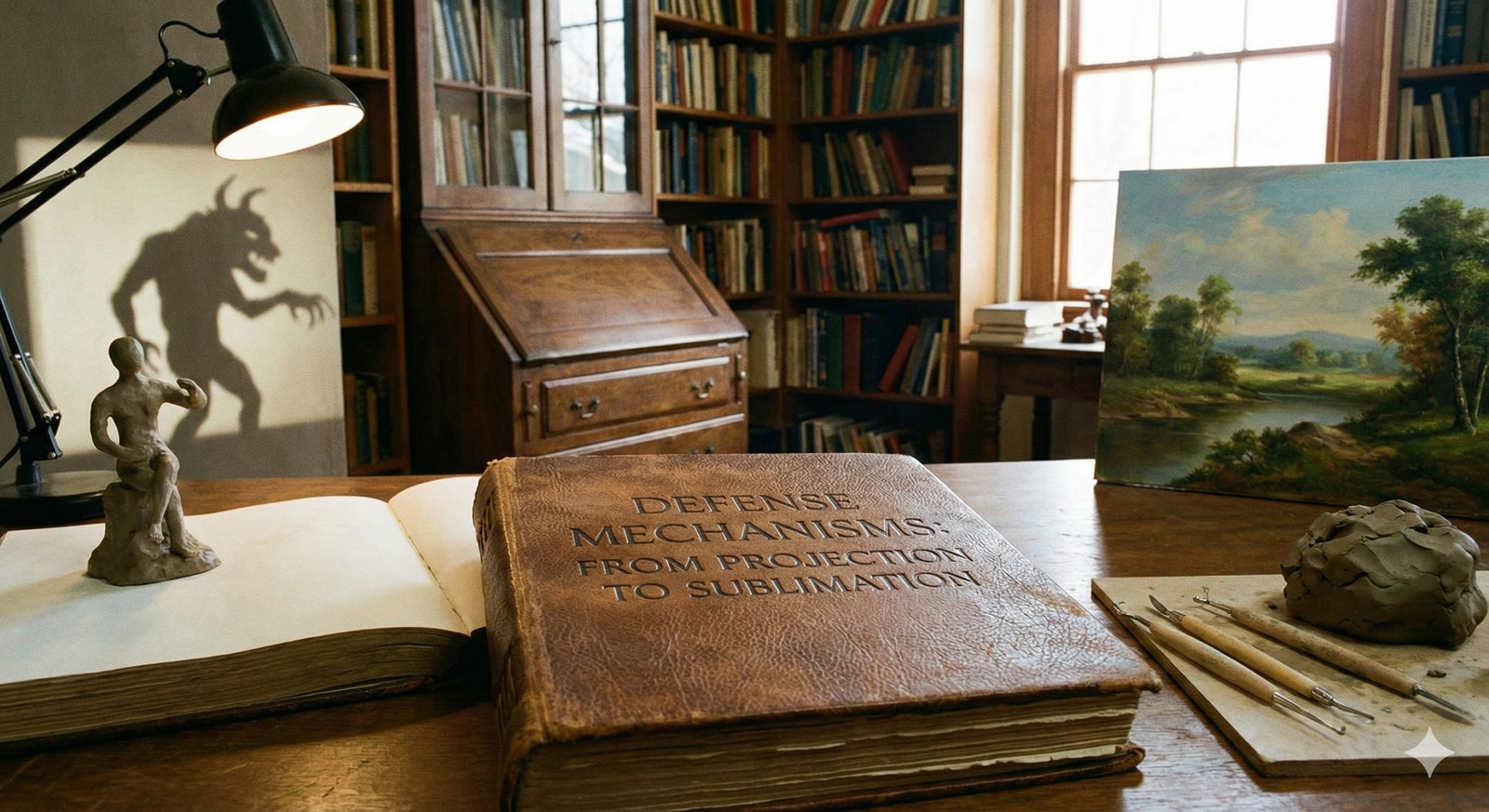

In the complex landscape of human psychology, the mind is constantly working to maintain equilibrium. When faced with anxiety, emotional pain, or internal conflict, the psyche often deploys invisible shields known as Defense Mechanisms. First conceptualized by Sigmund Freud and later expanded by his daughter, Anna Freud, these unconscious psychological strategies play a pivotal role in how we navigate the world, interact with others, and protect our self-esteem.
This article provides a comprehensive analysis of defense mechanisms, tracing the spectrum from primitive reactions like Projection to high-functioning, mature adaptations like Sublimation.
Shutterstock
Explore
What Are Defense Mechanisms?
At their core, defense mechanisms are psychological strategies brought into play by the unconscious mind to manipulate, deny, or distort reality in order to defend against feelings of anxiety and unacceptable impulses while maintaining one’s self-schema.
According to psychoanalytic theory, these mechanisms arise from the conflict between the Id (our primal, instinctual drive), the Superego (our moral compass), and the Ego (the rational mediator). When the demands of the Id and Superego conflict, the Ego utilizes defense mechanisms to reduce the resulting anxiety.
The Hierarchy of Defenses
Not all defense mechanisms are created equal. George Vaillant, a pioneer in the study of defense mechanisms, categorized them into a hierarchy based on their level of psycho-social maturity:
- Pathological/Primitive: Often severing contact with reality (e.g., Denial).
- Immature: Common in adolescents and some adults, often socially awkward (e.g., Projection).
- Neurotic: Common in adults, helpful in the short term but damaging in the long term (e.g., Displacement).
- Mature: Healthy, adaptive, and conscious strategies (e.g., Sublimation).
The Primitive & Immature Defenses: Distorting Reality
These mechanisms are often the first to develop in childhood. While they serve a protective purpose, relying on them heavily in adulthood can lead to significant interpersonal and psychological issues.
1. Projection: The Mirror of the Mind
Projection is an immature defense mechanism where an individual attributes their own unacceptable thoughts, feelings, or motives to another person.
- Mechanism: Instead of acknowledging, “I hate him,” the ego alters the perception to, “He hates me.”
- Psychological Function: It reduces anxiety by externalizing internal conflict. It allows the individual to criticize their own faults in others without damaging their self-image.
- Example: A partner who is tempted to cheat accuses their significant other of being unfaithful.
2. Denial
Perhaps the most famous primitive defense, Denial involves the refusal to accept reality or fact, acting as if a painful event, thought, or feeling did not exist.
- Example: A person diagnosed with a terminal illness refuses to seek treatment, insisting the doctors made a mistake, despite clear medical evidence.
3. Acting Out
Instead of articulating feelings or reflecting on emotions, an individual performs extreme behaviors to express thoughts they are incapable of expressing verbally.
- Example: An adult throws a temper tantrum or punches a wall when denied a promotion, rather than discussing their frustration.
The Neurotic Defenses: Managing Anxiety
These are common in “healthy” adults but can become problematic if used rigidly or exclusively.
4. Repression
Often confused with suppression, Repression is the unconscious blocking of unacceptable thoughts, feelings, and impulses. The key distinction is that the person is unaware they are doing it.
- Example: A trauma survivor has no memory of the abuse they suffered as a child, yet they have trouble forming relationships.
5. Displacement
Displacement involves redirecting thoughts, feelings, and impulses directed at one person or object, but taken out upon another person or object. People often use displacement when they cannot express their feelings in a safe manner to the person they are directed at.
- Example: An employee is yelled at by their boss. Fearful of losing their job, they say nothing, but go home and yell at their spouse or kick the dog.
6. Intellectualization
This involves overthinking or concentrating on the intellectual components of a situation to avoid the emotional aspects. It acts as a buffer against pain.
- Example: A person diagnosed with cancer spends hours researching survival statistics and treatment protocols but refuses to discuss their fear or sadness.
7. Rationalization
Rationalization is the cognitive distortion of “the facts” to make an event or an impulse less threatening. We provide ourselves with excuses.
- Example: A student fails a test and says, “The teacher hates me and the questions were unfair,” rather than admitting they didn’t study.
The Mature Defenses: Turning Lead into Gold
Mature defense mechanisms are considered the healthiest method of coping. They maximize gratification and allow individuals to deal with feelings and situations in a constructive, socially acceptable way.
8. Sublimation: The Pinnacle of Adaptation
Sublimation is the transformation of unwanted impulses into something less harmful and often socially productive. Freud considered this the sign of a mature, healthy individual.
- Mechanism: Unlike other defenses that deny or repress the drive, sublimation channels the energy of the drive. It is the alchemy of psychology.
- Psychological Function: It allows the Id’s energy to be expressed, but in a way that the Superego approves of.
- Example:
- Aggression: A person with high levels of aggression becomes a successful surgeon or a professional boxer.
- Sexual Drives: An artist channels intense sexual frustration or longing into creating a masterpiece painting or sculpture.
9. Humor
Using Humor involves pointing out the funny or ironic aspects of a situation. It does not deny the distress but makes it bearable.
- Example: Making a joke about a personal tragedy to break the tension and bond with others, acknowledging the pain without being consumed by it.
10. Suppression
Unlike repression, Suppression is the conscious decision to delay paying attention to an emotion or need in order to cope with the present reality.
- Example: “I am incredibly angry at my partner right now, but I have a presentation in five minutes. I will put this feeling aside and deal with it tonight.”
Summary: From Maladaptive to Adaptive
Understanding defense mechanisms is not about eliminating them—our minds need protection. The goal of psychology and therapy is to help individuals move from rigid, primitive defenses (like Projection and Denial) that distort reality and damage relationships, toward flexible, mature defenses (like Sublimation and Humor) that enhance life and creativity.
| Mechanism | Level | Function |
| Projection | Immature | Attributes internal faults to others. |
| Denial | Primitive | Refuses to accept reality. |
| Repression | Neurotic | Unconsciously forgets painful thoughts. |
| Sublimation | Mature | Channels energy into productive outlets. |
Recognizing these patterns in ourselves is the first step toward greater emotional intelligence and psychological resilience.