Menu
Formal Psychology
Search
Menu
  • Home
  • Contact Us

Formal PsychologyFormal Psychology

  • PsiQ
  • Pavlov Shop
  • Download App
Search
  • Abnormal Psychology
  • About Us
    • Roshan Kumar
  • Audiobooks
  • Bio Psychology
  • Blog Page
  • Blog Page
  • Career App
  • Career Opportunity
  • Certificate Verification
  • Cognitive Psychology
  • Colleges
    • DSPMU Ranchi Jharkhand
  • Colleges list for psychology
  • Community psychology
  • Contact
  • Contact Us
  • Counseling Psychology
  • Criminal & Forensic Psychology
  • Decision Making
  • Developmental Psychology
  • Educational Psychology
  • Emotional Intelligence
  • Feed
  • Flash Card
  • Health psychology
  • Home
  • Homepage
  • homepage
  • Introduction to psychology
  • Listing Form
  • Listings
  • My Account
  • News And update for app
  • Notification
  • Organisational Psychology
  • Positive psychology
  • Post Submission Form
  • PPT Submission
  • PPT-Intern
  • Privacy Policy
  • Psychological research
  • Registration
  • Sample Page
  • Search Results
  • Social Psychology
  • Statistical method of psychology
  • Submit your post
  • Subscribe
  • Typography
  • Under Graduate
  • University / College in india
  • Video lecture

close
Generic selectors
Exact matches only
Search in title
Search in content
Post Type Selectors
Formal PsychologyFormal Psychology
close
  • Home
  • Career Opportunity
  • Contact Us
  • Download Our App
  • Visit Pavlov Shop
  • WhatsApp Us
  • About Us
  • Visit PsiQ

Join the conversation

  • youtube
  • instagram
  • email
  • linkedin
A photograph of a leather-bound book on a wooden desk with the title "DEFENSE MECHANISMS: FROM PROJECTION TO SUBLIMATION" embossed on its cover. To the left, a small sculpture casts a large, monstrous shadow on the wall, and to the right, a lump of clay and sculpting tools sit next to a finished oil painting. The background is a library filled with bookshelves.

Defense Mechanisms: From Projection to Sublimation

  • Avatar photo
  • Posted byby Team Psychology
  • February 6, 2026
  • 4 min
  • Avatar photo
    • Share
A realistic photograph of a smiling doctor and an elderly patient in an exam room. The patient is holding a single white pill with a look of hope. A framed sign on the wall reads "THE PLACEBO EFFECT: THE POWER OF BELIEF IN CLINICAL SETTINGS".

The Placebo Effect: The Power of Belief in Clinical Settings

  • Avatar photo
  • Posted byby Team Psychology
  • February 6, 2026
  • 3 min
  • Avatar photo
    • Share
A realistic high-angle shot of a psychology researcher's wooden desk featuring a DNA double helix model, a microscope, a framed photo of identical twins, and an open notebook with handwritten text reading "Nature vs. Nurture: The Latest Consensus in Behavioral Genetics."

Nature vs Nurture in Behavioral Genetics: The Latest Consensus

  • Avatar photo
  • Posted byby Team Psychology
  • February 6, 2026
  • 3 min
  • Avatar photo
    • Share
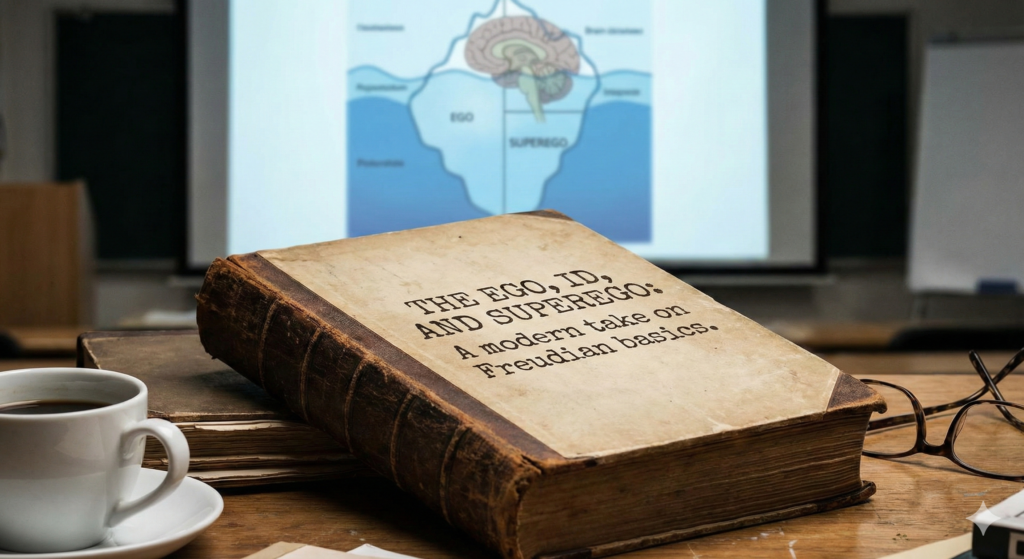
A vintage psychology textbook titled "The Ego, Id, and Superego" resting on a wooden desk, with a blurred diagram of Freud's iceberg model projected in the background.

The Ego, Id, and Superego: A Modern Take on Freudian Basics

  • Avatar photo
  • Posted byby Team Psychology
  • February 6, 2026
  • 3 min
  • Avatar photo
    • Share
A resilient tree growing on a rocky cliff overlooking a rough ocean as sunlight breaks through dark storm clouds. The text "POST-TRAUMATIC GROWTH: FINDING STRENGTH AFTER THE STORM" is displayed in white, sans-serif font across the top.

Post-Traumatic Growth: Finding Strength After the Storm

  • Avatar photo
  • Posted byby Team Psychology
  • February 6, 2026
  • 3 min
  • Avatar photo
    • Share
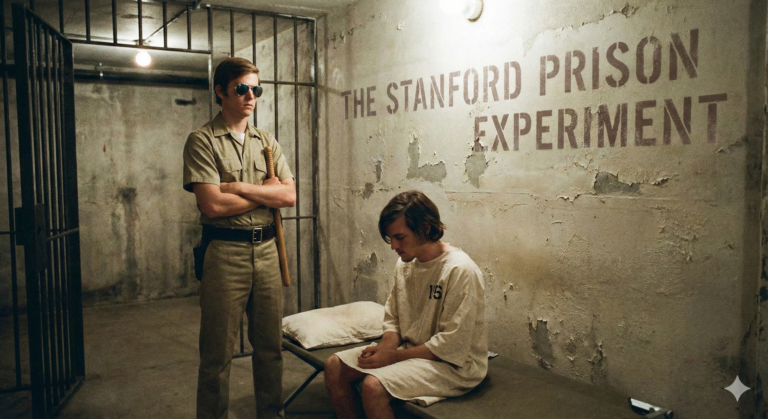
Cinematic recreation of the Stanford Prison Experiment showing a guard in sunglasses watching a prisoner, with the study title painted on the wall.

The Stanford Prison Experiment: Lessons Learned 50+ Years Later

  • Avatar photo
  • Posted byby Team Psychology
  • February 6, 2026
  • 3 min
  • Avatar photo
    • Share
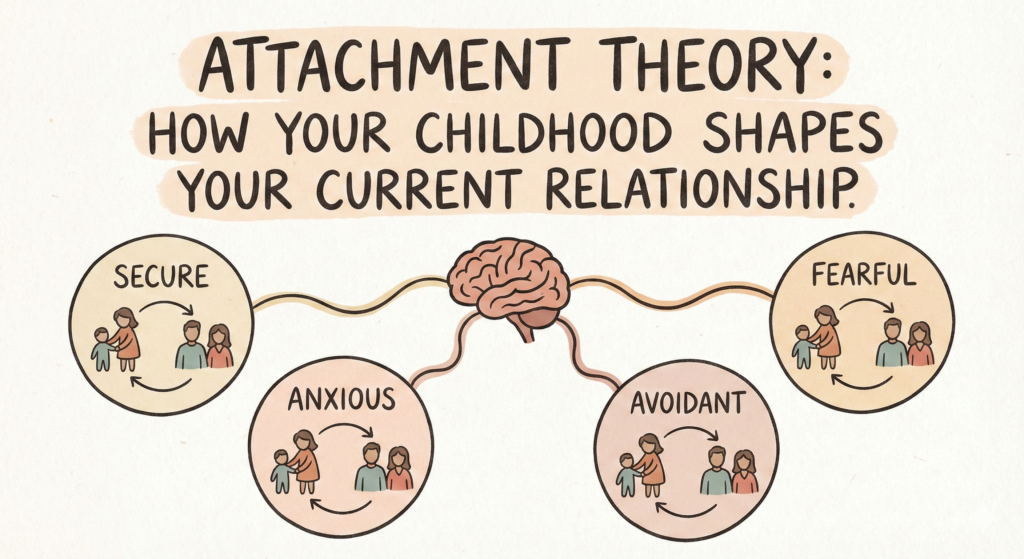
Hand-drawn infographic titled 'ATTACHMENT THEORY: HOW YOUR CHILDHOOD SHAPES YOUR CURRENT RELATIONSHIP.' A central brain connects via wavy lines to four circles labeled 'SECURE,' 'ANXIOUS,' 'AVOIDANT,' and 'FEARFUL,' each containing icons of a caregiver-child interaction and an adult couple with arrows showing relationship dynamics.

Attachment Theory: How Your Childhood Shapes Your Adult Relationships

  • Avatar photo
  • Posted byby Team Psychology
  • February 6, 2026
  • 3 min
  • Avatar photo
    • Share
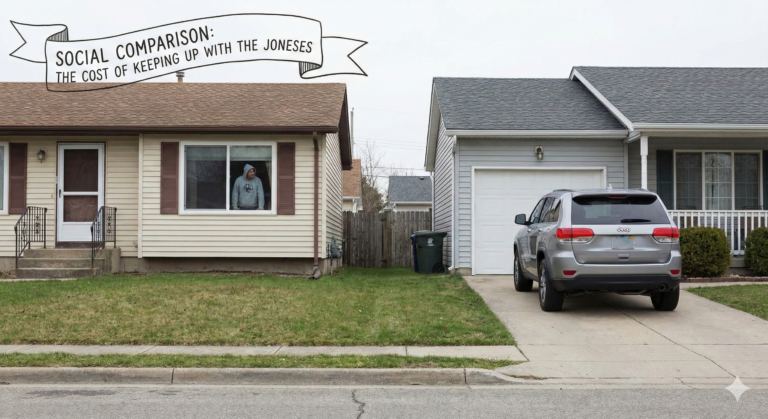
A realistic suburban scene illustrating Social Comparison Theory: a neighbor looking out their window at the luxury car in the driveway next door, representing the "Keeping up with the Joneses" psychological phenomenon.

Social Comparison Theory: The Cost of “Keeping Up with the Joneses”

  • Avatar photo
  • Posted byby Team Psychology
  • February 5, 2026
  • 4 min
  • Avatar photo
    • Share
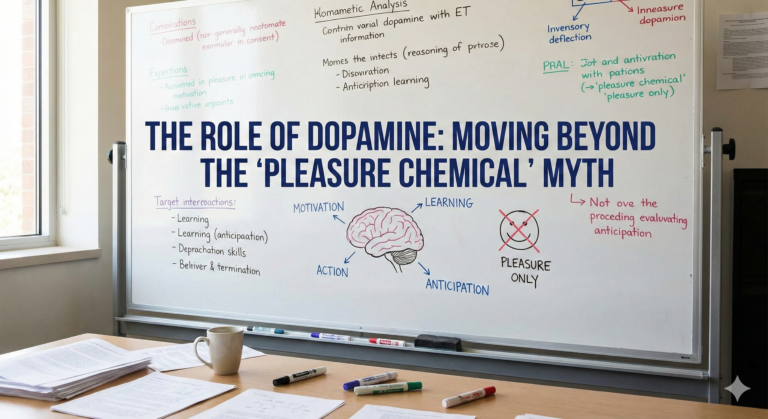
A white dry-erase board in a research setting, featuring the handwritten title "THE ROLE OF DOPAMINE: MOVING BEYOND THE 'PLEASURE CHEMICAL' MYTH". Below the title is a diagram of a brain with arrows pointing to "MOTIVATION," "LEARNING," "ACTION," and "ANTICIPATION," contrasting with a crossed-out smiley face labeled "PLEASURE ONLY". Other handwritten notes and definitions are visible around the main diagram.

The Role of Dopamine: Moving Beyond the “Pleasure Chemical” Myth.

  • Avatar photo
  • Posted byby Team Psychology
  • February 5, 2026
  • 3 min
  • Avatar photo
    • Share
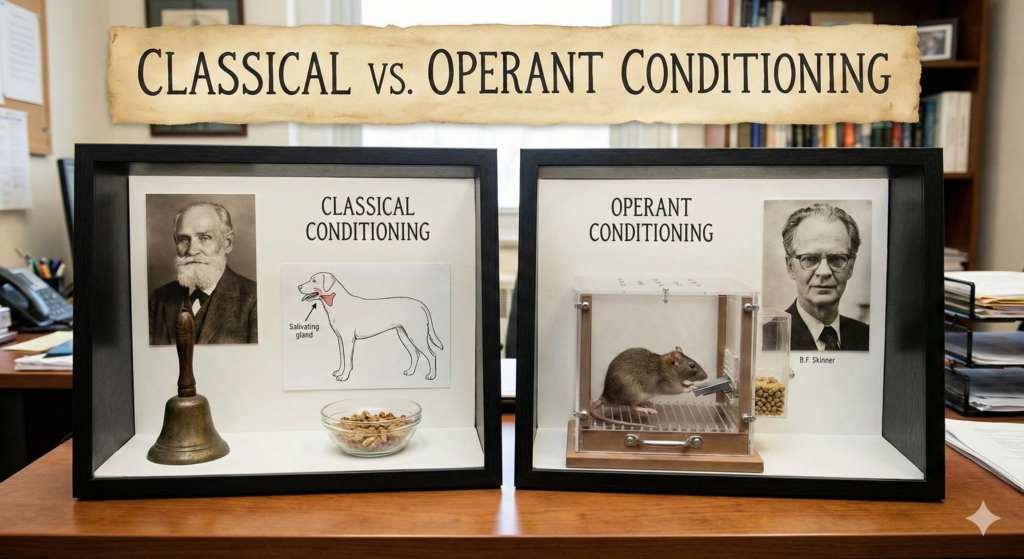
An image comparing two museum-style shadow boxes on a wooden desk, under a banner that reads "CLASSICAL VS. OPERANT CONDITIONING". The left box, labeled "CLASSICAL CONDITIONING," shows a portrait of Ivan Pavlov, a diagram of a dog with a salivating gland, a bell, and a bowl of food. The right box, labeled "OPERANT CONDITIONING," features a portrait of B.F. Skinner and a rat in a clear "Skinner box" pressing a lever for food pellets.

Classical vs. Operant Conditioning: How Our Habits Are Formed

  • Avatar photo
  • Posted byby Team Psychology
  • February 5, 2026
  • 3 min
  • Avatar photo
    • Share
A realistic home office desk featuring a corkboard with a diagram of the traditional pyramid, where a new hand-written layer labeled 'Wi-Fi' has been pinned to the bottom foundation, illustrating the Maslow’s Hierarchy of Needs Wi-Fi concept.

Maslow’s Hierarchy of Needs Wi-Fi: Does Connectivity Belong at the Bottom?

  • Avatar photo
  • Posted byby Team Psychology
  • February 5, 2026
  • 3 min
  • Avatar photo
    • Share
A photo of a diverse group of adults and children smiling and working together to build a wooden garden bed in a sunlit community garden. A prominent rustic wooden sign in the foreground reads "ADLERIAN PSYCHOLOGY: THE QUEST FOR SIGNIFICANCE AND BELONGING."

Adlerian Psychology: The Quest for Significance and Belonging

  • Avatar photo
  • Posted byby Team Psychology
  • February 5, 2026
  • 4 min
  • Avatar photo
    • Share
A professional psychology workspace featuring a sign reading "The Big Five Personality Traits: Beyond the MBTI." The scene includes a wooden desk with a stack of academic journals, an open notebook, a coffee mug with the "Formal Psychology" logo, and a whiteboard in the background displaying personality trait diagrams.

The Big Five Personality Traits: Beyond the MBTI

  • Avatar photo
  • Posted byby Team Psychology
  • February 5, 2026
  • 3 min
  • Avatar photo
    • Share
An illustration depicting cognitive dissonance, showing a person's head with two opposing thought bubbles clashing—one labeled "Belief: Smoking is harmful" and the other labeled "Action: Smoking a cigarette"—resulting in a facial expression of stress and mental discomfort.

The War Within: Understanding Cognitive Dissonance and the Discomfort of Conflicting Beliefs

  • Avatar photo
  • Posted byby Team Psychology
  • February 5, 2026
  • 3 min
  • Avatar photo
    • Share
A distressed patient holding their head and stomach while consulting a doctor, illustrating Somatoform Disorders where psychological pain manifests as physical symptoms.

Somatoform Disorders: When Psychological Pain Manifests Physically

  • Avatar photo
  • Posted byby Team Psychology
  • February 5, 2026
  • 3 min
  • Avatar photo
    • Share
A person in a sweater at a wooden desk, looking thoughtfully at a laptop. On the desk are an open booklet titled "THE HEALTH BELIEF MODEL," a smartphone with a notification, and a weekly pill organizer.

The Health Belief Model: Why People Choose (or Refuse) Medical Care

  • Avatar photo
  • Posted byby Team Psychology
  • February 5, 2026
  • 4 min
  • Avatar photo
    • Share
An open, old-fashioned book on a wooden table displays an illustration of a glowing human brain. Overlaid on the illustration and page is the text: "Neuroplasticity: How the brain literally rewires itself after trauma". To the right are a pen, reading glasses, and a mug of coffee.

Neuroplasticity: How the Brain Literally Rewires Itself After Trauma

  • Avatar photo
  • Posted byby Team Psychology
  • February 5, 2026
  • 3 min
  • Avatar photo
    • Share
A high-angle, photorealistic shot of a wooden desk featuring a ceramic coffee mug and an open journal. A person's hands rest gently on the pages, where the phrase "SETTING BOUNDARIES: HOW TO SAY 'NO' WITHOUT THE GUILT" is written in clear, handwritten text.

Setting Boundaries: How to Say “No” Without the Guilt

  • Avatar photo
  • Posted byby Team Psychology
  • February 5, 2026
  • 3 min
  • Avatar photo
    • Share
A realistic photo of a man in a business suit laughing nervously with his hand covering his mouth during a serious meeting. In the background, a projector screen displays the text "THE PSYCHOLOGY OF HUMOR: WHY WE LAUGH WHEN WE’RE UNCOMFORTABLE." Colleagues at the table look concerned and serious.

The Psychology of Humor: Why We Laugh When We’re Uncomfortable

  • Avatar photo
  • Posted byby Team Psychology
  • February 4, 2026
  • 3 min
  • Avatar photo
    • Share
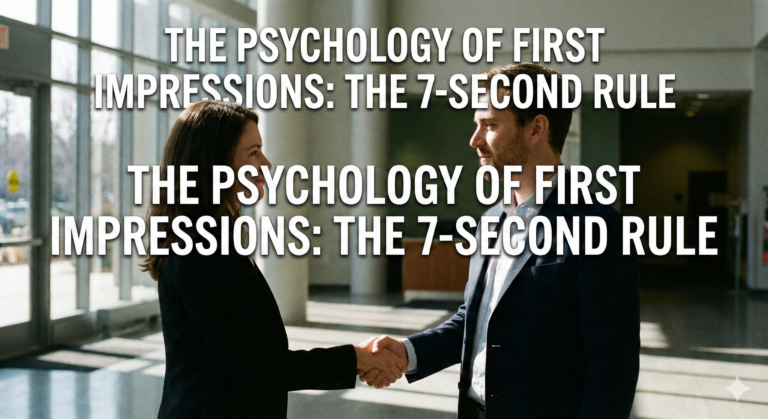
7-second rule psychology illustration showing a professional handshake and positive body language between a man and a woman.

The Psychology of First Impressions: Unpacking the 7-Second Rule

  • Avatar photo
  • Posted byby Team Psychology
  • February 4, 2026
  • 3 min
  • Avatar photo
    • Share
A woman curled on a sofa under a blanket at night, watching the 'Unsolved Mysteries' documentary series on a television screen. In the foreground, a stack of books labeled "TRUE CRIME" rests on a wooden coffee table next to a mug and an open journal. The text overlay reads "WHY WE LOVE TRUE CRIME."

Why We Love True Crime: The Darker Side of Human Curiosity

  • Avatar photo
  • Posted byby Team Psychology
  • February 4, 2026
  • 3 min
  • Avatar photo
    • Share
A realistic photo of a couple in a tense living room setting; a man stands with arms crossed looking out a rainy window while a woman sits on a couch looking dejected. Text overlay reads: "THE PSYCHOLOGY OF APOLOGIES: Why some people can never say 'I'm sorry.'" aiming to illustrate emotional distance.

The Psychology of Apologies: Why Some People Can Never Say “I’m Sorry”

  • Avatar photo
  • Posted byby Team Psychology
  • February 4, 2026
  • 3 min
  • Avatar photo
    • Share
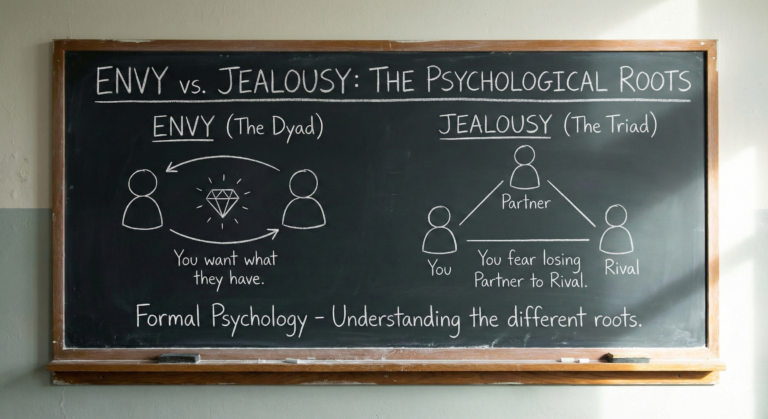
A photograph of a school chalkboard with handwritten white chalk text and diagrams illustrating the psychological difference between envy and jealousy. The title reads "ENVY vs. JEALOUSY: THE PSYCHOLOGICAL ROOTS". Below it are two sections: "ENVY (The Dyad)" with a diagram of two people and an object, and "JEALOUSY (The Triad)" with a diagram of three people labeled "You," "Partner," and "Rival." The bottom text reads "Formal Psychology - Understanding the different roots."

Envy vs. Jealousy: Understanding the Roots of the Green-Eyed Monster

  • Avatar photo
  • Posted byby Team Psychology
  • February 4, 2026
  • 3 min
  • Avatar photo
    • Share
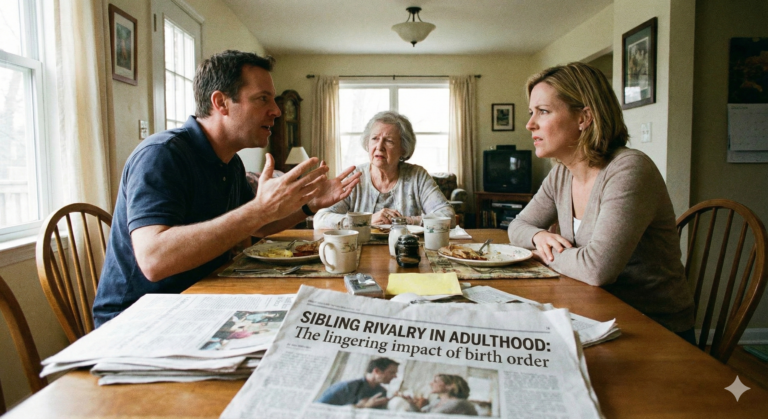
Two adult siblings arguing heatedly at a dining table while their elderly mother sits between them looking concerned; a newspaper in the foreground displays the headline "Sibling Rivalry in Adulthood: The lingering impact of birth order.

Sibling Rivalry in Adulthood: How Birth Order Shapes Lifelong Conflict

  • Avatar photo
  • Posted byby Team Psychology
  • February 4, 2026
  • 4 min
  • Avatar photo
    • Share
"Realistic photo of a young woman and an older man having a discussion in a cafe, with text on the window glass reading: The Halo Effect: Why we think attractive people are smarter."

The Halo Effect: Why We Think Attractive People Are “Smarter”

  • Avatar photo
  • Posted byby Team Psychology
  • February 4, 2026
  • 3 min
  • Avatar photo
    • Share

Posts pagination

  • Newer Posts
  • 1
  • …
  • 4
  • 5
  • 6
  • 7
  • 8
  • …
  • 15
  • Older Posts

Trending

HOT RIGHT NOW

  • Four East Asian professionals smiling and conversing during a business meeting over tea, representing the relationship-building and trust central to the psychology of Guanxi.
    • Business psychology
    The Psychology of Guanxi: East Asian Network Building Explained
    • Posted Team Psychology
    • 3 min
  • Photograph of an elder Maori woman with a moko kauae and a young Maori man with arm ta moko, sitting together on a bench. They are outside a carved wharenui (meeting house) with a coastal New Zealand landscape at sunset. White text at the top reads: 'THE PSYCHOLOGICAL RESILIENCE OF THE MAORI PEOPLE IN NEW ZEALAND'.
    • Cultural identity
    The Psychological Resilience of the Maori People in New Zealand
    • Posted Team Psychology
    • 3 min
  • A young woman looking thoughtfully at her face in a brightly lit clinic mirror, sitting next to a sign that reads "Cosmetic Surgery in South Korea: Body Image and Societal Pressure."
    • Cultural Psychology
    Cosmetic Surgery in South Korea: Body Image and Societal Pressure
    • Posted Team Psychology
    • 3 min

Social

FOLLOW US

  • youtube
  • instagram
  • email
  • linkedin

Featured

Our best picks

  • Four East Asian professionals smiling and conversing during a business meeting over tea, representing the relationship-building and trust central to the psychology of Guanxi.
    • Business psychology
    The Psychology of Guanxi: East Asian Network Building Explained
    • Posted Team Psychology
    • March 23, 2026
  • Photograph of an elder Maori woman with a moko kauae and a young Maori man with arm ta moko, sitting together on a bench. They are outside a carved wharenui (meeting house) with a coastal New Zealand landscape at sunset. White text at the top reads: 'THE PSYCHOLOGICAL RESILIENCE OF THE MAORI PEOPLE IN NEW ZEALAND'.
    • Cultural identity
    The Psychological Resilience of the Maori People in New Zealand
    • Posted Team Psychology
    • March 23, 2026
  • A young woman looking thoughtfully at her face in a brightly lit clinic mirror, sitting next to a sign that reads "Cosmetic Surgery in South Korea: Body Image and Societal Pressure."
    • Cultural Psychology
    Cosmetic Surgery in South Korea: Body Image and Societal Pressure
    • Posted Team Psychology
    • March 23, 2026
before-footer-banner

Trending

Hot topics

  1. Four East Asian professionals smiling and conversing during a business meeting over tea, representing the relationship-building and trust central to the psychology of Guanxi.
    • Business psychology
    The Psychology of Guanxi: East Asian Network Building Explained
    • Posted Team Psychology
    • March 23, 2026
  2. Photograph of an elder Maori woman with a moko kauae and a young Maori man with arm ta moko, sitting together on a bench. They are outside a carved wharenui (meeting house) with a coastal New Zealand landscape at sunset. White text at the top reads: 'THE PSYCHOLOGICAL RESILIENCE OF THE MAORI PEOPLE IN NEW ZEALAND'.
    • Cultural identity
    The Psychological Resilience of the Maori People in New Zealand
    • Posted Team Psychology
    • March 23, 2026
  3. A young woman looking thoughtfully at her face in a brightly lit clinic mirror, sitting next to a sign that reads "Cosmetic Surgery in South Korea: Body Image and Societal Pressure."
    • Cultural Psychology
    Cosmetic Surgery in South Korea: Body Image and Societal Pressure
    • Posted Team Psychology
    • March 23, 2026

Popular

Top posts

  • An elderly Okinawan woman smiling happily while tending to her vibrant vegetable garden at sunset, illustrating the concept of Ikigai psychology and finding meaning in daily life, with the text "Ikigai Psychology: The Okinawan Framework for Purpose".
    • Mental Health
    Ikigai Psychology: The Okinawan Framework for Purpose
    • Posted Team Psychology
    • 3 min
  • An exhausted South Korean student studying alone late at night at a desk with textbooks and test papers, illustrating the Suneung exam mental health crisis and extreme academic pressure.
    • Educational Psychology
    Suneung Exam Mental Health Crisis: South Korea’s Academic Pressure Cooker
    • Posted Team Psychology
    • 4 min
  • Exhausted Japanese businessman sleeping at his office desk late at night, symbolizing Karoshi psychology and extreme workplace burnout.
    • Mental Health
    Karoshi Psychology: The Drivers of Overwork Death in Japan
    • Posted Team Psychology
    • 3 min

Our Policies

  • Privacy Policy
  • Contact Us
  • About Us

Our Products

  • Formal Psychology
  • PsiQ
  • Pavlov Shop
© Formal Psychology, All rights reserved | Powered by Novul Sphere