
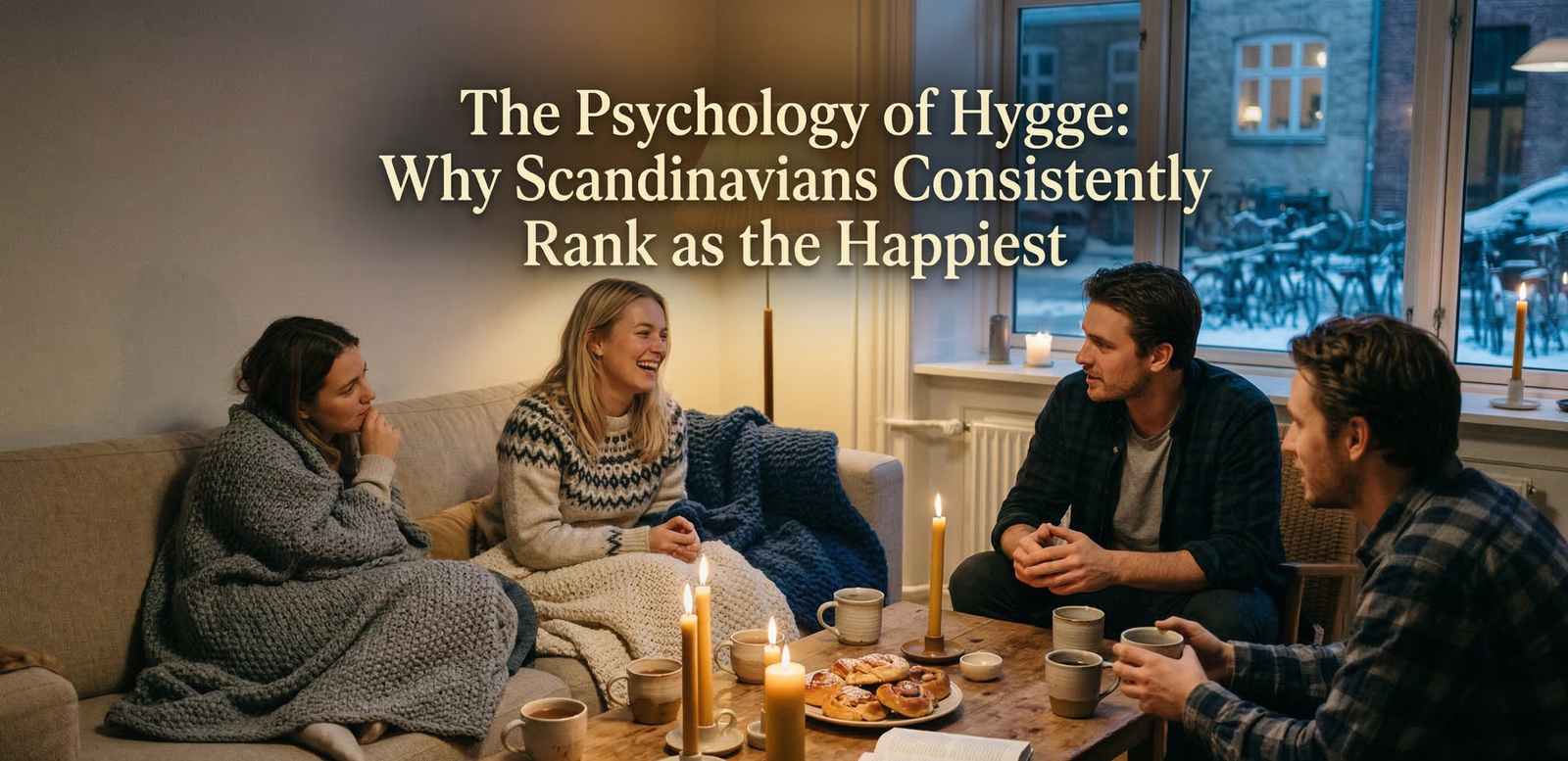

Year after year, the World Happiness Report yields remarkably consistent results: Scandinavian countries—Denmark, Finland, Norway, Sweden, and Iceland—dominate the top tiers. While economists point to robust social welfare systems and political scientists highlight high institutional trust, psychologists often look to a deeply ingrained cultural phenomenon. In Denmark, it is called hygge (pronounced hoo-gah).
While popular culture has commercialized hygge as an aesthetic of chunky knit blankets, lit candles, and warm beverages, formal psychology reveals that it is much more than a seasonal trend. Hygge is a complex psychological state that fosters profound mental well-being, resilience, and social cohesion.
What is Hygge? A Psychological Definition
At its core, hygge is an atmosphere of psychological safety and conscious appreciation of the present moment. It is the intentional creation of intimacy, connection, and coziness, often shared with close friends or family, but also experienced alone.
Psychologically, hygge operates as an active coping mechanism against the harsh, dark Scandinavian winters. By turning a potential trigger for Seasonal Affective Disorder (SAD) into an opportunity for communal warmth and mindfulness, hygge acts as a cultural buffer against depression and anxiety.
The Psychological Pillars of Hygge
To understand why hygge significantly impacts national happiness levels, we must break down its core psychological components.
1. Social Connection and Belonging
Humans are inherently social creatures. Evolutionary psychology dictates that our nervous systems regulate best in the presence of trusted others. Hygge heavily emphasizes egalitarian, non-competitive socializing.
- Removal of Status Anxiety: During a “hyggelig” gathering, talking about politics, work achievements, or controversial topics is generally discouraged. The focus is purely on shared presence.
- Oxytocin Release: Safe, warm social interactions trigger the release of oxytocin, a neuropeptide that lowers stress, reduces blood pressure, and promotes feelings of trust and bonding.
2. Everyday Mindfulness and Savoring
Positive psychology places a strong emphasis on “savoring”—the capacity to attend to, appreciate, and enhance the positive experiences in one’s life.
- Sensory Grounding: Hygge engages the senses (the smell of coffee, the warmth of a fire, the soft texture of a sweater) to pull the mind out of anxious rumination and anchor it firmly in the present.
- Micro-Moments of Joy: Rather than chasing grand, euphoric achievements for happiness, hygge cultivates satisfaction through accessible, daily micro-moments.
3. Psychological Safety
In clinical psychology, psychological safety refers to an environment where an individual feels comfortable being themselves without fear of judgment or negative consequences.
“Hygge is a sanctuary from the demands of the outside world. It is a dedicated space and time where the guard can be let down.”
When the brain perceives safety, the amygdala (the brain’s threat-detection center) downregulates, and cortisol levels drop, allowing the parasympathetic nervous system (rest and digest) to take over.
The Macro Environment: Why Hygge Thrives in Scandinavia
It is crucial to recognize that the psychology of hygge does not exist in a vacuum. It is deeply supported by the Scandinavian socio-economic model. We can view this through the lens of Abraham Maslow’s theory of human motivation.
Shutterstock
Explore
In Scandinavian countries, the foundational tiers of Maslow’s pyramid—physiological needs and safety needs—are largely guaranteed by the state. Universal healthcare, free education, generous parental leave, and strong unemployment benefits remove the chronic, low-grade survival anxiety that plagues citizens in many other nations.
Because their basic needs are securely met, Scandinavians have the psychological bandwidth to focus on the higher tiers of the pyramid: love and belonging, esteem, and self-actualization. Hygge is the cultural vehicle through which the “love and belonging” tier is consistently fulfilled.
The Neurobiology of Coziness
The environmental cues associated with hygge physically alter our brain chemistry to promote happiness:
- Lighting: Denmark burns more candles per capita than anywhere else. Evolutionarily, our brains associate the warm, amber glow of a fire (or a candle) with safety and community at the end of a day. This low-temperature lighting signals the pineal gland to begin producing melatonin, reducing stress and preparing the body for rest.
- Comfort Food: The consumption of hearty, comforting foods and warm drinks—central to hygge—triggers the release of dopamine and serotonin, creating a temporary but potent sense of well-being.
How to Apply the Psychology of Hygge Anywhere
You do not need to live in Copenhagen to reap the mental health benefits of this philosophy. Implementing hygge requires a psychological shift rather than a shopping spree:
- Prioritize Atmosphere Over Aesthetics: Focus on how a room or an event feels, rather than how it looks. Lower the lighting, reduce background noise, and eliminate digital distractions.
- Foster Egalitarian Socializing: Host gatherings where the explicit goal is connection, not networking or impressing others. Implement a “no shop-talk” rule to reduce social comparison.
- Practice Intentional Savoring: Take five minutes daily to engage fully in a simple pleasure—drinking a cup of tea, reading a book, or watching the rain—without multitasking.
- Create Psychological Sanctuaries: Dedicate a specific time of the week or a specific corner of your home where stress, work, and worries are not allowed to enter.
Conclusion
The psychology of hygge demonstrates that happiness is not necessarily found in wealth, status, or endless sunshine. Instead, Scandinavian societies show us that consistent, deeply rooted well-being comes from psychological safety, mindful appreciation of the present, and high-quality, egalitarian social connections. By adopting the psychological principles of hygge, anyone can build a more resilient and contented mind.