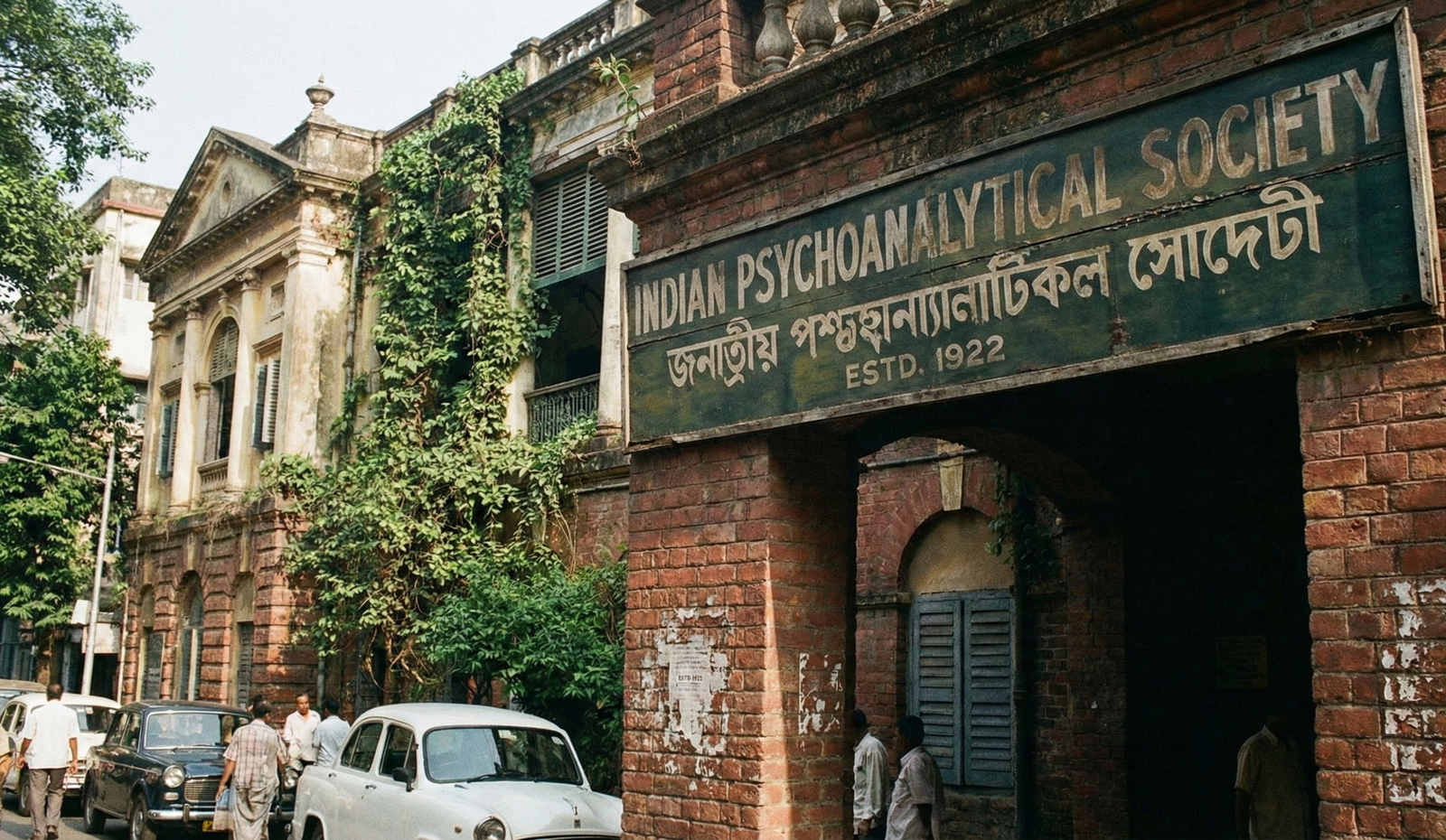

In the vast landscape of global psychology, India holds a unique and historically significant position. While Vienna is celebrated as the birthplace of psychoanalysis, Calcutta (now Kolkata) was arguably its first true outpost outside the West. At the heart of this movement is the Indian Psychoanalytical Society (IPS), an institution that not only adopted Freudian methods but adapted them to the cultural fabric of the East.
This article provides a detailed exploration of the Indian Psychoanalytical Society, covering its origins, its pioneering founder, its rigorous training programs, and its enduring relevance in modern mental health.
1. History and Origins: The Freud-Bose Connection
The story of the Indian Psychoanalytical Society is inextricable from the life of its founder, Dr. Girindrasekhar Bose. In the early 20th century, while Sigmund Freud was establishing the tenets of psychoanalysis in Europe, Bose was independently experimenting with similar concepts in India.
The Historic Correspondence
In 1921, Dr. Bose sent his doctoral thesis, The Concept of Repression, to Sigmund Freud in Vienna. To Bose’s delight, Freud replied warmly, validating Bose’s ideas. This sparked a legendary correspondence that lasted until 1937. Freud was fascinated by the “English-speaking Indian” who had grasped psychoanalysis so thoroughly without direct Western training.
Founding of the Society (1922)
Encouraged by Freud, Dr. Bose founded the Indian Psychoanalytical Society on January 26, 1922, in Calcutta. remarkably, this occurred just shortly after the formation of similar societies in major European capitals, making the IPS one of the oldest psychoanalytic bodies in the world.
- Affiliation: almost immediately after its formation, the IPS was accepted as a constituent society of the International Psychoanalytical Association (IPA), cementing India’s place on the global psychoanalytic map.
2. Theoretical Contributions: The “Indian” Twist
The IPS was never a mere echo of European thought. Dr. Bose famously debated Freud on the universality of the Oedipus Complex.
- The Bose-Freud Debate: While Freud emphasized the father-son conflict and castration anxiety, Bose argued that in the Indian context, the desire to be the mother (a pre-Oedipal identification) was more dominant than the desire to possess her.
- Cultural Integration: The Society has historically focused on blending Hindu philosophy (such as the concept of the “witness self”) with Western analytical techniques, creating a unique “Indian Psychoanalysis” that respects the cultural nuances of Indian family life.
3. Organizational Structure and Chapters
Headquartered at 14, Parsi Bagan Lane, Kolkata, the Society has expanded its reach over the decades.
- Kolkata (Headquarters): Remains the central hub for administration, archives, and the bulk of training activities.
- Mumbai Chapter: A vibrant branch that operates the Psychoanalytic Therapy and Research Centre (PTRC), focusing heavily on child analysis and observational studies.
- Delhi: While smaller, the Delhi presence includes several senior training analysts and active study groups.
4. Training and Education
The Indian Psychoanalytical Society is the only body in India authorized by the International Psychoanalytical Association (IPA) to train candidates to become “Psychoanalysts.”
The Psychoanalytic Training Program
This is a rigorous, multi-year program designed for mental health professionals (psychiatrists, psychologists, and social workers). It follows the classical “Eitingon model” consisting of three pillars:
- Personal Analysis: The candidate must undergo their own psychoanalysis with a Training Analyst for several years (often 4–5 times a week).
- Theoretical Seminars: Intensive study of Freud, Klein, Winnicott, Bion, and contemporary theorists.
- Supervised Clinical Work: The candidate treats patients under the strict supervision of a senior analyst.
Diploma in Psychodynamic Counselling
Recognizing the need for broader mental health support, the IPS also offers a shorter, more accessible Diploma in Psychodynamic Counselling. This course equips students with analytical listening skills and psychodynamic understanding, suitable for counselors who may not wish to become full psychoanalysts.
5. Publications: Samiksa
In 1947, the Society launched its official journal, Samiksa (meaning “Review” or “Investigation” in Sanskrit).
- Content: The journal publishes clinical case studies, theoretical papers, and articles applying psychoanalytic thought to literature, cinema, and social issues.
- Legacy: It serves as the primary archive of psychoanalytic thought in India, housing the early writings of G.S. Bose and other pioneers like T.C. Sinha and N.N. Chatterjee.
6. Clinical Services and Social Contribution
The Society does not exist in an ivory tower. It has a long history of community service:
- Lumbini Park Mental Hospital: Established by the IPS in 1940, this was one of the first mental hospitals in India to emphasize humane, psychological treatment over custodial care.
- Girindrasekhar Clinic: Located at the Kolkata headquarters, this clinic provides low-cost psychoanalytic therapy to the public, ensuring that financial status is not a barrier to mental health support.
7. Current Status and Future Outlook
In the 21st century, the Indian Psychoanalytical Society faces the challenge of remaining relevant in an era dominated by quick-fix cognitive therapies and biological psychiatry. However, there is a resurgence of interest in depth psychology. The IPS is currently modernizing its curriculum, engaging with gender studies, and addressing contemporary trauma, ensuring that the “talking cure” remains a vital part of India’s mental health landscape.