
Introduction
From 1979 to 2015, the Chinese government enforced one of the most drastic demographic experiments in human history: the One-Child Policy. Designed to curb rapid population growth and stimulate economic development, the policy successfully reduced the population size but left an indelible mark on the nation’s psychological landscape. The China One-Child Policy trauma is perhaps most visible in the millions of children born during this era, colloquially known as the “Little Emperor” generation (Xiaohuangdi). While often stereotyped as spoiled and entitled due to being the sole focus of their families, a closer psychological examination reveals a generation burdened by intense pressure, chronic loneliness, and deep-seated emotional distress.
The Architecture of the “Little Emperor”
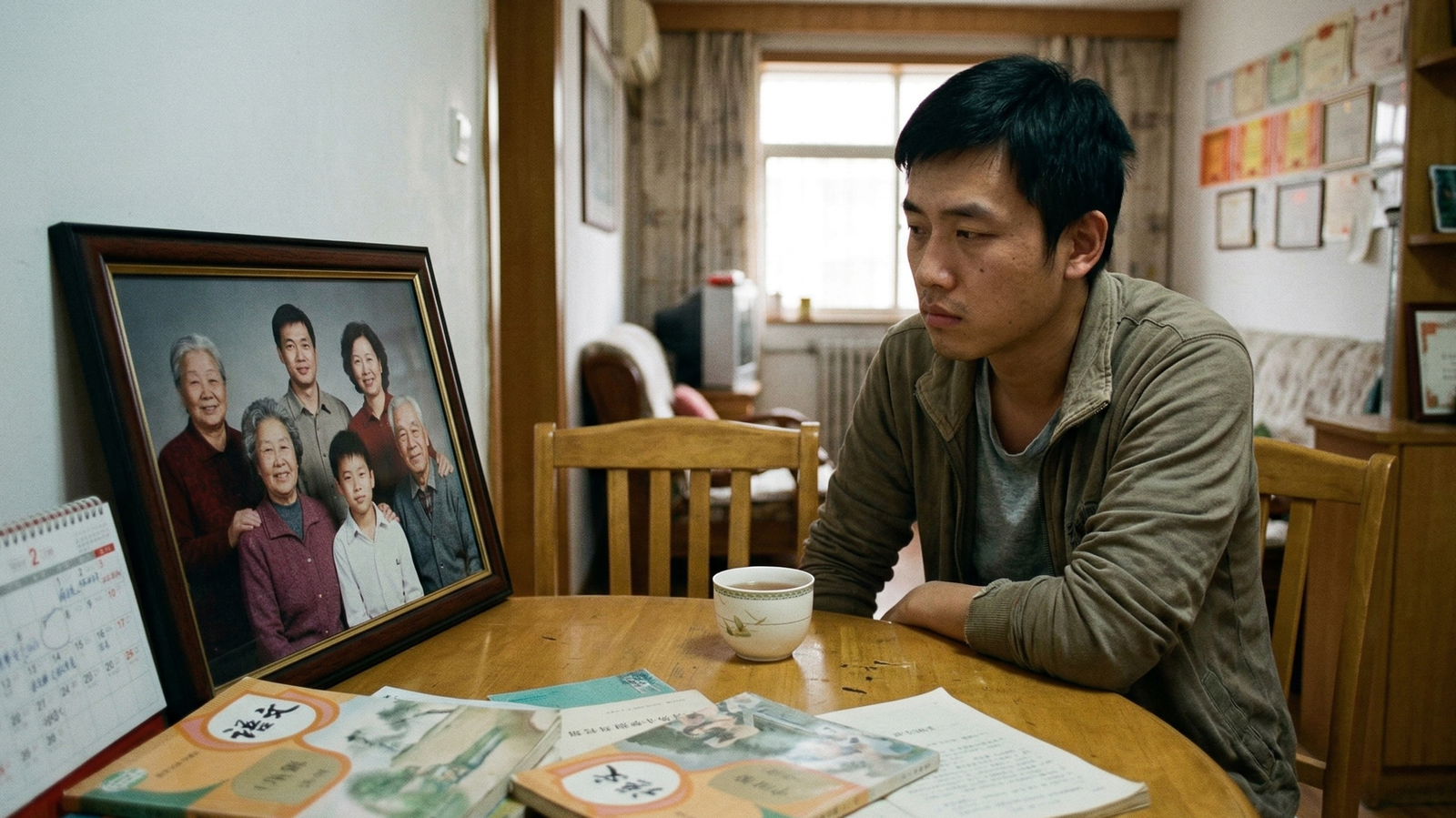
The term “Little Emperor” stems from the unique family dynamic created by the policy. In a traditional household, resources, attention, and expectations are distributed among several siblings. Under these new restrictions, a single child became the sole focal point for two parents and four grandparents.
While this resulted in unprecedented material indulgence for many, it also created a psychological pressure cooker.
- Hyper-Parenting: The child became the sole vessel for the family’s hopes, dreams, and upward mobility.
- Conditional Self-Worth: Psychological well-being became intrinsically tied to academic and professional success, leaving little room for individual exploration or failure.
The 4-2-1 Problem and Anticipatory Anxiety
Understanding the China One-Child Policy trauma requires looking at the “4-2-1 problem.” As this generation ages into adulthood, a single young adult is often financially and emotionally responsible for two aging parents and four grandparents.
In a culture deeply rooted in Confucian values of filial piety (respect and care for one’s parents and elders), this creates immense anticipatory anxiety.
- Financial Strain: The economic burden of supporting up to six aging adults alone is overwhelming, especially in a fiercely competitive job market.
- Emotional Burnout: The emotional labor of caretaking falls squarely on one pair of shoulders, leading to high rates of chronic stress and caregiver fatigue.
- Lack of Support Networks: Without siblings to share the burden, the individual often feels trapped by familial obligations, resulting in feelings of resentment paired with overwhelming guilt.
Social Isolation and the Loss of Sibling Dynamics
The absence of siblings fundamentally alters childhood development. Siblings serve as a child’s first peer group, teaching critical socialization skills such as conflict resolution, sharing, empathy, and negotiation.
- Chronic Loneliness: Many single children from this era report a profound sense of isolation during childhood, lacking a confidant who shares their exact generational and familial context.
- Interpersonal Difficulties: Psychologists have noted that some individuals from this generation struggle with emotional regulation in romantic or workplace relationships, having lacked the safe, low-stakes environment of sibling rivalry to practice these skills.
The Gaokao and Academic Trauma
The concentration of family expectations culminated in the realm of education, specifically the Gaokao (the National College Entrance Examination). Because the single child was the family’s only chance at success, academic performance became a high-stakes, life-or-death endeavor.
The psychological toll of this academic pressure includes:
- Clinical Anxiety and Depression: Rates of anxiety and depression among Chinese adolescents and young adults skyrocketed during this era, driven by the intense fear of disappointing their lineage.
- Perfectionism: A maladaptive form of perfectionism developed, where failure was not viewed as a learning opportunity but as a catastrophic familial disgrace.
Intergenerational Trauma Transmission
It is impossible to discuss the China One-Child Policy trauma without acknowledging the systemic distress experienced by the parents. The enforcement of the policy often involved coercive measures, heavy financial penalties, and a profound loss of reproductive autonomy.
Parents who endured these strictures often inadvertently passed their psychological distress onto their only children. The child, consciously or subconsciously, carried the weight of the siblings who were never born. The parents’ grief, anxiety, and hyper-vigilance created an environment where the child felt they had to overcompensate for the family’s sacrifices and losses.
Conclusion
The “Little Emperor” moniker is a double-edged sword that fails to capture the profound psychological complexities of this generation. Beneath the veneer of material indulgence lies a cohort navigating intense loneliness, crushing familial expectations, and the looming burden of the 4-2-1 demographic reality.