
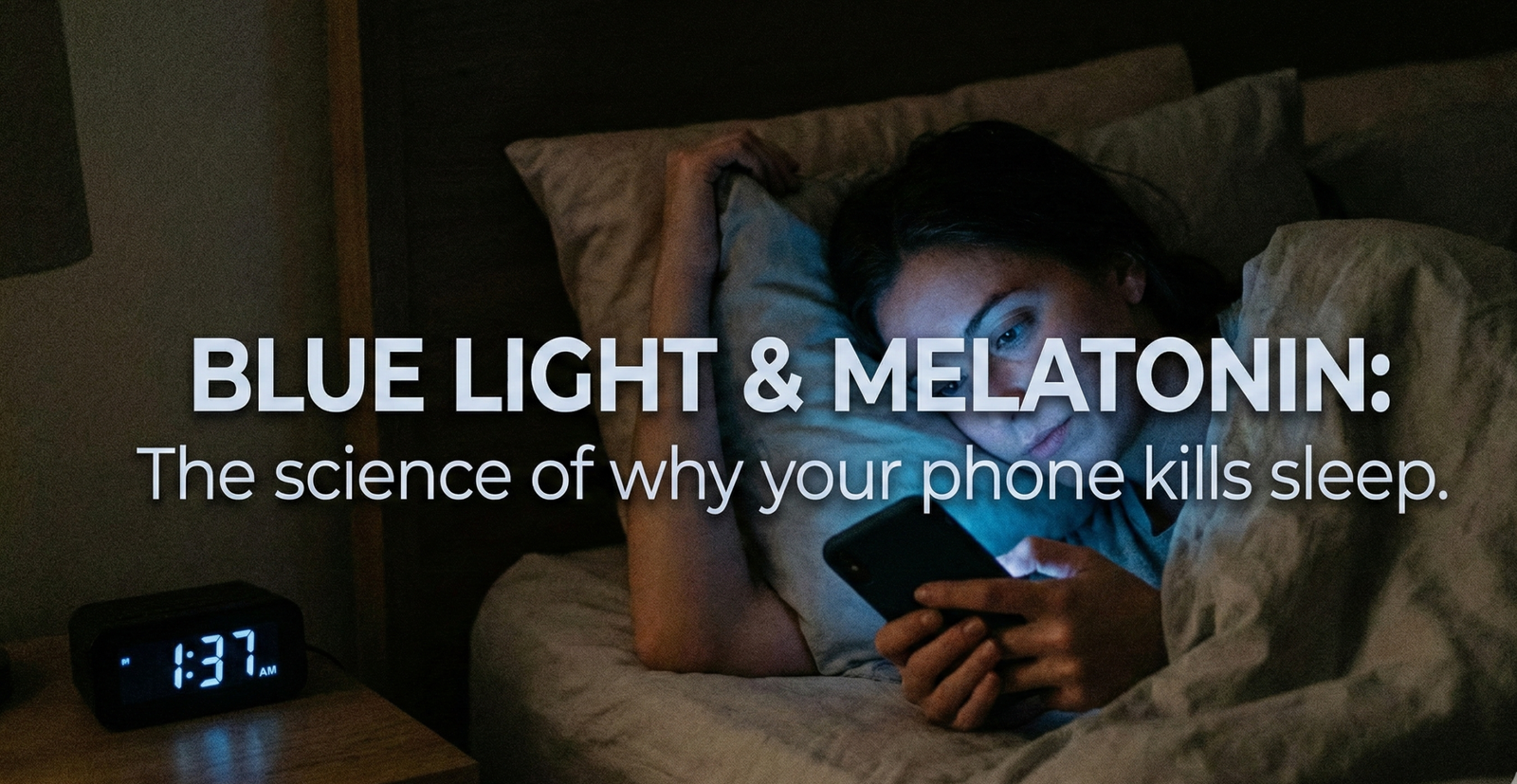

It is a familiar ritual for millions: you get into bed, lights out, and reach for your phone “just for a minute.” An hour later, you are still scrolling, wide awake. While we often blame the engaging content of social media for keeping us up, the primary culprit is biological, not just behavioral.
At Formal Psychology, we explore the intersection of biology and behavior. To understand why your phone is the enemy of rest, we must look at the relationship between blue light, the hormone melatonin, and the ancient internal clock ticking inside your brain.
1. The Circadian Rhythm: Your Internal Master Clock
Human beings are diurnal creatures; we are evolved to be active during the day and rest at night. This cycle is governed by the circadian rhythm, a roughly 24-hour internal clock running in the background of your brain.
This clock is controlled by a tiny region in the hypothalamus called the Suprachiasmatic Nucleus (SCN). The SCN relies on external cues, primarily light, to synchronize your biological time with the environment. When light enters your eyes, it signals the SCN that it is daytime, triggering processes to keep you alert. When darkness falls, the SCN signals the body to wind down.
2. Enter Melatonin: The “Dracula Hormone”
Melatonin is a hormone produced by the pineal gland in the brain. It is often called the “Dracula of hormones” because it only comes out at night.
- Production: As the sun sets and light decreases, the SCN signals the pineal gland to start secreting melatonin.
- Function: Melatonin doesn’t exactly put you to sleep like a sedative; rather, it induces a state of “quiet wakefulness” that helps transition the body into sleep. It lowers body temperature and reduces alertness.
- The Peak: Melatonin levels typically peak between 2:00 AM and 4:00 AM, then drop as morning approaches.
3. The Blue Light Problem: Tricking the Brain
Not all light affects the circadian rhythm equally. Light on the blue end of the spectrum (short wavelength, high energy) is particularly potent at regulating the SCN. Sunlight contains a significant amount of blue light, which is beneficial during the day as it boosts attention, reaction times, and mood.
However, modern digital devices—smartphones, tablets, laptops, and LED TVs—emit a high concentration of this same blue light.
** The Mechanism of Disruption**
When you stare at your phone screen at night:
- Photoreception: Specialized cells in the retina called intrinsically photosensitive retinal ganglion cells (ipRGCs) detect the blue light.
- False Signal: These cells contain a photopigment called melanopsin, which is highly sensitive to blue light. They send a signal to the SCN mimicking daylight.
- Suppression: The SCN, believing it is still daytime, tells the pineal gland to halt or delay the production of melatonin.
Research suggests that exposure to blue light in the evening can push your sleep schedule back by up to three hours, essentially giving you a case of “social jet lag.”
4. The Psychological & Cognitive Cost
At Formal Psychology, we emphasize that biology drives psychology. The suppression of melatonin does more than just make you tired the next day; it alters your cognitive state.
- Cognitive Arousal: The content we consume (news, emails, social drama) creates emotional arousal, releasing cortisol and dopamine. Combined with blue light suppression of melatonin, this creates a state of “tired but wired.”
- Impact on REM Sleep: Even if you do fall asleep after scrolling, blue light exposure can reduce the amount of REM (Rapid Eye Movement) sleep you get. REM is crucial for emotional regulation and memory consolidation.
- Mental Health Correlation: Chronic sleep disruption is strongly linked to increased risks of anxiety, depression, and mood disorders.
5. How to protect your Sleep Hygiene
You don’t need to abandon technology to get a good night’s rest. Here are evidence-based strategies to mitigate the effects of blue light:
** The “2-Hour Rule”**
Stop using electronic devices at least 1 to 2 hours before bed. This allows melatonin production to rise naturally without interference.
** Use “Night Mode” or Flux**
Most smartphones and computers now have built-in “Night Shift” or “Eye Comfort” modes. These settings warm the color temperature of the screen, reducing blue light emission and replacing it with amber or red hues.
** Blue Light Blocking Glasses**
Amber-tinted glasses can block specific wavelengths of blue light. While not a cure-all, they can be effective if you must use screens late at night.
** Control Your Environment**
Use dim, warm-colored lighting (red or orange bulbs) in your bedroom. Avoid bright, white LED lights in the evening hours.
Conclusion
Your phone is a tool for connection, but biologically, it is a mini-sun that fits in your pocket. By understanding the neuroscience of the SCN and melatonin, you can take control of your sleep hygiene. Protecting your circadian rhythm is not just about feeling rested—it is a fundamental pillar of psychological health.