Menu
Formal Psychology
Search
Menu
  • Home
  • Branches of Psychology
    • Introduction to Psychology
    • Clinical Psychology
    • Cognitive Psychology
    • Behavioral Psychology
    • Developmental Psychology
    • Social Psychology
    • Bio Psychology
    • Positive Psychology
    • Statistical Methods
    • Health Psychology
    • Mental Health

Formal PsychologyFormal Psychology

  • Articles
  • Resources
    • About Us
    • Contact Us
    • Psychology Colleges
    • Flash Cards
    • Career Opportunities
    • Audiobooks
    • Certificate Verification
  • Policies
    • Privacy Policy
    • Terms & Conditions
    • Medical Disclaimer
    • Editorial Policy
Search
close
Generic selectors
Exact matches only
Search in title
Search in content
Post Type Selectors
Formal PsychologyFormal Psychology

close
  • Home
  • Branches of Psychology
    • Introduction to Psychology
    • Clinical Psychology
    • Cognitive Psychology
    • Behavioral Psychology
    • Developmental Psychology
    • Social Psychology
    • Bio Psychology
    • Positive Psychology
    • Statistical Methods
    • Health Psychology
    • Mental Health
  • Articles
  • Resources
    • Psychology Colleges
    • Flash Cards
    • Career Opportunities
    • Audiobooks
    • Certificate Verification
  • About Us
  • Contact Us
  • Privacy Policy
  • Policies
    • Privacy Policy
    • Terms & Conditions
    • Medical Disclaimer
    • Editorial Policy

Join the conversation

  • youtube
  • instagram
  • email
  • linkedin
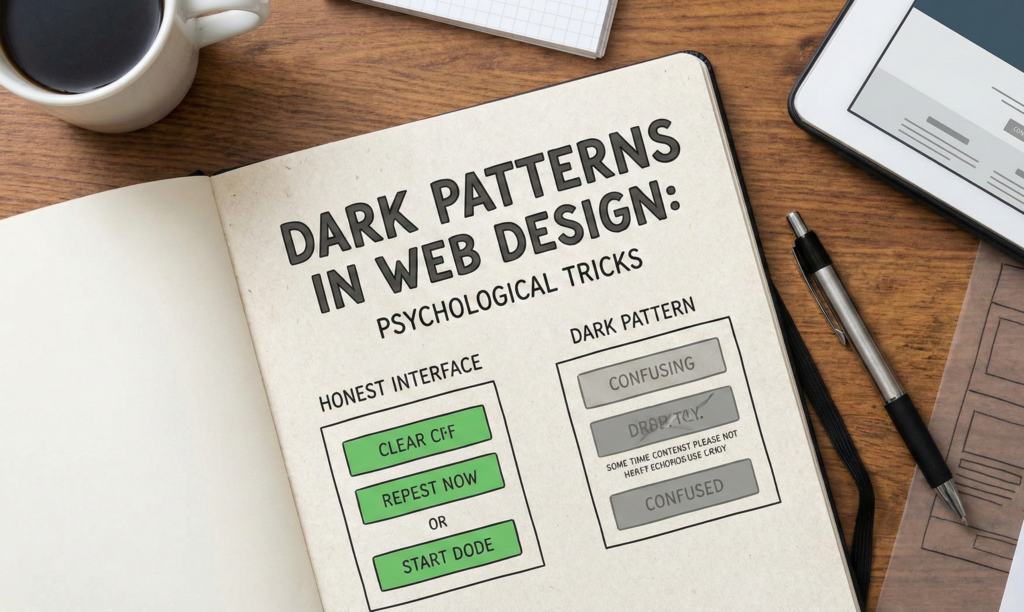
Overhead photograph of a notebook featuring a hand-drawn infographic comparing clear "Honest Interface" buttons with confusing "Dark Pattern" web design tricks.

Dark Patterns in Web Design: Psychological Tricks That Make You Click

  • Avatar photo
  • Posted byby Team Psychology
  • February 13, 2026
  • 4 min
  • Avatar photo
    • Share
A realistic coffee shop scene featuring a customer holding a mug with a brain-shaped logo, with a poster in the background reading "The Psychology of Branding: Why We Trust Certain Logos."

The Psychology of Branding: Why We Trust Certain Logos

  • Avatar photo
  • Posted byby Team Psychology
  • February 13, 2026
  • 4 min
  • Avatar photo
    • Share
A patient wearing a black VR headset sits in a therapist's office, gesturing with their hands. Beside them, a female clinical psychologist watches a computer monitor showing a simulated view from a tall skyscraper balcony.

Virtual Reality Therapy Treating Phobias with VR: A Clinical Guide

  • Avatar photo
  • Posted byby Team Psychology
  • February 13, 2026
  • 3 min
  • Avatar photo
    • Share
A vintage wooden card sorting machine labeled "Algorithmic Bias." It sorts index cards into "Preferred" and "Secondary" slots based on labels like "Male," "Ivy League," "Female," and "State School," symbolizing systemic prejudice in code.

Algorithmic Bias: When the Code Inherits Our Prejudices

  • Avatar photo
  • Posted byby Team Psychology
  • February 13, 2026
  • 3 min
  • Avatar photo
    • Share
Conceptual photograph showing a vintage leather journal and a stack of old black and white photos on a wooden desk. They are connected by glowing, ethereal light trails to a transparent tablet displaying a memorialized social media profile interface. The text "The Digital Legacy" is overlaid across the center of the image in a cream-colored serif font.

The Digital Legacy: What Happens to Our Online Personas After We’re Gone?

  • Avatar photo
  • Posted byby Team Psychology
  • February 13, 2026
  • 3 min
  • Avatar photo
    • Share
A futuristic illustration of a human brain merging with mechanical gears and circuit boards, featuring the text "The Psychology of Failure: Why 'Failing Fast' is a Tech Superpower" in the center.

The Psychology of Failure: Why “Failing Fast” is a Tech Superpower

  • Avatar photo
  • Posted byby Team Psychology
  • February 13, 2026
  • 3 min
  • Avatar photo
    • Share
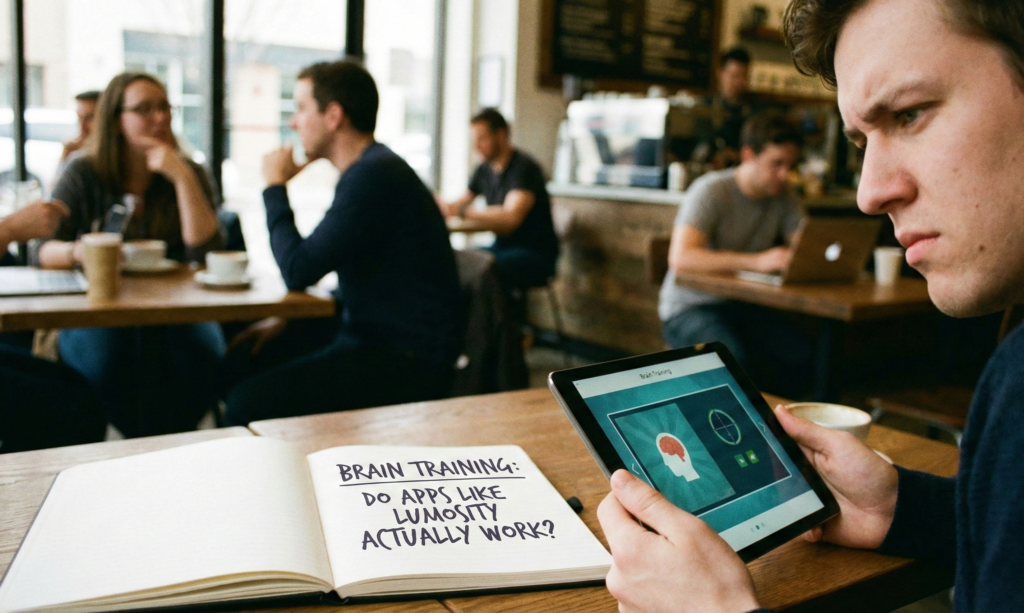
Candid photo of a man in a coffee shop looking skeptically at a tablet running brain training apps, next to a notebook asking "Brain Training: Do apps like Lumosity actually work?".

Brain Training Apps: Do Games Like Lumosity Actually Work?

  • Avatar photo
  • Posted byby Team Psychology
  • February 13, 2026
  • 3 min
  • Avatar photo
    • Share
A speaker standing at a wooden podium holding a microphone, facing a blurred audience in a dimly lit hall, with the text overlay "Public Speaking Anxiety: Overcoming the fear of being judged."

Public Speaking Anxiety: Overcoming the Fear of Being Judged

  • Avatar photo
  • Posted byby Team Psychology
  • February 13, 2026
  • 4 min
  • Avatar photo
    • Share
A thoughtful man looking at a laptop screen displaying a website, with the text overlay "THE PSYCHOLOGY OF USER EXPERIENCE (UX) WHY SOME WEBSITES 'FEEL' BETTER". A notebook with a brain sketch is visible on the desk.

The Psychology of Leadership: Leading with Empathy vs. Authority

  • Avatar photo
  • Posted byby Team Psychology
  • February 13, 2026
  • 3 min
  • Avatar photo
    • Share
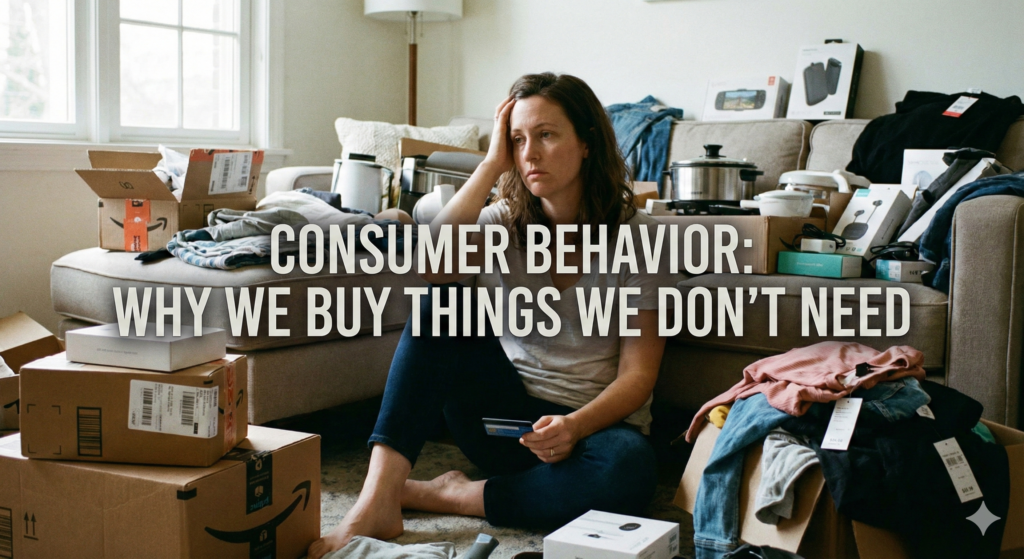
A candid photograph of a distressed woman sitting on a living room floor, overwhelmed by mounds of shipping boxes, new clothes with tags, and kitchen electronics, holding a credit card. Text overlay across the center reads: "CONSUMER BEHAVIOR: WHY WE BUY THINGS WE DON'T NEED."

Consumer Behavior: The Psychology Behind Why We Buy Things We Don’t Need

  • Avatar photo
  • Posted byby Team Psychology
  • February 13, 2026
  • 4 min
  • Avatar photo
    • Share
A woman sitting at a desk using a laptop, with a blue glowing digital brain schema overlaid on her head. Large white text across the image reads: "CYBERPSYCHOLOGY: HOW THE INTERNET IS CHANGING OUR BRAINS."

Cyberpsychology: How the Internet is Changing Our Brains

  • Avatar photo
  • Posted byby Team Psychology
  • February 13, 2026
  • 3 min
  • Avatar photo
    • Share
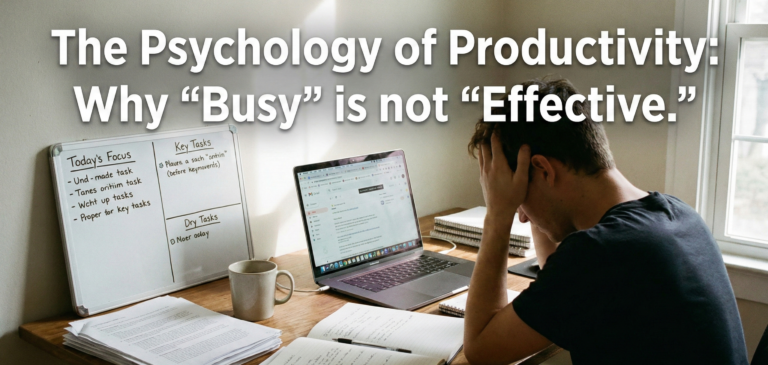
A person sits at a cluttered wooden desk with their head in their hands, appearing overwhelmed in front of an open laptop and notebooks. A whiteboard with handwritten tasks sits beside them. Large white text overlay reads: "The Psychology of Productivity: Why 'Busy' is not 'Effective.'"

The Psychology of Productivity: Why “Busy” is not “Effective”

  • Avatar photo
  • Posted byby Team Psychology
  • February 13, 2026
  • 3 min
  • Avatar photo
    • Share
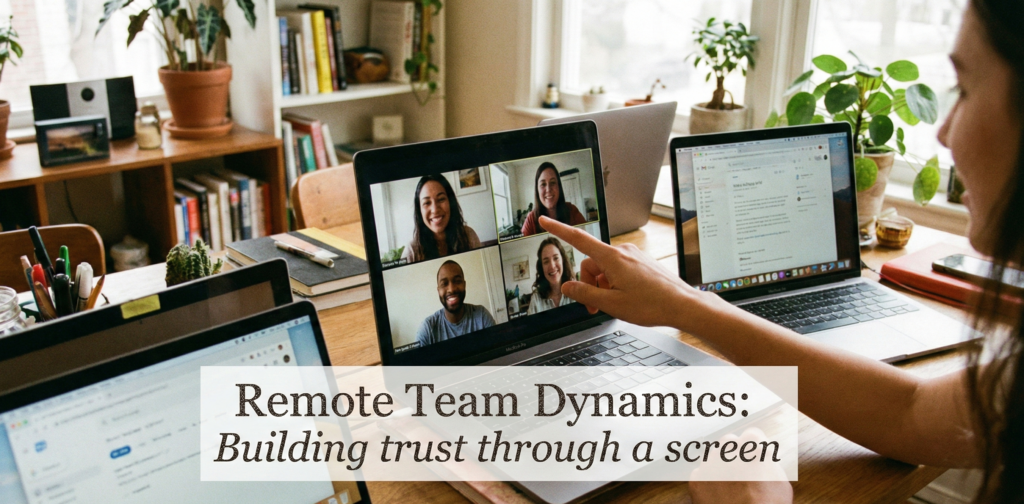
A professional working from a home office looking at colleagues on a video conference call, with the title text "Remote Team Dynamics: Building trust through a screen" overlaid in the center.

Remote Team Dynamics: Building Trust Through a Screen

  • Avatar photo
  • Posted byby Team Psychology
  • February 13, 2026
  • 3 min
  • Avatar photo
    • Share
A man in a business suit looking through binoculars at a crowd of people, symbolizing the psychology of wealth and how money changes social perception.

The Psychology of Wealth: How Money Changes The Way We See Others

  • Avatar photo
  • Posted byby Team Psychology
  • February 13, 2026
  • 4 min
  • Avatar photo
    • Share
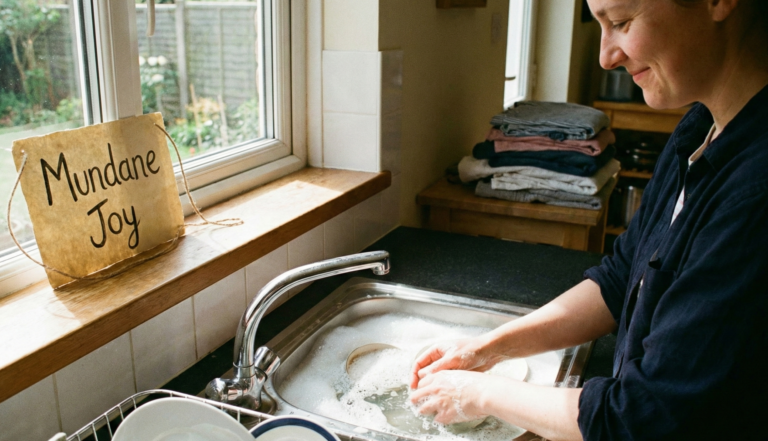
A woman smiling peacefully while washing dishes near a sunny window, illustrating the psychology of Mundane Joy and finding happiness in repetitive tasks.

The “Mundane” Joy: Finding Happiness in Repetitive Tasks

  • Avatar photo
  • Posted byby Team Psychology
  • February 13, 2026
  • 3 min
  • Avatar photo
    • Share
A realistic photograph of a home office setup featuring a laptop on a white desk, separated from a living room couch and bookshelf by a wooden slat room divider. A framed sign on the desk reads "WORK-FROM-HOME PSYCHOLOGY: MAINTAINING BOUNDARIES."

Work-from-Home Psychology: Maintaining Boundaries in a Home Office

  • Avatar photo
  • Posted byby Team Psychology
  • February 13, 2026
  • 2 min
  • Avatar photo
    • Share
A woman sitting at a wooden desk looking contemplatively at a tablet screen. The image features a text overlay that reads: "AI and Empathy: Can a machine ever truly 'understand' us?"

AI and Empathy: Can a Machine Ever Truly “Understand” Us?

  • Avatar photo
  • Posted byby Team Psychology
  • February 13, 2026
  • 4 min
  • Avatar photo
    • Share
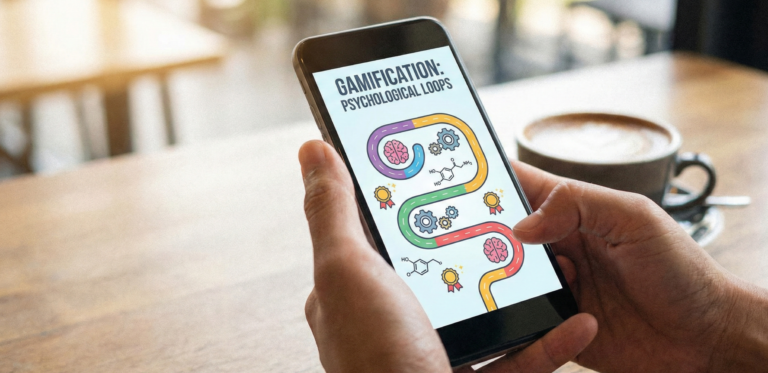
A close-up photograph of hands holding a smartphone in a cafe setting. The phone screen displays a graphic diagram titled "GAMIFICATION: PSYCHOLOGICAL LOOPS," illustrating a winding path connecting icons of human brains, mechanical gears, chemical structures representing dopamine, and reward badges.

Gamification Psychology: How Apps Use Psychological Loops to Keep You Hooked

  • Avatar photo
  • Posted byby Team Psychology
  • February 13, 2026
  • 3 min
  • Avatar photo
    • Share
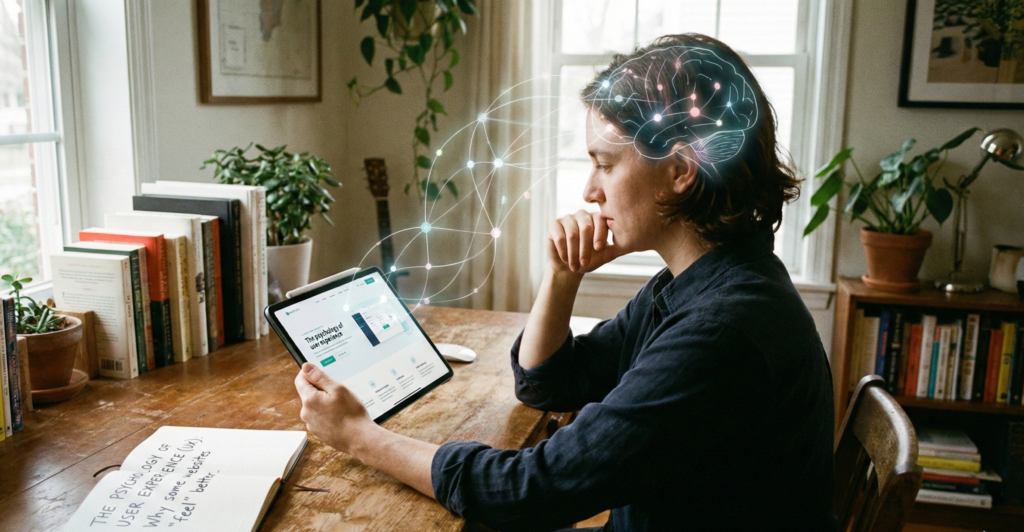
A candid photo of a person looking at a tablet, with a glowing, conceptual neural network connecting their brain to the device. An open notebook on the desk reads "THE PSYCHOLOGY OF USER EXPERIENCE (UX): Why some websites 'feel' better."

The Psychology of User Experience (UX): Why Some Websites “Feel” Better

  • Avatar photo
  • Posted byby Team Psychology
  • February 12, 2026
  • 4 min
  • Avatar photo
    • Share
A realistic scene of ancient Greek philosophers gathered around a table with scrolls and a stone tablet engraved with the text "Ancient Greece Philosophical Framework: The Cradle of Mind and Psychology," set against a backdrop of classical columns and temples.

Ancient Greece Philosophical Framework: The Cradle of Mind and Psychology

  • Avatar photo
  • Posted byby Team Psychology
  • February 12, 2026
  • 4 min
  • Avatar photo
    • Share
An ancient Egyptian papyrus scroll unrolled on a wooden desk featuring hieroglyphs, brain anatomy sketches, and the text "The Edwin Smith Papyrus & Pre-Scientific Psychology" across the center.

The Hidden Origins of Psychology: The Edwin Smith Papyrus and the Pre-Scientific Era

  • Avatar photo
  • Posted byby Team Psychology
  • February 12, 2026
  • 3 min
  • Avatar photo
    • Share
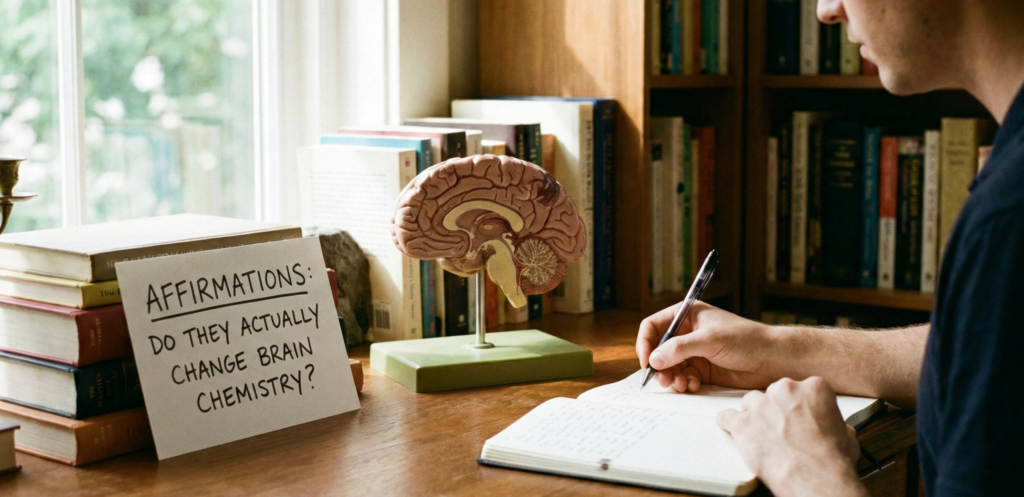
A person writing in a journal at a wooden desk with a model of the human brain, stacks of psychology books, and a handwritten note reading "Affirmations: Do they actually change brain chemistry?"

Do Affirmations Actually Change Brain Chemistry? The Neuroscience of Positive Self-Talk

  • Avatar photo
  • Posted byby Team Psychology
  • February 10, 2026
  • 3 min
  • Avatar photo
    • Share
A candid photo of a smiling woman in an armchair petting a golden retriever on her lap, with a rustic wooden sign on the wall behind them that reads "THE POWER OF PETS: How animals lower cortisol levels." The room is cozy and filled with books and plants.

The Power of Pets: How Animals Lower Cortisol Levels

  • Avatar photo
  • Posted byby Team Psychology
  • February 10, 2026
  • 3 min
  • Avatar photo
    • Share
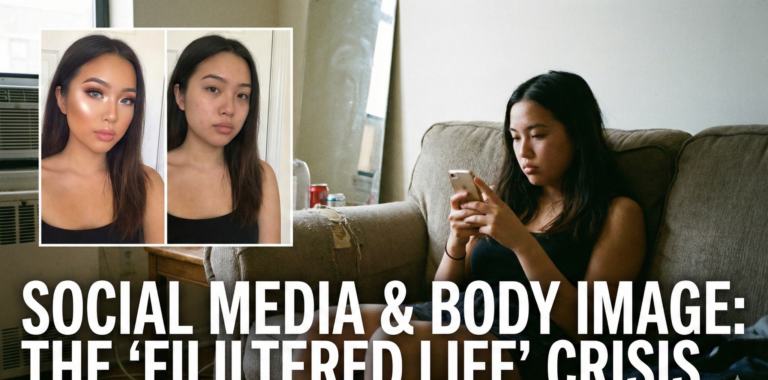
A documentary-style photograph of a young woman sitting on a couch, looking at her smartphone with a distressed expression. An inset overlay shows a side-by-side comparison of a heavily filtered glamorous selfie versus a natural, unedited photo of the same woman. Large white text across the bottom reads "SOCIAL MEDIA & BODY IMAGE: THE 'FILTERED LIFE' CRISIS".

Social Media & Body Image: The “Filtered Life” Crisis

  • Avatar photo
  • Posted byby Team Psychology
  • February 10, 2026
  • 3 min
  • Avatar photo
    • Share
A realistic street photography style image of a young Indian woman standing in a busy market street holding a cardboard sign that reads "Stigma in Mental Health: Breaking the Silence in India," surrounded by a blurred crowd.

Stigma in Mental Health: Breaking the Silence in India

  • Avatar photo
  • Posted byby Team Psychology
  • February 10, 2026
  • 3 min
  • Avatar photo
    • Share

Posts pagination

  • Newer Posts
  • 1
  • …
  • 19
  • 20
  • 21
  • 22
  • 23
  • …
  • 33
  • Older Posts

Trending

HOT RIGHT NOW

  • A woman sitting at a wooden desk looking contemplatively at a tablet screen. The image features a text overlay that reads: "AI and Empathy: Can a machine ever truly 'understand' us?"
    • Developmental Psychology
    Attachment in Infancy: Mary Ainsworth’s Strange Situation Protocol and Classification
    • Posted Team Psychology
    • 2 min
  • A realistic photograph of a home office setup featuring a laptop on a white desk, separated from a living room couch and bookshelf by a wooden slat room divider. A framed sign on the desk reads "WORK-FROM-HOME PSYCHOLOGY: MAINTAINING BOUNDARIES."
    • Developmental Psychology
    Language Acquisition: Noam Chomsky’s Universal Grammar vs. B.F. Skinner’s Verbal Behavior
    • Posted Team Psychology
    • 2 min
  • A woman smiling peacefully while washing dishes near a sunny window, illustrating the psychology of Mundane Joy and finding happiness in repetitive tasks.
    • Developmental Psychology
    Adolescent Brain Maturation: The Gap Between Limbic Reactivity and Prefrontal Executive Control
    • Posted Team Psychology
    • 2 min

Social

FOLLOW US

  • youtube
  • instagram
  • email
  • linkedin

Featured

Our best picks

  • A woman sitting at a wooden desk looking contemplatively at a tablet screen. The image features a text overlay that reads: "AI and Empathy: Can a machine ever truly 'understand' us?"
    • Developmental Psychology
    Attachment in Infancy: Mary Ainsworth’s Strange Situation Protocol and Classification
    • Posted Team Psychology
    • October 17, 2026
  • A realistic photograph of a home office setup featuring a laptop on a white desk, separated from a living room couch and bookshelf by a wooden slat room divider. A framed sign on the desk reads "WORK-FROM-HOME PSYCHOLOGY: MAINTAINING BOUNDARIES."
    • Developmental Psychology
    Language Acquisition: Noam Chomsky’s Universal Grammar vs. B.F. Skinner’s Verbal Behavior
    • Posted Team Psychology
    • October 17, 2026
  • A woman smiling peacefully while washing dishes near a sunny window, illustrating the psychology of Mundane Joy and finding happiness in repetitive tasks.
    • Developmental Psychology
    Adolescent Brain Maturation: The Gap Between Limbic Reactivity and Prefrontal Executive Control
    • Posted Team Psychology
    • October 17, 2026
before-footer-banner

Trending

Hot topics

  1. A woman sitting at a wooden desk looking contemplatively at a tablet screen. The image features a text overlay that reads: "AI and Empathy: Can a machine ever truly 'understand' us?"
    • Developmental Psychology
    Attachment in Infancy: Mary Ainsworth’s Strange Situation Protocol and Classification
    • Posted Team Psychology
    • October 17, 2026
  2. A realistic photograph of a home office setup featuring a laptop on a white desk, separated from a living room couch and bookshelf by a wooden slat room divider. A framed sign on the desk reads "WORK-FROM-HOME PSYCHOLOGY: MAINTAINING BOUNDARIES."
    • Developmental Psychology
    Language Acquisition: Noam Chomsky’s Universal Grammar vs. B.F. Skinner’s Verbal Behavior
    • Posted Team Psychology
    • October 17, 2026
  3. A woman smiling peacefully while washing dishes near a sunny window, illustrating the psychology of Mundane Joy and finding happiness in repetitive tasks.
    • Developmental Psychology
    Adolescent Brain Maturation: The Gap Between Limbic Reactivity and Prefrontal Executive Control
    • Posted Team Psychology
    • October 17, 2026

Popular

Top posts

  • A professional working from a home office looking at colleagues on a video conference call, with the title text "Remote Team Dynamics: Building trust through a screen" overlaid in the center.
    • Developmental Psychology
    Masked ADHD and Autism in Women: Gendered Camouflaging, Diagnostic Delay, and Mental Toll
    • Posted Team Psychology
    • 2 min
  • Gemini Generated Image 52u8fh52u8fh52u8 1
    • Developmental Psychology
    Diana Baumrind’s 4 Parenting Styles: Authoritative, Authoritarian, Permissive, and Neglectful Outcomes
    • Posted Team Psychology
    • 2 min
  • A person sits at a cluttered wooden desk with their head in their hands, appearing overwhelmed in front of an open laptop and notebooks. A whiteboard with handwritten tasks sits beside them. Large white text overlay reads: "The Psychology of Productivity: Why 'Busy' is not 'Effective.'"
    • Developmental Psychology
    Adverse Childhood Experiences (ACEs): Biological Embedding of Early Trauma in Adult Health
    • Posted Team Psychology
    • 2 min

Our Policies

  • Privacy Policy
  • Terms & Conditions
  • Medical Disclaimer
  • Editorial Policy
  • About Us
  • Contact Us

Our Products

  • Formal Psychology

  • PsiQ
  • Pavlov Shop
© Formal Psychology, All rights reserved | Powered by Novul Sphere