

At its core, psychology is the rigorous scientific study of behavior and mental processes. However, defining the scope of psychology requires moving beyond simple definitions to understand its ontological and epistemological foundations. For university-level scholars, psychology is a pluralistic science that integrates natural sciences (biology, neuroscience) with social sciences (sociology, anthropology).
The scope of psychology encompasses not only the intricate firing of neurons and the architecture of cognition but also the complex socio-cultural systems that shape human comportment. This comprehensive guide explores the historical evolution, methodological rigor, ethical boundaries, and critical contemporary debates that define modern psychological science.
1. Historical Context: The Evolution of Psychological Scope
To understand the current boundaries of psychology, we must examine its philosophical roots and structural evolution. The transition from philosophical speculation to empirical science expanded the discipline’s scope dramatically.
- Structuralism and Functionalism: Wilhelm Wundt’s establishment of the first experimental laboratory fundamentally shifted psychology’s scope toward the empirical measurement of consciousness (Structuralism). Shortly after, William James introduced Functionalism, expanding the scope to examine why behaviors evolved and how they help humans adapt to their environments.
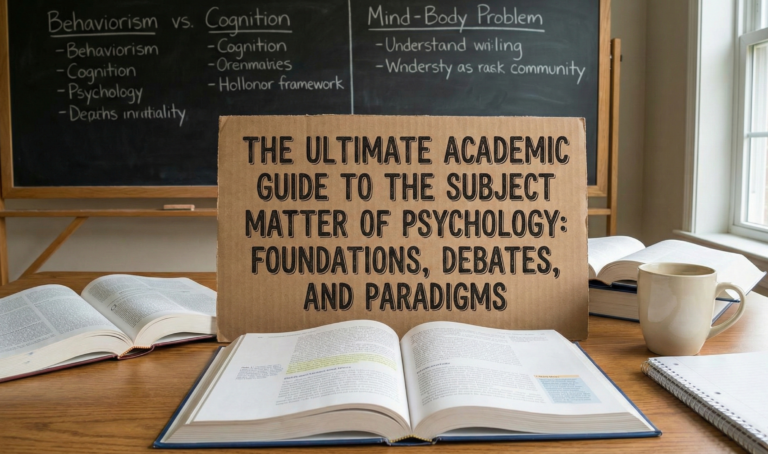
- Behaviorism vs. Psychoanalysis: By the early 20th century, the scope fractured. Behaviorists like John B. Watson and B.F. Skinner argued that psychology should strictly be the science of observable behavior, rejecting introspection. Conversely, Sigmund Freud’s psychoanalytic theory expanded the scope inward, emphasizing the profound influence of the unconscious mind and early childhood experiences.
- The Cognitive Revolution: In the 1950s and 60s, the scope shifted again. Reacting against the limitations of behaviorism, the cognitive revolution reintroduced mental processes—memory, language, and problem-solving—as highly measurable, fundamental aspects of psychological science.
2. Methodological Scope: How We Study the Mind
The validity of psychological science relies entirely on its research methodologies. The scope of what psychologists can claim is limited by the rigor of how they test it.
- Experimental Methods: The cornerstone of psychological research, allowing researchers to establish cause-and-effect relationships by manipulating independent variables and measuring dependent variables under highly controlled conditions.
- Correlational Studies: Used to identify relationships between variables when manipulation is unethical or impossible (e.g., studying the correlation between childhood trauma and adult anxiety).
- Qualitative Research and Psychometrics: The scope of measurement extends to subjective human experience via qualitative inquiry (interviews, ethnographic studies) and the highly mathematical field of psychometrics, which develops reliable and valid scales to measure abstract constructs like intelligence or personality traits.
3. Core Branches and Empirical Anchors
The theoretical scope of psychology is divided into specialized branches, each grounded in classic empirical studies.
Cognitive Psychology and Neuroscience
This branch maps internal mental processes and their biological underpinnings. The scope integrates heavily with neurobiology, using tools like fMRI to study localized brain activity.
Developmental Psychology
Studying the lifespan from conception to death, this branch owes much of its foundational scope to Jean Piaget’s stages of cognitive development. Modern developmental psychology now deeply integrates longitudinal studies to separate cohort effects from true developmental changes.
Social Psychology
Social psychology examines the profound impact of the social environment on individual comportment. Classic empirical examples that defined this scope include Stanley Milgram’s obedience experiments and Solomon Asch’s conformity studies, which demonstrated how powerful situational forces can override individual personality.
Clinical and Advanced Applied Psychology
The applied scope translates research into practice. In Clinical Psychology, the focus is on the diagnosis and treatment of severe psychopathology. For students aiming for the highest level of direct clinical practice and patient care, the Psy.D. (Doctor of Psychology) serves as the ultimate terminal degree, prioritizing therapeutic application over research generation.
Other vital applied fields include Industrial-Organizational (I-O) Psychology (optimizing workplace behavior and human-computer interactions) and Forensic Psychology (applying psychometric and clinical assessments within the legal system).
4. The Ethical Scope: APA Guidelines
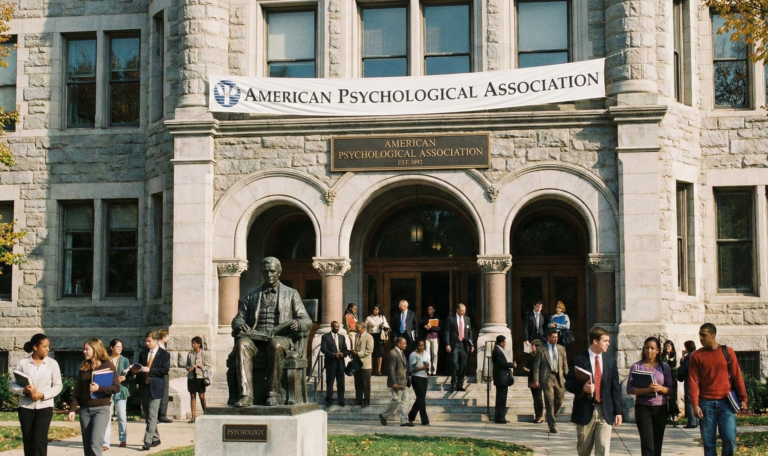
The scope of what psychologists can do is strictly bounded by what they should do. The American Psychological Association (APA) establishes strict ethical boundaries for both clinical practice and research to protect human rights.
- Beneficence and Nonmaleficence: The foundational mandate to maximize benefit and strictly avoid inflicting harm on clients or research participants.
- Fidelity, Responsibility, and Integrity: Maintaining professional boundaries, avoiding conflicts of interest, and ensuring absolute honesty and transparency in research data reporting.
- Justice and Respect for People’s Rights: Ensuring equitable access to psychological services and rigidly enforcing informed consent, privacy, and confidentiality.
5. Contemporary Debates: The Limitations of Scope
At the graduate level, studying the scope of psychology means critiquing its flaws. The discipline is currently undergoing a massive paradigm shift driven by two critical debates:
The WEIRD Bias
In 2010, researchers highlighted a severe limitation in the scope of psychological knowledge: roughly 95% of psychological samples come from countries representing only 12% of the global population. This population is WEIRD (Western, Educated, Industrialized, Rich, and Democratic). Over-relying on WEIRD samples means many “universal” psychological truths fail to replicate in cross-cultural contexts, forcing the discipline to aggressively expand its demographic scope to ensure true global validity.
The Replication Crisis
Emerging in the early 2010s, the replication crisis revealed that many classic, widely taught psychological studies (including concepts like ego depletion) could not be reproduced by independent researchers. Driven by small sample sizes, publication bias, and questionable research practices like p-hacking, this crisis has birthed a new scope of study: Metascience. The field is now adopting “Open Science” practices, such as preregistration of studies, to restore empirical credibility.
Conclusion
The scope of psychology is not a static list of topics, but a living, breathing scientific framework. From the philosophical debates of the 19th century to the sophisticated neuroimaging and cross-cultural analyses of the 21st century, psychology continually refines its boundaries. For the advanced student, mastering the scope of psychology means embracing its multi-disciplinary nature, upholding its ethical standards, and critically engaging with the debates that will shape its future.