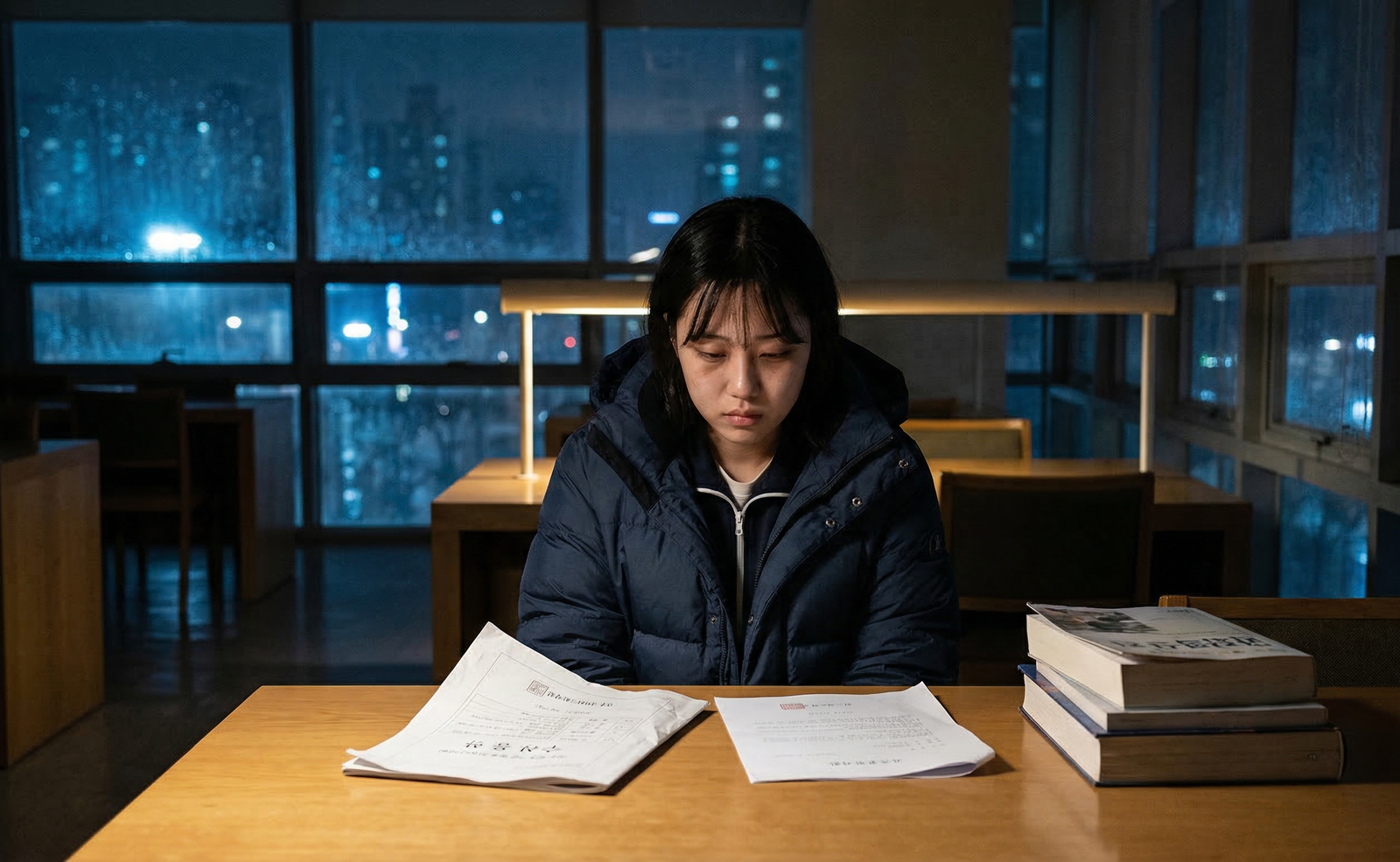
Once a year in November, South Korea essentially falls silent for a test that sits at the center of a nationwide Suneung exam mental health crisis. Government offices open late to clear the roads, the stock market delays its opening bell, and police officers are on standby to escort running students. Most strikingly, for 35 minutes in the afternoon, all domestic and international flights are grounded to ensure absolute silence for the listening portion of the test.
This nationwide mobilization is for the College Scholastic Ability Test (CSAT), known locally as the Suneung. While standardized testing is common worldwide, the Suneung is a distinct cultural and psychological phenomenon. For hundreds of thousands of high school students, this singular, eight-hour marathon exam is viewed as the ultimate determinant of their future—shaping not just university admissions, but career prospects, social standing, and even marriage viability.
But what happens to the human mind under this level of sustained, high-stakes pressure? From a psychological perspective, the Suneung exam mental health toll offers a stark look at the consequences of extreme stress, perfectionism, and burnout on youth.
The Suneung: A Nine-Hour Psychological Marathon
The Suneung is a grueling endurance test. Spanning up to nine hours (with short breaks), students are tested on Korean language, mathematics, English, Korean history, and various elective subjects.
In South Korea, society is often described as a “one-shot society.” The Suneung is administered only once a year, and if a student fails to achieve their desired score, their primary option is to wait an entire year to retake it. These retakers, known as jaesusaeng, often spend that gap year enrolled in highly disciplined private academies, dedicating another 12 months solely to exam preparation.
The ultimate goal for many is admission into one of the “SKY” universities (Seoul National University, Korea University, and Yonsei University). Admission to these prestigious institutions is seen as a golden ticket, creating a hyper-competitive environment where students are no longer just learning; they are locked in statistical triage.
The Psychological Toll: Sleep Deprivation and Burnout
The preparation for the Suneung begins years in advance. After regular school hours, a vast majority of students attend hagwons (private cram schools) late into the night. It is not uncommon for teenagers to study upwards of 12 to 16 hours a day.
This lifestyle breeds a dangerous normalization of chronic sleep deprivation. A grim, well-known proverb among Korean students dictates: “Sleep three hours, you pass. Sleep five hours, you fail.” Psychologically and neurologically, the impacts of this lifestyle are severe:
- Cognitive Exhaustion: Chronic lack of sleep impairs memory consolidation, emotional regulation, and critical thinking—ironically hindering the very skills required for academic success.
- Clinical Burnout: Surveys indicate that 1 in every 3 South Korean students experiences clinical burnout before even reaching high school.
- Anxiety and Depression: The relentless cycle of studying leaves little to no time for socialization, hobbies, or identity development outside of academia, leading to staggering rates of Generalized Anxiety Disorder (GAD) and clinical depression among adolescents.
Cultural Underpinnings: The Weight of Filial Piety
To understand the Suneung, one must look at the socio-cultural dynamics at play. The pressure does not just come from a desire for a high-paying job; it is deeply rooted in Confucian ideals.
Under the principle of Hyo (filial piety), a child’s academic success is a reflection of the entire family’s honor. Conversely, academic failure is often internalized as a betrayal of the parents’ sacrifices. This creates a psychological environment where a student’s inherent self-worth is conditionally tied to their academic output. The fear of disappointing parents, combined with the social stigma of falling behind peers, traps students in a constant state of hyper-vigilance and fear of failure.
Furthermore, these deep-rooted cultural values often create a “silence barrier.” Admitting to psychological distress is frequently stigmatized, making it incredibly difficult for struggling youth to seek out therapeutic help or counseling.
The Darkest Consequence: A Mental Health Crisis
The most tragic symptom of this academic pressure cooker is its impact on mortality. South Korea currently has the highest youth suicide rate among OECD countries. Academic stress is consistently cited as a leading cause of suicidal ideation and self-harm among middle and high school students, making the Suneung exam mental health conversation more critical than ever.
When the Suneung results are released, mental health professionals and hotlines go on high alert. For a teenager whose brain is still developing, the realization that a single test score might derail their lifelong trajectory can trigger acute psychological crises, leading to feelings of hopelessness and despair.
The “N-po Generation”: Long-Term Impacts
The psychological damage does not magically vanish once the exam is over. The trauma of this hyper-competitive upbringing has given rise to the “N-po generation”—a sociological term for young adults who have given up on an indefinite number (N) of life milestones, such as dating, marriage, having children, and homeownership.
Having spent the first two decades of their lives focusing entirely on rote memorization and out-competing their peers, many young adults enter the workforce severely lacking in interpersonal skills and intrinsic motivation. The prolonged denial of childhood exploration and emotional development leaves many feeling hollow, leading to mid-life crises occurring as early as a person’s twenties.
Steps Toward Healing
Awareness of this crisis is growing. In recent years, the South Korean government has acknowledged the severity of the issue, with leaders referring to the youth mental health crisis as a “social disaster.”
Recent interventions include:
- Removing “Killer Questions”: The government recently banned overly complex, esoteric questions from the Suneung that forced students to rely on expensive hagwons.
- Mental Health Curriculums: Introducing social and emotional learning into public school curriculums to help students build resilience.
- Expanding Pathways: A gradual cultural push to value vocational schools, technology sectors, and the arts, proving that the Suneung is not the only path to a successful life.
Ultimately, the Suneung is a mirror reflecting a society that highly prizes excellence and discipline. However, from a psychological standpoint, human beings are not machines. Until the educational paradigm shifts from viewing students as test-taking data points to treating them as multifaceted individuals, the mental health toll of South Korea’s academic pressure cooker will remain a critical concern.