

In the realm of cross-cultural psychology, understanding how different societies construct social identity is crucial. For Western cultures, identity is often highly individualistic, driven by internal self-esteem. However, in collectivist societies—particularly within Chinese culture—social identity is heavily mediated by the external, interpersonal concept of “Face.”
Known primarily as Mianzi (面子), this concept is a cornerstone of Chinese social psychology. It dictates how individuals interact, resolve conflicts, and build trust. To truly understand social dynamics in East Asia, psychologists and sociologists must look beyond Western paradigms and examine the profound influence of Face.
What is “Face” in Psychology?
In psychological terms, “Face” refers to an individual’s claimed sense of positive public image within a social network. While the phrase “saving face” is used globally to describe avoiding embarrassment, the Chinese conceptualization is much deeper, acting as a social currency that can be earned, lost, given, or taken away.
In Chinese social psychology, “Face” is traditionally divided into two distinct but deeply intertwined constructs: Lian (脸) and Mianzi (面子).
1. Lian (Moral Face)
Lian represents the confidence of society in the moral character of an ego. It is the baseline of human decency and moral integrity. Losing Lian means a person has violated fundamental moral codes or social norms, resulting in deep shame and potential ostracization from the community. It is an internalized moral standard that is judged externally.
2. Mianzi (Social Face)
Mianzi is more closely related to prestige, reputation, and social standing. It is the social image one achieves through success, wealth, education, or influential connections. Unlike Lian, which is a baseline you must maintain, Mianzi is a dynamic status you can actively build and accumulate. You can survive socially with low Mianzi, but losing Lian is socially devastating.
The Psychological Mechanisms of Mianzi
How does Mianzi operate on a psychological level? It is deeply rooted in the need for social harmony and belonging.
Collectivism and Interdependent Self-Construal
In individualistic cultures, people possess an independent self-construal—they view themselves as distinct from others. In Chinese culture, people generally possess an interdependent self-construal. An individual’s identity is defined by their relationships and their place within a social hierarchy. Therefore, Mianzi is not just about personal pride; it is about fulfilling role expectations to maintain the harmony of the group.
The Role of Guanxi (Social Networks)
Mianzi is inextricably linked to Guanxi (关系), which translates to interpersonal connections or networks. Mianzi acts as the currency of Guanxi. If you have high Mianzi, your network expands, and you gain access to resources and favors. Conversely, strong Guanxi helps you build more Mianzi. The two feed into a psychological feedback loop of social reinforcement.
The Behavioral Dynamics of Face
The concept of Face dictates specific, observable behaviors in daily Chinese social interactions. Psychologists categorize these into three main dynamics:
1. Giving Face (Gei Mianzi)
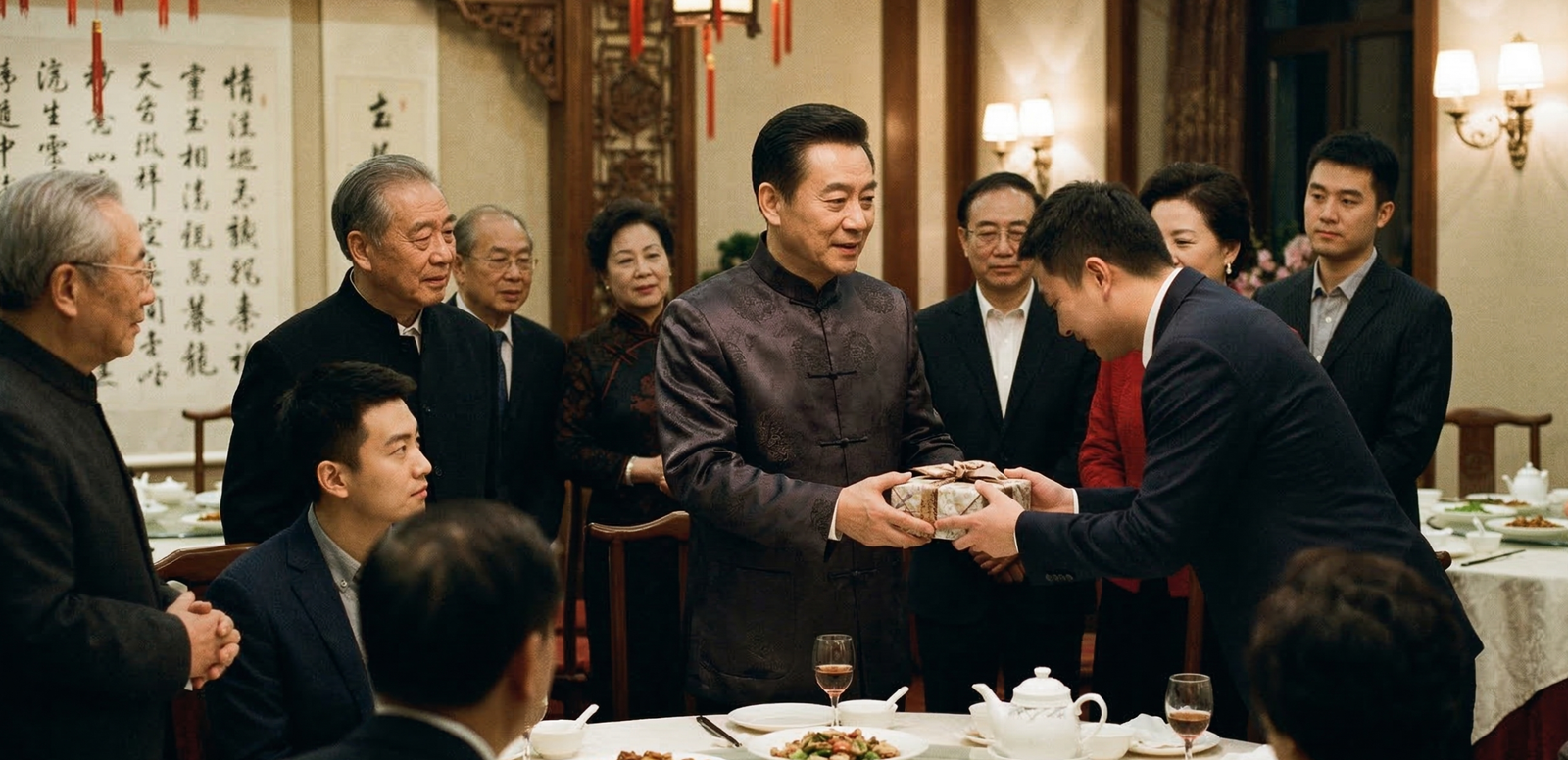
Giving face involves publicly elevating someone’s prestige. This can be done through compliments, showing deference, presenting gifts, or giving someone a prominent seat at a dinner table. Psychologically, giving face builds trust and strengthens Guanxi, initiating a principle of reciprocity.
2. Losing Face (Diu Lian / Diu Mianzi)
Losing face occurs when an individual fails to meet the expectations of their social role, faces public criticism, or is openly contradicted. In Chinese social psychology, the fear of losing face is a powerful motivator. It relies heavily on a “shame culture” (external social regulation) rather than a “guilt culture” (internal self-regulation).
3. Saving Face (Liu Mianzi)
To preserve social harmony, Chinese communication is often high-context and indirect. Individuals go to great lengths to save their own face and the face of others. This is why a direct “no” is often avoided in business and personal negotiations. Instead, people might use phrases like “let me think about it” or “it might be inconvenient” to reject a proposal without causing the other party to lose face.
Implications for Modern and Cross-Cultural Psychology
The concept of Mianzi is not just a cultural quirk; it has profound implications for globalized environments:
- Conflict Resolution: Western therapeutic and mediation models often emphasize direct communication and “getting things out in the open.” In a Mianzi-driven culture, this directness can cause severe social damage. Therapists and mediators must employ indirect strategies that allow all parties to save face.
- Mental Health: The intense pressure to maintain Mianzi can lead to significant psychological stress, anxiety, and depression. Acknowledging this cultural pressure is vital for clinical psychologists working with Chinese populations.
- Organizational Behavior: In multinational corporations, misunderstandings often arise between Western managers who value blunt feedback and Chinese employees who perceive such feedback as a profound loss of face. Understanding Mianzi is essential for effective cross-cultural leadership and team cohesion.
Conclusion
Mianzi is the invisible scaffolding that supports Chinese social structures. For formal psychology, studying Mianzi provides a vital lens through which we can understand the powerful impact of culture on human cognition, emotion, and behavior. By recognizing the delicate balance of Lian and Mianzi, we gain a richer, more accurate understanding of the interdependent human psyche.