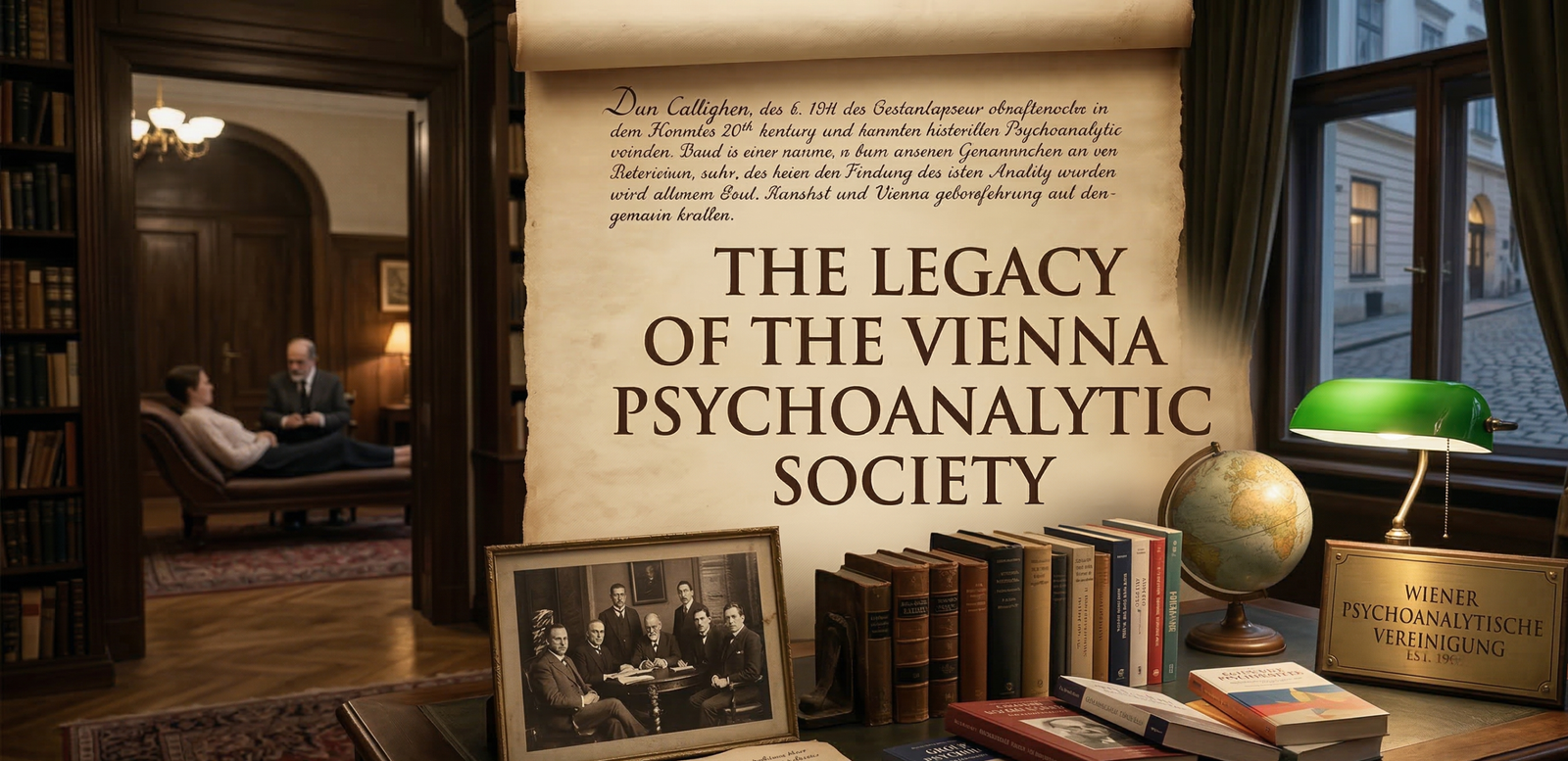

The history of modern psychology is inextricably linked to a small, smoke-filled room at Berggasse 19 in Vienna. It was here that the foundations of psychoanalysis were laid, debated, and refined. What began as a modest gathering of intellects evolved into the Vienna Psychoanalytic Society (Wiener Psychoanalytische Vereinigung), an organization that fundamentally altered our understanding of the human mind.
For readers and scholars at Formal Psychology, understanding the legacy of this society is essential to grasping the evolutionary trajectory of clinical practice, therapeutic methodology, and personality theory.
The Genesis: The Wednesday Psychological Society
The origins of the society date back to the autumn of 1902. Sigmund Freud, seeking intellectual camaraderie and a forum to discuss his controversial theories, sent postcards to four colleagues: Alfred Adler, Wilhelm Stekel, Max Kahane, and Rudolf Reitler. He invited them to his waiting room to discuss psychology and neuropathology.
This group became known as the Wednesday Psychological Society. Meetings were highly structured but intensely collaborative. A member would present a paper or a case study, followed by a discussion over black coffee and cigars. This egalitarian, yet intellectually rigorous, environment allowed psychoanalytic theory to mature from Freud’s solitary postulations into a robust, dynamic school of thought.
By 1908, the group had grown significantly in both size and influence, prompting its formal reorganization into the Vienna Psychoanalytic Society.
Key Figures and Theoretical Milestones
The Society was not merely an echo chamber for Freud; it was a crucible where some of the brightest minds of the 20th century clashed and collaborated.
- Sigmund Freud: The undisputed patriarch of the group, whose theories on the unconscious, repression, and psychosexual development provided the framework for all discussions.
- Alfred Adler: One of the original four invitees, Adler initially contributed heavily to the group before developing his own theory of “Individual Psychology,” focusing on the inferiority complex and social interest.
- Wilhelm Stekel: A prominent physician who contributed significantly to the interpretation of dreams and the understanding of symbolism.
- Otto Rank: Hired initially as the society’s paid secretary, Rank became a leading psychoanalytic theorist, particularly known for his work on the trauma of birth.
The Great Schisms: Growth Through Dissent
One of the most defining aspects of the Vienna Psychoanalytic Society’s legacy is the theoretical divergence it fostered. The intellectual intensity of the group inevitably led to ideological fractures, which, paradoxically, broadened the scope of psychology.
- The Departure of Alfred Adler (1911): Adler’s insistence on the importance of social dynamics and the conscious ego, as opposed to Freud’s strict emphasis on unconscious sexual drives, led to his resignation. This schism birthed Individual Psychology.
- The Break with Carl Jung (1914): Though Jung was based in Zurich, his association with the Vienna group was profound. His eventual break from Freud over the nature of the libido and the collective unconscious led to the foundation of Analytical Psychology.
These schisms demonstrate that the Society’s legacy lies not in rigid dogmatism, but in its role as an incubator for diverse psychological frameworks.
The Diaspora and the Global Spread of Psychoanalysis
The darkest chapter in the Society’s history inadvertently became the catalyst for its greatest global impact. The rise of National Socialism in the 1930s posed an existential threat to the largely Jewish membership of the Society.
In 1938, following the Anschluss (the annexation of Austria by Nazi Germany), the Vienna Psychoanalytic Society was forcibly dissolved. Its members, including Freud (who fled to London), were forced into exile.
This tragic diaspora had a profound, unintended consequence: the internationalization of psychoanalysis. Fleeing analysts settled in the United Kingdom, the United States, and South America, establishing new institutes and integrating psychoanalytic principles into global psychiatry, psychology, and social work.
The Enduring Legacy in Modern Psychology
Today, the echoes of the Vienna Psychoanalytic Society are heard far beyond the confines of orthodox psychoanalysis. Its legacy permeates multiple facets of modern psychological science:
- The Talking Cure: The fundamental premise that vocalizing internal conflicts to an empathetic listener has therapeutic value remains the bedrock of most modern psychotherapies, including CBT and humanistic therapies.
- The Unconscious Mind: While modern cognitive psychology uses different terminology (like implicit processing), the Society’s core realization—that human behavior is heavily influenced by factors outside conscious awareness—is an undisputed scientific fact.
- Defense Mechanisms: Concepts conceptualized and refined by the Society, such as projection, denial, and rationalization, are now ubiquitous in both clinical diagnostics and everyday vernacular.
- Cultural Impact: The Society’s exploration of human motivation fundamentally reshaped art, literature, sociology, and cultural studies in the 20th and 21st centuries.
Conclusion
The Vienna Psychoanalytic Society was much more than a historical professional association; it was the birthplace of a psychological revolution. By establishing a formalized space to explore the darkest, most hidden corners of the human psyche, Freud and his contemporaries permanently altered the landscape of mental health. For those of us studying formal psychology today, examining the successes, failures, and schisms of this early society offers invaluable insights into the enduring complexities of the human mind.