
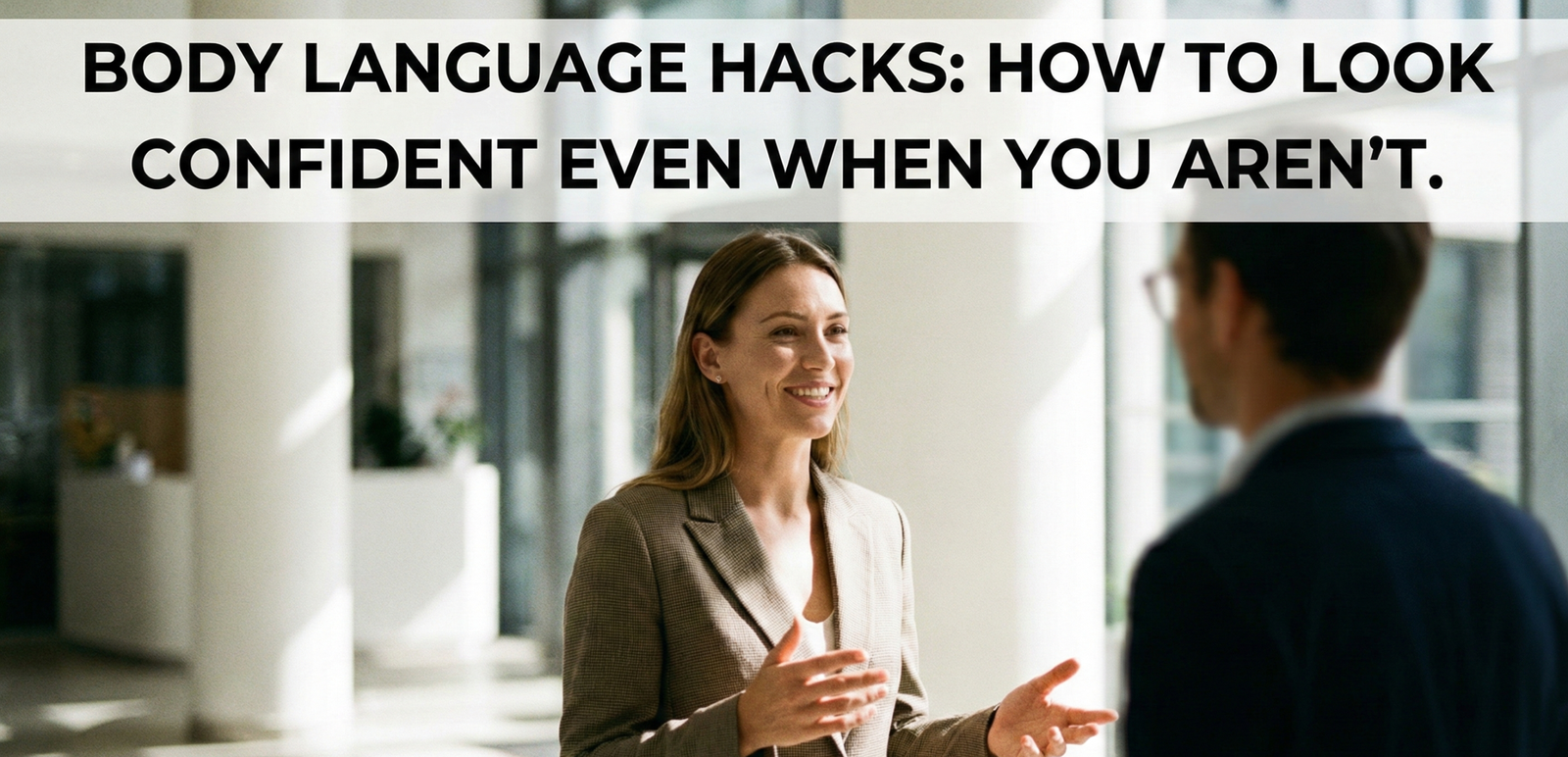
Confidence is often misunderstood as a fixed personality trait—you either have it or you don’t. However, from a psychological perspective, confidence is as much a behavior as it is a feeling.
The connection between the mind and body is bidirectional. While your emotions dictate your posture, your posture can also dictate your emotions. This phenomenon, rooted in the facial feedback hypothesis and embodied cognition, suggests that by consciously altering your physical state, you can not only change how others perceive you but also how you feel about yourself.
Whether you are walking into a job interview, a first date, or a high-stakes presentation, here are scientifically grounded body language hacks to project confidence—even if you are trembling on the inside.
1. The “Power Pose” Effect
One of the most famous concepts in social psychology is “power posing.” While the extent of its hormonal impact is debated, the psychological benefit of taking up space is well-documented.
When we feel insecure, we tend to shrink. We cross our legs, hunch our shoulders, and minimize our physical footprint. To look confident:
- Expand Your Frame: Stand with your feet shoulder-width apart. This “grounded” stance signals stability.
- Uncross Your Arms: Open body language signals that you are receptive and unafraid. Exposing your torso (the most vulnerable part of your body) is a primal signal of comfort and dominance over your environment.
- The Superman Stance: Before entering a stressful room, spend two minutes standing with hands on hips and chest out. It helps reset your mindset from “threat” to “challenge.”
2. Master the Art of Eye Contact
Eye contact is the single most powerful tool for building rapport, but it is a delicate balance. Too little makes you look evasive or submissive; too much makes you look aggressive.
The Triangle Technique: To maintain confident but non-threatening eye contact, visualize an inverted triangle connecting the other person’s eyes and mouth. Rotate your gaze between these three points every 5–10 seconds. This keeps you engaged without turning it into a staring contest.
The “Sticky Eyes” Method: When finishing a sentence or looking away, do it slowly. Darting your eyes away quickly signals nervousness. Imagine your eyes are “stuck” to the listener and have to be peeled away gently.
3. Control Your Hands (The Steeple vs. The Fig Leaf)
What you do with your hands often betrays your anxiety.
- Avoid “The Fig Leaf”: Clasping your hands in front of your groin is a classic defensive posture that signals insecurity.
- Avoid Pockets: Hiding hands suggests you have something to hide or are disengaged.
- Use “The Steeple”: Touch the fingertips of one hand to the fingertips of the other, forming a church steeple. This gesture is universally recognized as a sign of deep confidence and intelligence. Use it sparingly during negotiations or when making a key point.
4. The Mirroring Technique
Mirroring is the subconscious replication of another person’s nonverbal signals. When done subtly, it builds trust and makes you appear more in control of the social dynamic.
If your conversation partner leans forward, wait a few seconds and lean forward too. If they speak slowly, match their pace. This psychological synchronization makes the other person feel “seen” and validates your presence in the conversation, naturally boosting your perceived status.
5. Chin Up (Literally)
The angle of your chin communicates your hierarchy in a social setting.
- Too Low: Looking down through your eyebrows can make you look submissive or, conversely, aggressive (the “Kubrick Stare”).
- Too High: Looking down your nose at people signals arrogance.
- The Sweet Spot: Keep your chin level with the floor. Imagine a string pulling the crown of your head toward the ceiling. This elongates the neck and aligns the spine, naturally correcting “tech neck” and projecting alertness.
6. Slow Down Your Movements
Anxiety manifests as kinetic energy—fidgeting, tapping, and rapid movements. Confident people move with intention.
- The Anti-Fidget Rule: If you are sitting, plant your feet firmly. If you are standing, choose a spot and stay there.
- Deliberate Gestures: When you use your hands to speak, make the gestures smooth and wide rather than jerky and close to the body. Slowing down your physical tempo signals that you are not in a rush and are comfortable in the moment.
7. The Psychology of the Smile
A nervous smile is quick and only engages the mouth. A confident, genuine smile (the Duchenne smile) engages the eyes.
- Don’t Over-Smile: Smiling constantly in a serious setting can be interpreted as a submissive appeasement signal.
- Smile with Purpose: Smile when greeting, when making a connection, or when amused. A deliberate smile is a gift; a nervous smile is a shield.
Conclusion: Fake It Until You Become It
Using these body language hacks isn’t about being inauthentic. It is about using behavioral psychology to bypass your brain’s fear response. By acting confident, you signal safety to your amygdala (the brain’s fear center), which in turn lowers your cortisol levels and allows you to actually become confident.
Start with one hack—like uncrossing your arms or slowing your walk—and observe how the world reacts to you differently.