
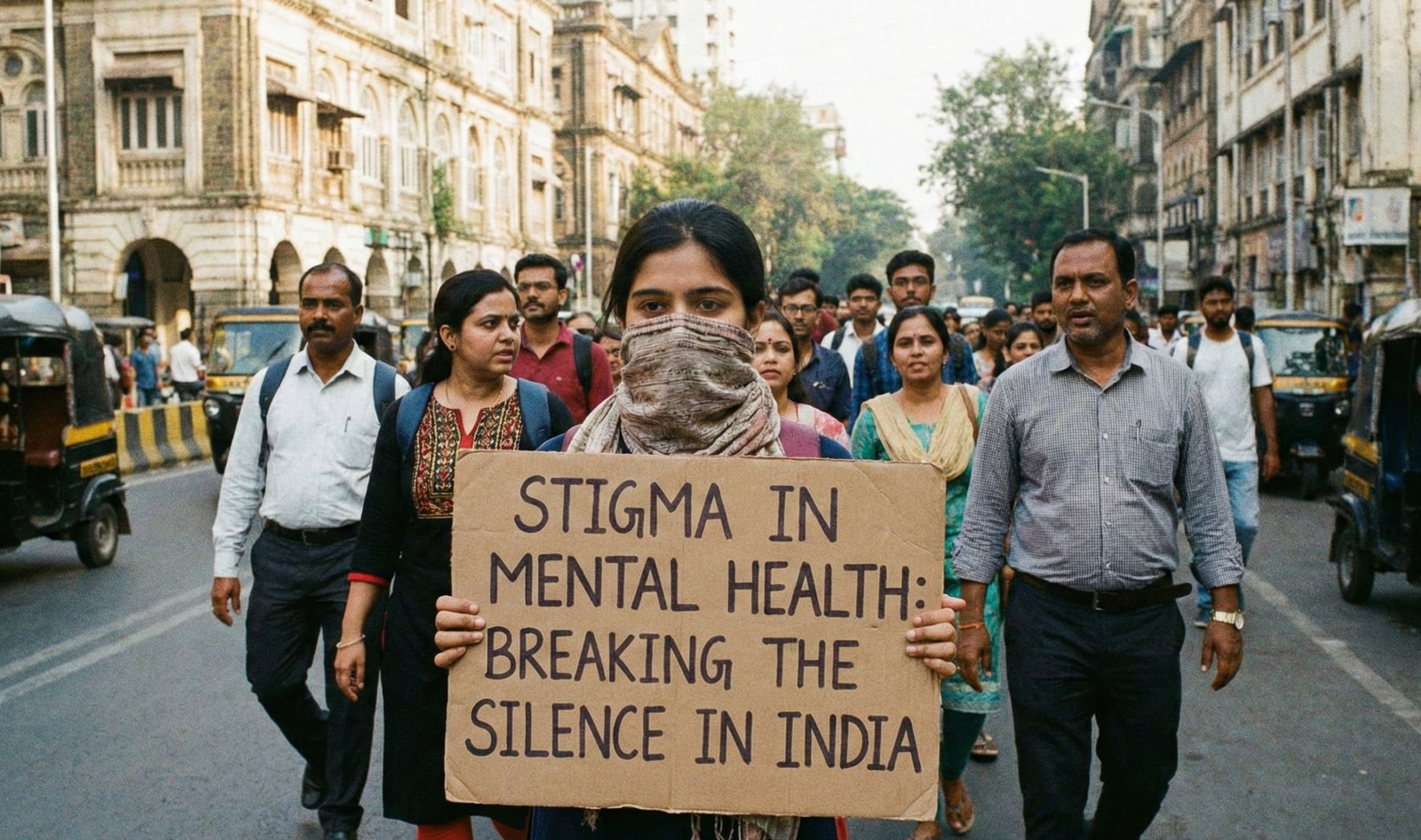

In a country of over 1.4 billion people, silence can be deafening. While India has made rapid advancements in technology and economy, a significant shadow remains over its collective psyche: the stigma surrounding mental health.
At Formal Psychology, we believe that understanding the root of this stigma is the first step toward dismantling it. Mental health is not merely a personal struggle; in India, it is a profound social challenge intertwined with culture, tradition, and the fear of judgment.
The Weight of “Log Kya Kahenge” (What Will People Say?)
The most pervasive barrier to mental health awareness in India is the cultural obsession with social image. The phrase “Log kya kahenge” dictates life choices, careers, and marriages, but it is deadliest when applied to health.
In many Indian households, admitting to a struggle with depression, anxiety, or bipolar disorder is viewed not as a medical condition, but as a “family flaw.” There is a fear that a diagnosis will render a person “unmarriageable” or bring shame upon the family name. Consequently, symptoms are often hidden, suppressed, or explained away as stress or “nazar” (evil eye), delaying crucial medical intervention.
Roots of Stigma: Culture, Religion, and Misconception
To break the silence, we must understand where it comes from. The stigma in India is multifaceted:
- Supernatural Attribution: In many rural and semi-urban areas, mental health episodes (such as psychosis or schizophrenia) are frequently attributed to black magic, possession by spirits, or karma. Instead of psychiatrists, families often turn to faith healers or exorcists.
- Language and Labeling: The vocabulary used to describe mental illness in India is often derogatory. Terms like “Pagal” (mad) or “Kamzor” (weak) are thrown around casually, stripping the individual of their dignity and reducing complex neurological conditions to character insults.
- The “Strong” Narrative: There is a prevailing myth, particularly among Indian men, that emotional vulnerability is a sign of weakness. Stoicism is rewarded, while seeking help is often stigmatized as a failure to “cope.”
The Cost of Silence: Impact on the Individual and Society
The repercussions of this stigma are severe and measurable. According to the National Mental Health Survey of India, nearly 150 million Indians require mental health care interventions, yet less than 30 million seek help.
- Treatment Gap: The stigma leads to a massive treatment gap. People often wait until a crisis point—such as a suicide attempt or severe breakdown—before seeking professional help.
- Social Isolation: Individuals suffering from mental health issues often isolate themselves to avoid judgment, worsening their condition.
- Economic Impact: The World Health Organization (WHO) estimates that India will lose over a trillion dollars in economic value due to mental health conditions between 2012 and 2030, largely due to lost productivity.
Shifting Tides: The Mental Healthcare Act, 2017
Legislation plays a crucial role in legitimizing mental health. The Mental Healthcare Act of 2017 was a landmark move in India. It decriminalized suicide attempts, acknowledging that individuals driven to such extremes need care, not punishment. It also legally guarantees the right to access mental healthcare.
While the law has changed, the mindset is slower to catch up. Laws can mandate clinics, but they cannot force people to walk through the doors without fear of social ostracization.
How We Can Break the Silence
Ending stigma requires a collective effort from psychologists, educators, families, and media.
1. Normalize the Conversation
We need to treat mental health check-ups with the same normalcy as physical check-ups. Just as one would not be ashamed of diabetes or hypertension, one should not be ashamed of depression.
2. Media Responsibility
Indian cinema and news media have historically sensationalized mental illness, often portraying it as violence or comedy. Responsible storytelling that depicts the reality of therapy and recovery is essential.
3. Education at the Grassroots
Mental health education must begin in schools. Children should be taught emotional literacy—how to identify their feelings and ask for help—before they learn the societal prejudices against it.
4. Community Support
We must move from a culture of judgment to a culture of empathy. Listening without advising, supporting without shaming, and encouraging professional help are small acts that save lives.
Conclusion
Breaking the silence on mental health in India is not an overnight task; it is a generational shift. It requires us to challenge our own biases and the traditions we hold dear.
At Formal Psychology, we stand for a future where seeking help is seen as an act of strength, not weakness. It is time to speak up, reach out, and realize that no one has to fight their battles in the dark.