
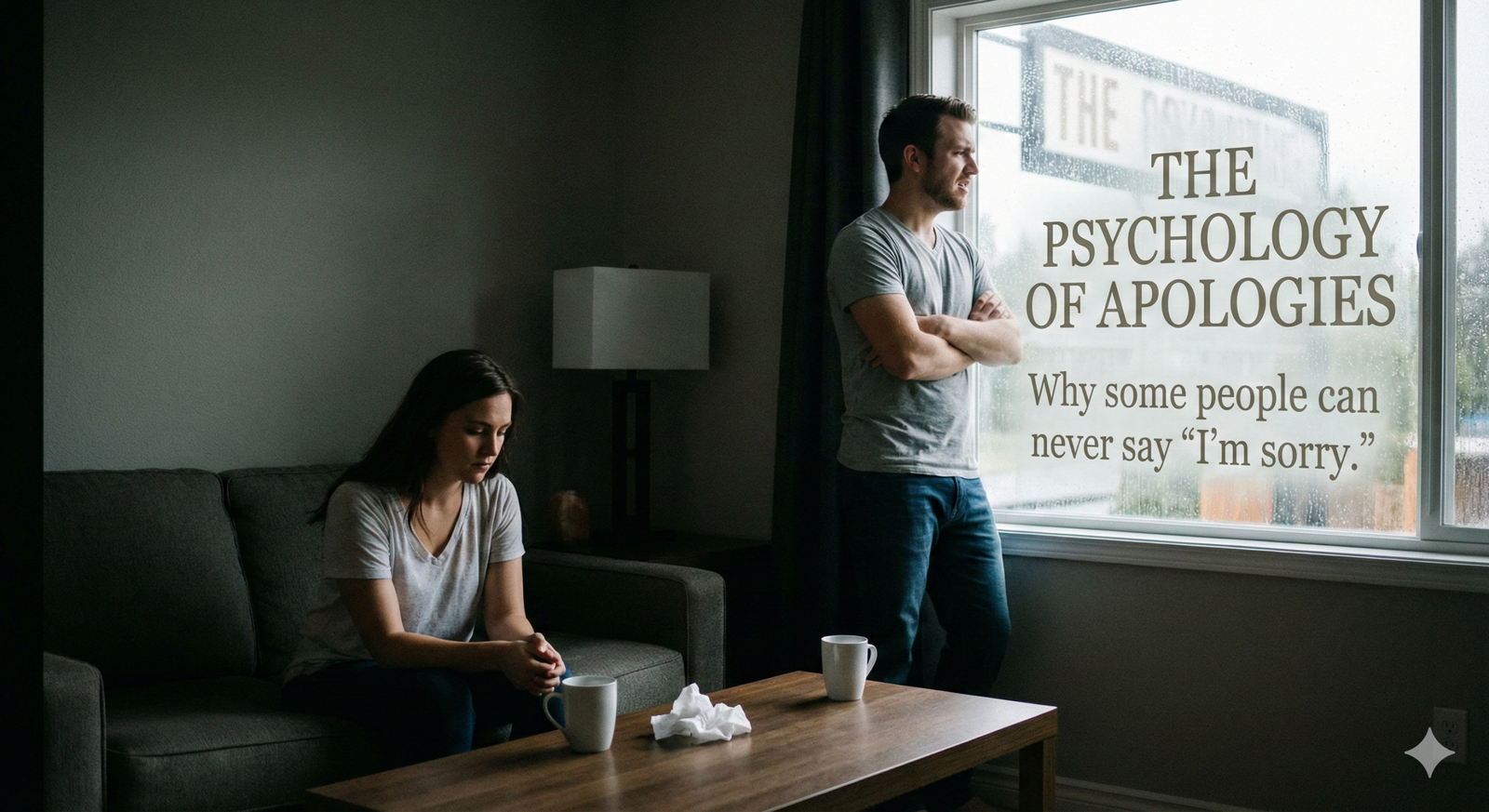

We have all been there: standing in the debris of a conflict, waiting for the one word that could fix it all—“sorry.” Yet, from some people, that word never comes. They might deflect, get angry, or stay silent, but they will not admit fault.
For the person waiting for the apology, this is maddening. It feels like stubbornness or a lack of care. However, from a psychological perspective, the inability to apologize is often rooted in something much deeper than mere pride. It is a defense mechanism protecting a fragile sense of self.+1
Here is a deep dive into the psychology of the “non-apologizer.”
1. The Threat to Self-Esteem
For most people, an apology is an admission of a specific error. It says, “I did a bad thing.” For a non-apologizer, an apology is often interpreted as an admission of being a flawed person. It says, “I am bad.”
Psychologists have found that people who struggle to apologize often have a fragile sense of self-worth. To them, admitting a mistake isn’t just taking responsibility for an action; it is a direct hit to their identity. If they admit they were wrong, their psychological narrative—that they are competent, good, and worthy—crumbles. To protect their ego from this perceived annihilation, they unconsciously reject the apology.+1
2. Shame vs. Guilt: The Critical Distinction
To understand why apologies are impossible for some, we must distinguish between guilt and shame.
- Guilt is a feeling of remorse for an action (“I made a mistake”). It is a healthy emotion that drives reparative behavior (apologizing).
- Shame is a feeling of worthlessness regarding the self (“I am a mistake”).
Non-apologizers are often shame-prone. When they do something wrong, they bypass guilt and plunge straight into toxic shame. Because shame is such a painful, overwhelming emotion, they utilize defense mechanisms—like denial or projection—to avoid feeling it. By refusing to apologize, they are trying to keep the floodgates of shame closed.
3. The Perfectionist’s Dilemma
Many non-apologizers suffer from maladaptive perfectionism. They operate under a rigid internal rule: People are either perfect, or they are failures.
If they admit to a mistake, they categorize themselves as failures. There is no middle ground for “a good person who made a mistake.” This black-and-white thinking (cognitive distortion) makes the cost of an apology too high to pay.
4. Fear of Vulnerability
An apology is an act of vulnerability. It involves handing power over to the other person—the power to forgive, or the power to reject.
For individuals with an insecure attachment style or a history of trauma, vulnerability feels dangerous. They may view an apology as opening their armor during a battle. If they apologize, they fear the other person will use it as ammunition in future conflicts (“See? You admitted you were wrong last time!”). Remaining defensive feels safer than risking emotional exposure.
5. The “Pseudo-Apology” and Gaslighting
When forced into a corner, a non-apologizer might offer a counterfeit apology. It is vital to recognize these to protect your own mental health.
- The Conditional Apology: “I’m sorry if you felt hurt.” (This shifts the problem to your feelings, not their actions.)
- The Blame-Shifting Apology: “I’m sorry I yelled, but you pushed me to do it.”
- The Dismissive Apology: “Fine, I’m sorry! Can we drop it now?” (This is about ending the discomfort, not repairing the bond.)
6. How to Deal with a Non-Apologizer
If you are in a relationship (personal or professional) with someone who cannot apologize, waiting for them to change can be exhausting. Here are psychological strategies for coping:
- Accept the Reality: Understand that their inability to apologize is about their fragility, not your validity. You do not need their apology to know you were right.
- Focus on Behavior, Not Words: Some people show remorse through changed behavior rather than verbal admissions. Look for “repair attempts”—small gestures they make to return things to normal.
- State Your Needs Clearly: Instead of demanding an apology (which triggers their defense mechanisms), state how their action affected you. “When you forgot our plans, I felt unimportant.”
- Set Boundaries: If the behavior is repeated and damaging, you must set boundaries to protect yourself, regardless of whether they admit fault.
Conclusion
The inability to apologize is rarely about not loving or respecting the other person. It is almost always about a desperate need to protect a fragile ego from shame. While understanding this psychology cultivates empathy, it does not mean you must accept mistreatment. True emotional maturity involves the courage to say, “I was wrong,” and the grace to forgive those who can’t.



811bet, huh? I’m liking the sound of that. Hoping for some big wins there. Gonna give it a spin tonight! Get your tickets: 811bet
86win? Well, that’s the goal isn’t it! Let’s see if it lives up to the name. I hope I win there! Right here: 86win
89betvip… hmm, feels like a newbie on the block. Interface is pretty clean, but need more game variety to compete. Worth a peek if you’re bored though. See what you think: 89betvip.