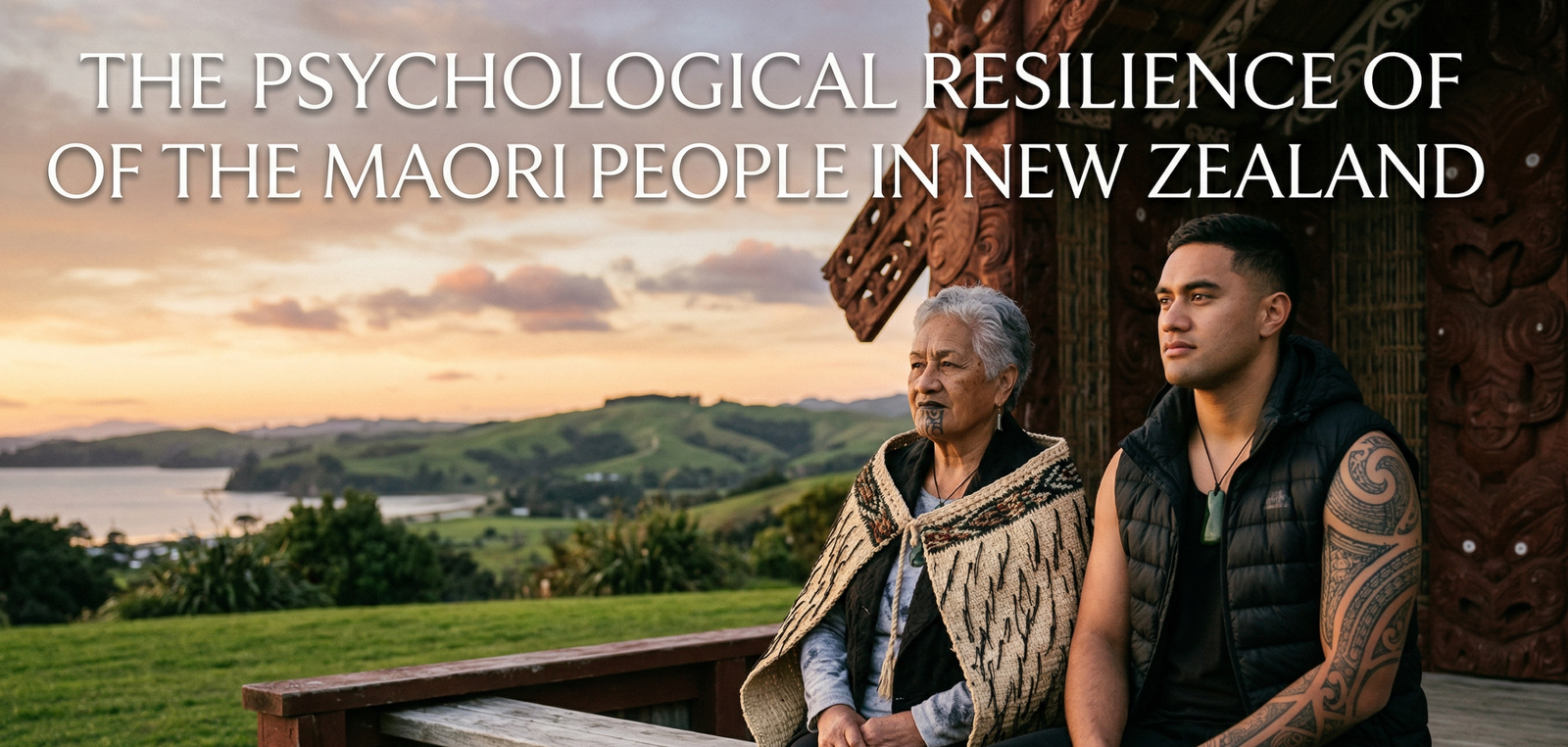

When examining how communities overcome profound historical and systemic adversity, the psychological resilience of the Maori people in New Zealand stands out as a powerful example of holistic healing. In Western psychology, resilience is often viewed as an individual trait—a combination of grit, optimism, and cognitive flexibility. However, exploring resilience through an Indigenous lens offers a profoundly different and enriching perspective.
For the Maori, the tangata whenua (Indigenous people of the land) of Aotearoa (New Zealand), mental strength is deeply intertwined with cultural identity, spirituality, and collective connection. Understanding this requires moving beyond individualistic frameworks and looking at the culturally grounded protective factors that have sustained this community through centuries of profound change.
Historical Trauma and the Need for Resilience
To truly appreciate the psychological resilience of the Maori people, one must first acknowledge the context of their adversity. European colonization, beginning in the 19th century, brought massive disruptions to Maori society. Land confiscation (raupatu), the suppression of the Maori language (Te Reo), and the dismantling of traditional social structures led to significant historical trauma.
In psychological terms, historical trauma refers to cumulative emotional and psychological wounding across generations. For the Maori, this manifested in socio-economic disparities and higher rates of psychological distress. Yet, despite these systemic disruptions, the Maori people have demonstrated an extraordinary capacity to endure, adapt, and revitalize their culture.
Core Pillars of Maori Psychological Resilience
Maori resilience is not a solitary endeavor but a collective and cultural asset. Several core pillars form the foundation of this psychological strength:
1. Whakapapa (Genealogy and Connection)
Whakapapa translates to genealogy, but psychologically, it functions as a profound sense of belonging and identity. It is the framework that links a person to their ancestors (tūpuna), their descendants, the environment, and the universe.
- Psychological Benefit: Knowing one’s whakapapa provides an existential anchor. It counters feelings of isolation by placing the individual within a continuous, enduring lineage. When facing adversity, a person draws strength from the survival and wisdom of their ancestors.
2. Whanaungatanga (Interconnectedness and Belonging)
While mainstream psychology often emphasizes autonomy, Maori well-being thrives on whanaungatanga—the sense of family connection, kinship, and reciprocal support.
- Psychological Benefit: Whānau (family or community) acts as a primary buffer against stress. Emotional and psychological burdens are shared collectively. This relational resilience means that healing and recovery are community processes, providing robust social support networks vital for mental health.
3. Cultural Identity and Mātauranga Maori
Mātauranga Maori refers to traditional Maori knowledge and wisdom. The revitalization of cultural practices, such as speaking Te Reo Maori (the language), performing kapa haka (traditional performing arts), and engaging in marae (meeting house) protocols, serves as a powerful psychological protective factor.
- Psychological Benefit: A strong cultural identity is strongly correlated with higher self-esteem and better mental health outcomes in Indigenous populations. Engaging in cultural traditions fosters a sense of pride, directly countering the internalized effects of historical trauma.
Te Whare Tapa Whā: A Model of Holistic Well-being
One of the most significant contributions to understanding the psychological resilience of the Maori people is the Te Whare Tapa Whā model, developed by leading Maori health advocate Sir Mason Durie in 1984. This model compares human well-being to a wharenui (meeting house), which relies on four foundational walls to remain standing. If one wall is compromised, the house becomes unbalanced.
- Taha Tinana (Physical Well-being): The physical body and how it is cared for.
- Taha Hinengaro (Mental and Emotional Well-being): The mind, thoughts, and feelings. Crucially, Maori psychology recognizes that thoughts and emotions are intricately linked to the physical and spiritual realms.
- Taha Wairua (Spiritual Well-being): The unseen energies, faith, connection to the universe, and a sense of meaning. For many Maori, this is the most essential requirement for health.
- Taha Whānau (Family and Social Well-being): The capacity to belong, care, and share within a wider social system.
Resilience, through the lens of Te Whare Tapa Whā, is the active maintenance and balancing of these four domains. When adversity strikes, a resilient response involves drawing upon spiritual beliefs (wairua), seeking collective support (whānau), processing emotions (hinengaro), and ensuring physical health (tinana).
Decolonizing Psychology: The Future of Resilience
Mainstream clinical psychology is increasingly recognizing the need to “decolonize” its approaches when working with Indigenous populations. In New Zealand, this means integrating Maori models of health into mainstream clinical practice. Therapies that incorporate traditional healing practices (rongoā), involve the extended family in treatment plans, and validate historical trauma are proving far more effective in fostering resilience than strictly clinical, individual-focused therapies.
Conclusion
The psychological resilience of the Maori people is a profound example of how human strength is deeply rooted in connection—to the past, to the community, to the land, and to the spirit. By prioritizing collective well-being, cultural identity, and holistic health models like Te Whare Tapa Whā, the Maori community continues to navigate modern challenges with remarkable fortitude. For the broader field of psychology, this offers a crucial reminder that true healing often lies in looking beyond the individual and recognizing the restorative power of community and culture.