
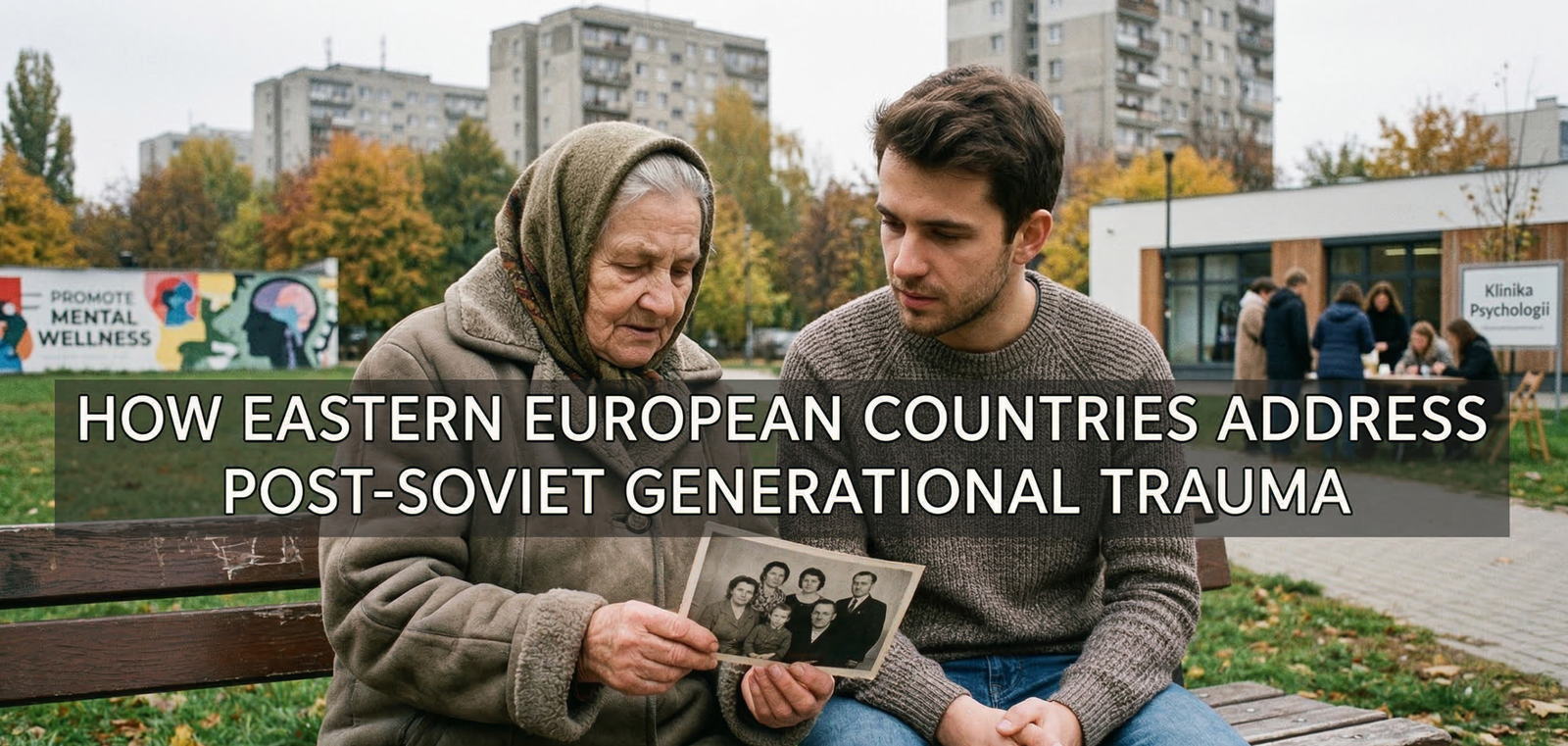

The collapse of the Soviet Union in 1991 marked the end of a geopolitical era, but for the citizens of Eastern Europe, the psychological aftermath was only just beginning. Decades of totalitarian rule, forced collectivization, secret police surveillance, political purges, and the sudden, chaotic transition to capitalism left profound psychological scars. Today, mental health professionals recognize that these scars did not vanish with the regime change; they were passed down.
Understanding how Eastern European countries are addressing post-Soviet generational trauma is crucial for modern psychology. It requires a nuanced look at how clinical interventions, cultural shifts, and sociopolitical reckonings intersect to heal deeply ingrained historical wounds.
Understanding Post-Soviet Generational Trauma
Generational (or intergenerational) trauma occurs when the psychological effects of a traumatic experience are transmitted from the initial survivors to subsequent generations. In the context of the Soviet bloc, this transmission happened through several mechanisms:
- Behavioral Transmission: Survivors of totalitarian regimes often adopted survival mechanisms—such as extreme distrust of authority, emotional suppression, hyper-vigilance, and a culture of silence—that they modeled for their children.
- Systemic Stigma: In the Soviet Union, psychiatry was frequently weaponized against political dissidents (a practice known as punitive psychiatry). This created a deep-seated cultural distrust of mental health professionals that persisted long after the Iron Curtain fell.
- Epigenetic Factors: Emerging psychological and biological research suggests that prolonged periods of extreme stress, such as surviving famines (like the Holodomor) or gulags, may alter gene expression in ways that affect offspring’s stress responses.
Pathways to Healing: Clinical and Societal Approaches
Eastern European nations are not a monolith, and the approach to mental health varies from the Baltics to the Balkans. However, several unifying strategies have emerged in the psychological and societal efforts to break the cycle of trauma.
1. Rebuilding Trust in Mental Healthcare
The most significant hurdle in addressing generational trauma in this region has been dismantling the stigma surrounding psychotherapy.
- Modernizing Psychiatric Care: Countries like Poland, the Czech Republic, and the Baltic states have actively reformed their psychiatric institutions, moving away from the clinical, institutionalized models of the Soviet era toward community-based, patient-centric care.
- Psychoeducation: Grassroots organizations and modern psychological institutions are conducting widespread psychoeducational campaigns to redefine therapy not as a punishment for the “abnormal,” but as a tool for personal growth and healing.
2. Specialized Therapeutic Interventions
Psychologists in the region are increasingly employing trauma-informed therapies tailored to historical wounds:
- Narrative Exposure Therapy (NET): This approach helps individuals contextualize their family’s history of trauma, allowing them to construct a coherent narrative that separates their own identity from the inherited trauma of their parents or grandparents.
- Family Systems Therapy: Because Soviet trauma deeply affected family structures—often resulting in emotionally distant parenting or enmeshment—family therapy is used to identify and break maladaptive generational patterns.
- Cognitive Behavioral Therapy (CBT): CBT is widely utilized to address the high rates of anxiety and depression that stem from the inherited hyper-vigilance and learned helplessness common in post-Soviet societies.
3. Societal Reckoning and Truth-Seeking
Psychological healing cannot occur in a vacuum; it requires a societal acknowledgment of the trauma.
- Opening the Archives: Countries like Germany (with the Stasi archives) and Lithuania (with KGB records) allowed citizens to access files kept on their families. While painful, psychologists note that uncovering the truth removes the toxic “culture of secrets” that fuels generational anxiety, allowing for profound closure.
- Decommunization and Memorialization: Erecting memorials for victims of Soviet repression and establishing museums of occupation (such as those in Riga, Tallinn, and Kyiv) serve a vital psychological function. They validate the suffering of the older generation, which is a necessary step before collective healing can begin.
4. Art, Literature, and Cultural Therapy
Where clinical therapy is still stigmatized, cultural expression serves as an alternative therapeutic outlet. A new generation of Eastern European writers, filmmakers, and artists are exploring the inherited trauma of the Soviet era. By bringing these unspoken family histories into the public sphere, they facilitate a collective catharsis and normalize conversations about mental health.
Ongoing Challenges in the Healing Process
Despite significant progress, the road to recovery is complex. The ongoing war in Ukraine has acted as a massive psychological trigger, re-traumatizing populations and bringing latent anxieties regarding imperialism and occupation back to the surface across Eastern Europe. Furthermore, economic disparities in the region mean that access to high-quality, trauma-informed psychological care remains inconsistent, often concentrated in urban centers while rural populations are left behind.
Conclusion
Addressing post-Soviet generational trauma is an ongoing, multi-faceted process. Eastern European countries are making vital strides by reforming psychiatric care, embracing modern therapeutic modalities, and courageously facing their historical truths. For the field of psychology, this region serves as a profound case study in resilience, demonstrating that while trauma can be inherited, so too can the capacity for recovery and psychological liberation.