
For most of human history, death meant the cessation of presence. Memories lived on in the minds of loved ones, in physical letters, or on gravestones, but the active “voice” of the individual fell silent. Today, that has fundamentally changed.
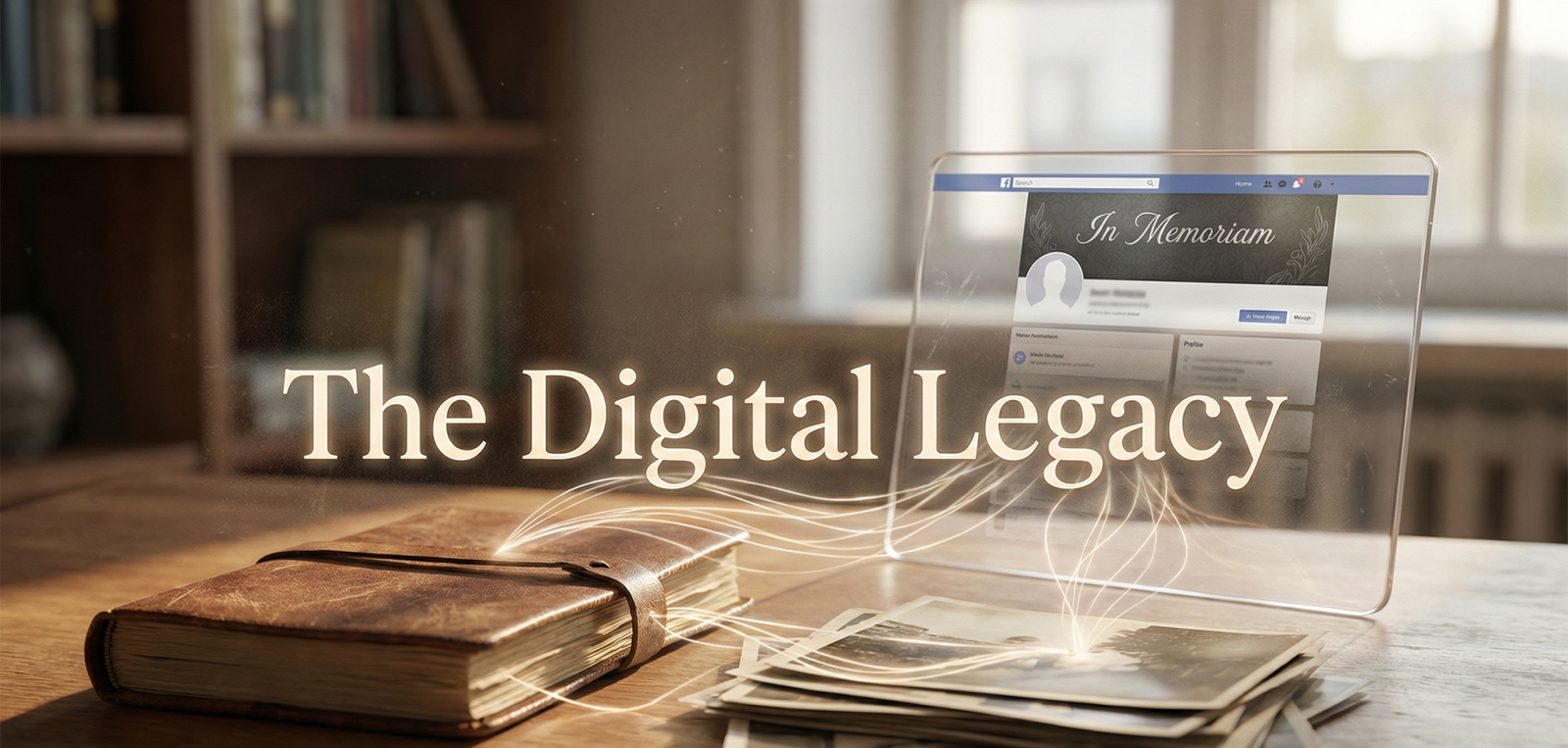
In the age of social media, we are creating vast, searchable, and interactive archives of our lives. We upload our thoughts, photos, and milestones to the cloud, creating a “Digital Self” that potentially outlives our physical bodies. This phenomenon, known as the Digital Legacy, raises profound psychological questions about grief, memory, and the human desire for immortality.
The Rise of the Digital Ghost
When a person passes away today, they leave behind more than physical assets; they leave behind a “digital ghost.” Their social media profiles remain active, their automated birthday reminders still notify friends, and their algorithms continues to interact with the living.
Psychologically, this creates a new frontier in how we process death. The Extended Self Theory in psychology suggests that our possessions and environments are extensions of our identity. In the 21st century, our Instagram grids and Twitter feeds are arguably the most potent extensions of our self-concept. When the physical body dies, this digital extension remains animated, creating a unique dissonance for those left behind.
Thanatechnology: The Intersection of Death and Tech
The study of how technology changes our experience of death is called Thanatechnology. It examines a shifting paradigm:
- The End of “Closure”: Historically, grief rituals (funerals, wakes) provided a clear demarcation between life and death. Digital media blurs this line. Seeing a deceased friend’s “Online” status or receiving a “Memory” notification can trigger what psychologists call ambiguous loss—a feeling that the person is physically absent but psychologically present.
- Continuing Bonds: Classical grief theories (like Freud’s) emphasized “letting go” of the deceased. However, modern psychology embraces the Continuing Bonds Theory, which suggests it is healthy to maintain a connection with the deceased. Digital legacies facilitate this. Friends can post on a deceased person’s Facebook wall, sending messages to them as if they can still read them. This digital space becomes a modern-day shrine, accessible 24/7.
The Pursuit of Digital Immortality
The fear of oblivion is a primal human anxiety. Digital legacy offers a seductive promise: Digital Immortality.
This goes beyond static profiles. We are entering an era of AI-driven preservation. Services now exist that can train AI on a deceased person’s text messages and emails to create chatbots that “speak” like them. While this offers comfort to some, it raises ethical and psychological concerns:
- Stunted Grief: Does interacting with a digital simulation of a loved one prevent us from accepting the reality of their loss?
- Consent: Did the deceased consent to having their personality mimicked by an algorithm?
Managing the Digital Afterlife: Practical & Psychological Steps
Given the psychological weight of our online presence, managing a digital legacy is now a crucial part of life planning. The major platforms have begun to address this:
- Memorialization (Facebook & Instagram): Accounts can be “memorialized,” freezing them in time. This prevents the account from appearing in “People You May Know” suggestions (which can be traumatic for survivors) while allowing friends to share memories.
- Legacy Contacts: Users can designate a trusted person to manage their account after death. This psychological handover of control is a modern form of executing a will.
- The Right to be Forgotten: Conversely, some individuals prefer a digital wipe. The psychological desire for a “clean slate” or total privacy even in death is valid. Understanding the “Right to be Forgotten” is essential for digital dignity.
Conclusion: Curating Your Forever
The question of “What happens to our online personas?” is no longer just a technical one; it is deeply human. Our digital legacies are not just data; they are the narratives of our lives that will persist long after we are gone.
As we navigate this digital era, we must become mindful curators of our online selves. Whether we choose to be memorialized or deleted, the decision impacts not only our legacy but the psychological well-being of the loved ones we leave behind.