
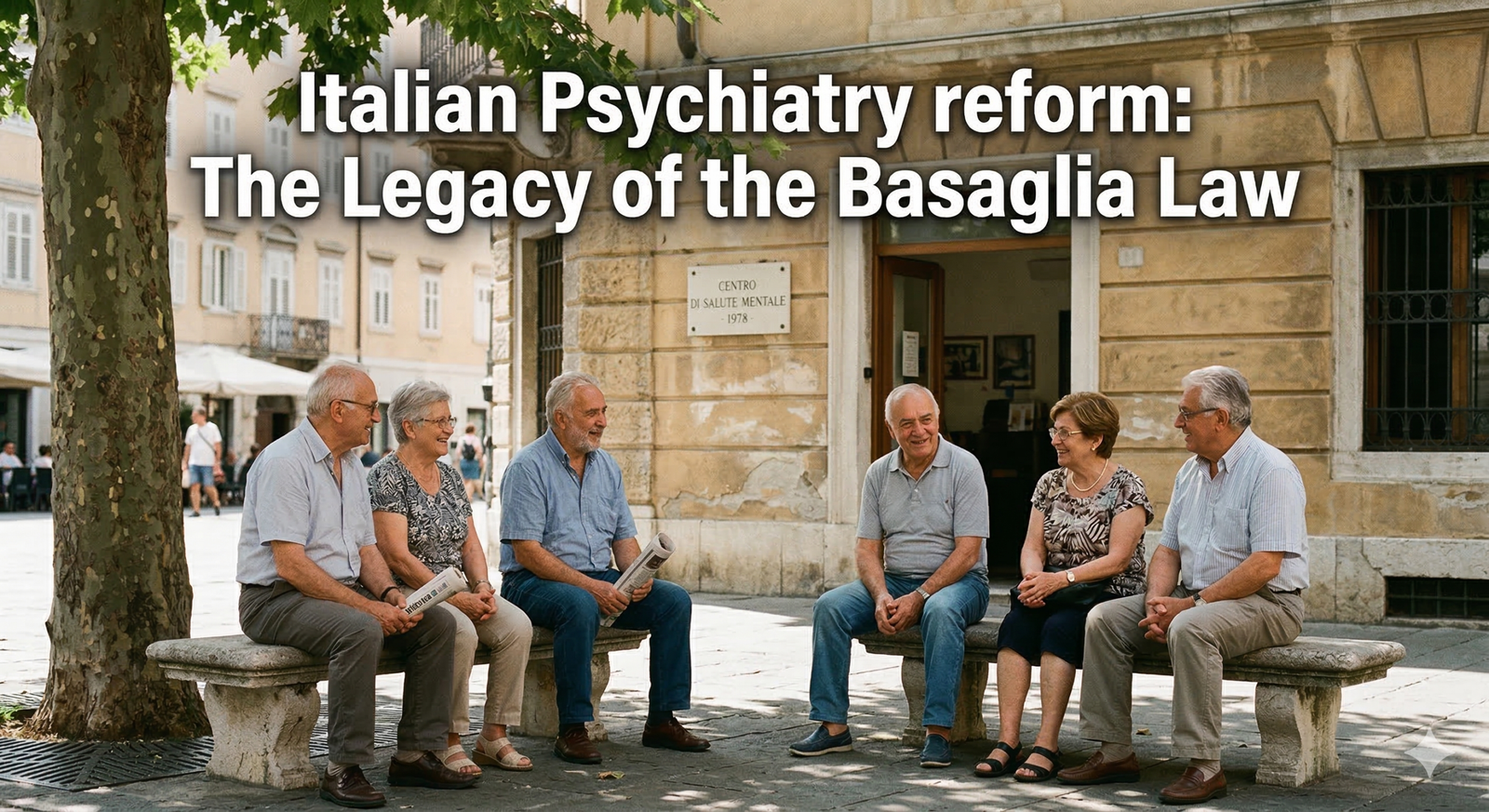

The Basaglia Law, officially known as Law 180, stands as one of the most revolutionary milestones in the global history of mental health care. Enacted in Italy in May 1978, this groundbreaking legislation mandated the closure of psychiatric hospitals (asylums) and initiated a shift toward community-based mental health services.
At Formal Psychology, we believe that understanding the history of psychiatric reform is essential for appreciating modern therapeutic practices. The legacy of this law continues to influence how societies around the world perceive and treat mental distress.
The Dark Era of Asylums: Before the Reform
Prior to the 1970s, the standard approach to severe mental illness across much of the world—including Italy—was institutionalization. Psychiatric hospitals were often overcrowded, isolated from society, and focused more on custodial containment than on actual psychological treatment.
Patients in these facilities were frequently subjected to:
Dehumanizing conditions: Patients were stripped of their personal belongings and civil rights.
Coercive treatments: There was heavy reliance on physical restraints, electroconvulsive therapy (ECT) without consent, and high doses of sedatives.
Social segregation: Once admitted, patients rarely returned to their communities, effectively serving life-long confinement due to their mental health conditions.
It was within this bleak landscape that a movement for radical change began to emerge, spearheaded by a visionary psychiatrist.
Franco Basaglia and Democratic Psychiatry
Franco Basaglia (1924–1980) was the driving force behind psychiatric reform in Italy. Appointed as the director of the psychiatric hospital in Gorizia in 1961, Basaglia was deeply disturbed by the prison-like conditions he witnessed.
Influenced by existential philosophy and the broader anti-psychiatry movement of the era, he began dismantling the oppressive structures of the asylum from within.
Basaglia founded the Psichiatria Democratica (Democratic Psychiatry) movement. His core philosophy was simple yet profound: a mental health patient is, first and foremost, a human being with fundamental rights, and a therapeutic environment cannot exist where there is oppression and subjugation.
Under his leadership:
- Hospital doors were unlocked
- Physical restraints were abolished
- Patients were encouraged to participate in decisions about their own lives and living spaces
The Core Mandates of the Basaglia Law
The grassroots success of Basaglia’s reforms in cities such as Gorizia and Trieste eventually gained national attention, culminating in the passage of Law 180.
The Basaglia Law fundamentally restructured Italy’s approach to mental health through several key mandates:
Abolition of Psychiatric Hospitals
The law prohibited the construction of new mental asylums and banned new admissions to existing psychiatric hospitals, mandating their gradual closure.
Establishment of Community Care
Mental health treatment shifted from isolated institutions to Community Mental Health Centers (CMHCs). These centers provided accessible local care, allowing individuals to remain integrated within their communities and families.
Integration with General Hospitals
Acute psychiatric crises were to be treated in small psychiatric wards within general public hospitals, typically limited to no more than 15 beds, preventing the creation of new large-scale institutions.
Strict Limits on Involuntary Treatment
The law placed strict restrictions on compulsory admissions, ensuring that involuntary treatment could only occur as a last resort, under legal and medical oversight, and for short, regulated periods.
The Global Legacy and Ongoing Impact
The passage of the Basaglia Law made Italy the first country in the world to legally dismantle its psychiatric hospital system. This bold reform sent shockwaves through the international medical community and became an influential model for global deinstitutionalization movements.
Triumphs of the Reform
One of the most significant achievements of the reform was the restoration of human dignity to individuals living with mental illness.
By reintegrating patients into society, the law helped reduce the profound stigma associated with mental health conditions. It demonstrated that even individuals with severe psychiatric disorders could live meaningful lives in the community when supported by appropriate care systems.
Modern Challenges
Despite its achievements, the legacy of the Basaglia Law is not without challenges. Transitioning from institutional care to community-based services required significant systemic restructuring and funding.
Over the years, critics have highlighted several issues:
Uneven implementation: The quality of community mental health services varies across different regions of Italy, largely depending on local government resources.
Family burden: In areas where community services are insufficient, families often bear a significant responsibility for caring for individuals with severe mental illness.
Conclusion
The Basaglia Law remains a landmark example of human-rights-based medical reform. Franco Basaglia’s belief that “freedom is therapeutic” fundamentally reshaped modern perspectives on psychology and psychiatric care.
Although challenges in community-based mental health systems persist worldwide, the Italian psychiatric reform marked a decisive step away from the dark era of institutionalized suffering.
By studying this historical transformation, we are reminded of the ongoing need to advocate for compassionate, dignified, and inclusive mental health care.