
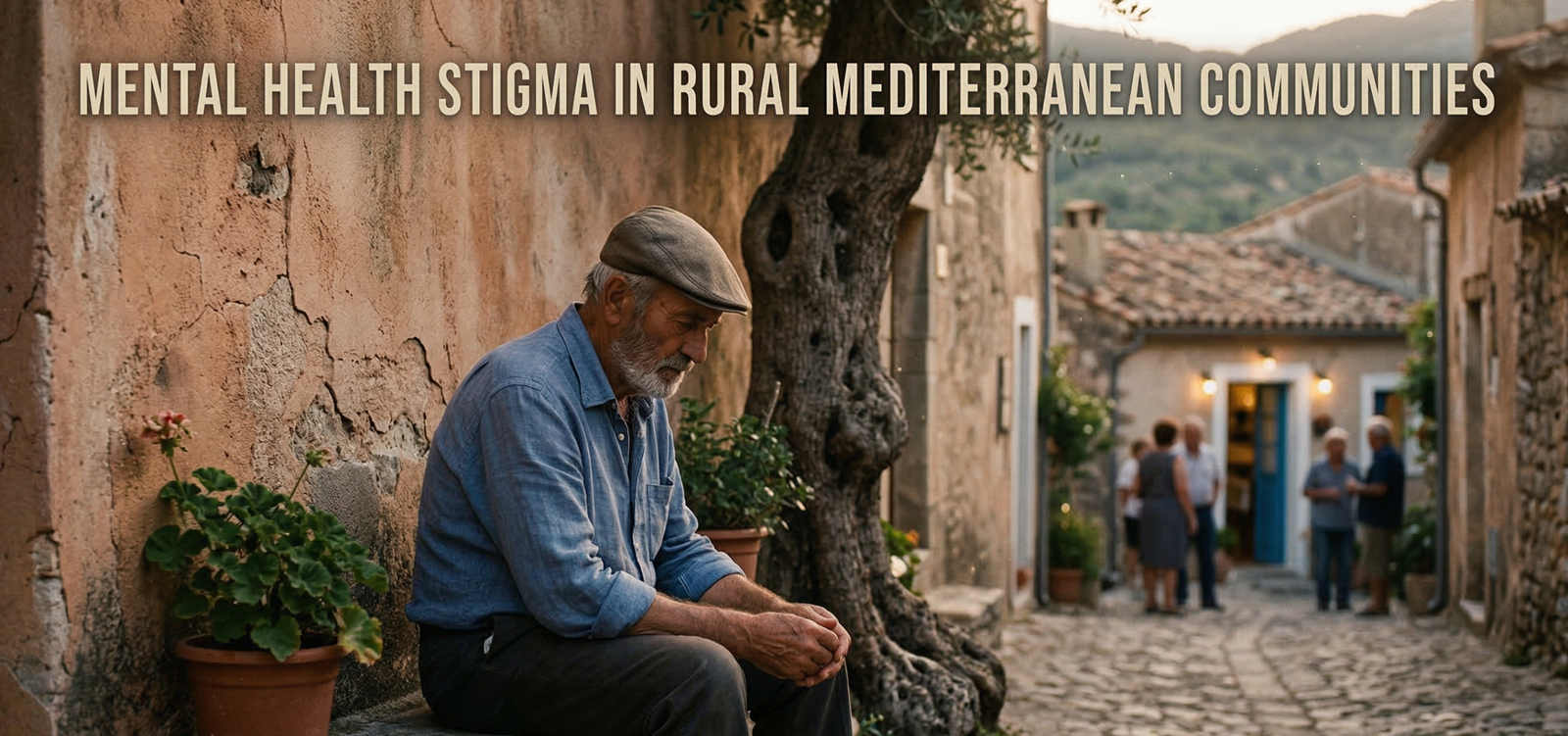

When picturing the Mediterranean, the mind often wanders to sun-drenched coastlines, robust olive groves, and tight-knit communities gathered around sprawling dinner tables. While this idyllic image holds truth, it often masks a silent struggle occurring behind closed doors. In many rural Mediterranean communities—spanning Southern Europe, North Africa, and the Levant—mental health remains a deeply stigmatized topic.
For platforms like Formal Psychology, examining how culture intersects with mental well-being is vital. To effectively promote psychological healing, we must first unpack the unique social, cultural, and systemic barriers that sustain mental health stigma in these tight-knit, traditional enclaves.
The Cultural Architecture of Stigma: Honor and Shame
At the core of many Mediterranean societies is a deeply ingrained sociological framework of “honor and shame” (often referred to as filotimo in Greece, or tied to concepts of omertà and machismo in other regions).
In these rural communities, the family unit is paramount. An individual’s actions, successes, and perceived “failings” are rarely viewed in isolation; they reflect on the entire family lineage.
- The Burden of Secrecy: Mental illness is frequently perceived not as a medical or psychological condition, but as a moral failing or a “stain” on the family’s honor. Consequently, conditions like depression, anxiety, or schizophrenia are hidden to protect the family’s reputation in the village square.
- Self-Stigma and Denial: Because the community views mental illness through a lens of weakness, individuals internalize these beliefs. This self-stigma leads to profound denial, preventing individuals from acknowledging their own psychological distress out of fear of bringing shame to their loved ones.
Somatization: When the Mind Speaks Through the Body
One of the most fascinating and prevalent psychological phenomena in rural Mediterranean cultures is somatization—the manifestation of psychological distress as physical symptoms.
In environments where saying “I am depressed” is taboo, it becomes culturally acceptable to say “I have a heavy chest,” “My stomach is in knots,” or “I suffer from chronic headaches.” General practitioners in these rural areas frequently see patients presenting with vague physical ailments that have no biological origin. Somatization acts as a socially permissible cry for help, allowing the individual to receive care and sympathy without facing the acute stigma of a psychiatric label.
Religious and Spiritual Interpretations
Religion—whether Catholicism, Eastern Orthodoxy, or Islam—plays a central role in the daily rhythms of rural Mediterranean life. While faith can be a profound source of resilience and community support, traditional spiritual interpretations can sometimes inadvertently reinforce mental health stigma.
- Spiritual Failing: Psychological distress is sometimes misattributed to a lack of faith, a test from a higher power, or a spiritual punishment.
- Folk Beliefs: In highly traditional pockets, symptoms of severe mental illness (like psychosis or severe manic episodes) might still be attributed to superstitions, such as the “evil eye” (malocchio in Italy, mati in Greece). When the etiology of an illness is viewed as supernatural, individuals are more likely to seek out spiritual healers or religious clergy rather than licensed psychologists or psychiatrists.
Geographic and Systemic Barriers
Beyond culture and belief, practical barriers heavily contribute to the ongoing crisis:
- The Brain Drain: Mental health professionals tend to cluster in urban centers and capital cities. Rural villages often face a severe shortage of clinical psychologists, psychiatrists, and licensed counselors.
- Lack of Anonymity: In a village where everyone knows everyone, seeking therapy is a highly visible act. Parking outside a known psychologist’s office can spark local gossip, deterring those who desperately need help.
- Economic Constraints: Rural areas often face higher rates of poverty and lower funding for community health resources, making out-of-pocket psychological care an unattainable luxury for many.
Pathways to Change: Fostering Mental Health Awareness
Addressing mental health stigma in rural Mediterranean communities requires immense cultural competence. Western-centric models of highly individualized therapy do not always translate well to collectivist, family-oriented cultures.
- Integrating Mental and Physical Health: Because somatization is so common, placing psychologists within primary care clinics allows individuals to receive mental health care under the guise of a standard medical visit, bypassing the fear of being seen at a psychiatric facility.
- Leveraging Community Leaders: Collaborating with trusted community figures—including religious leaders and village elders—can help reframe mental health. When a local priest or imam speaks openly about mental well-being as a component of overall health, it dramatically reduces community stigma.
- Embracing Telepsychology: The rise of telehealth offers a profound solution to the lack of anonymity. Individuals can now speak to highly qualified psychologists from the privacy of their own homes, shielded from the judgment of their neighbors.
- Psychoeducation: Platforms must continue to provide culturally sensitive, accessible information that normalizes psychological struggles, explaining the neurobiological and environmental roots of mental illness to dismantle old superstitions.
Conclusion
The vibrant, close-knit nature of rural Mediterranean communities is one of their greatest strengths. By gently untangling the cultural ties of honor, shame, and stigma, these communities can transform their tight social bonds into powerful networks of mental health support. Acknowledging psychological pain is not a loss of honor; it is the first courageous step toward holistic healing.