
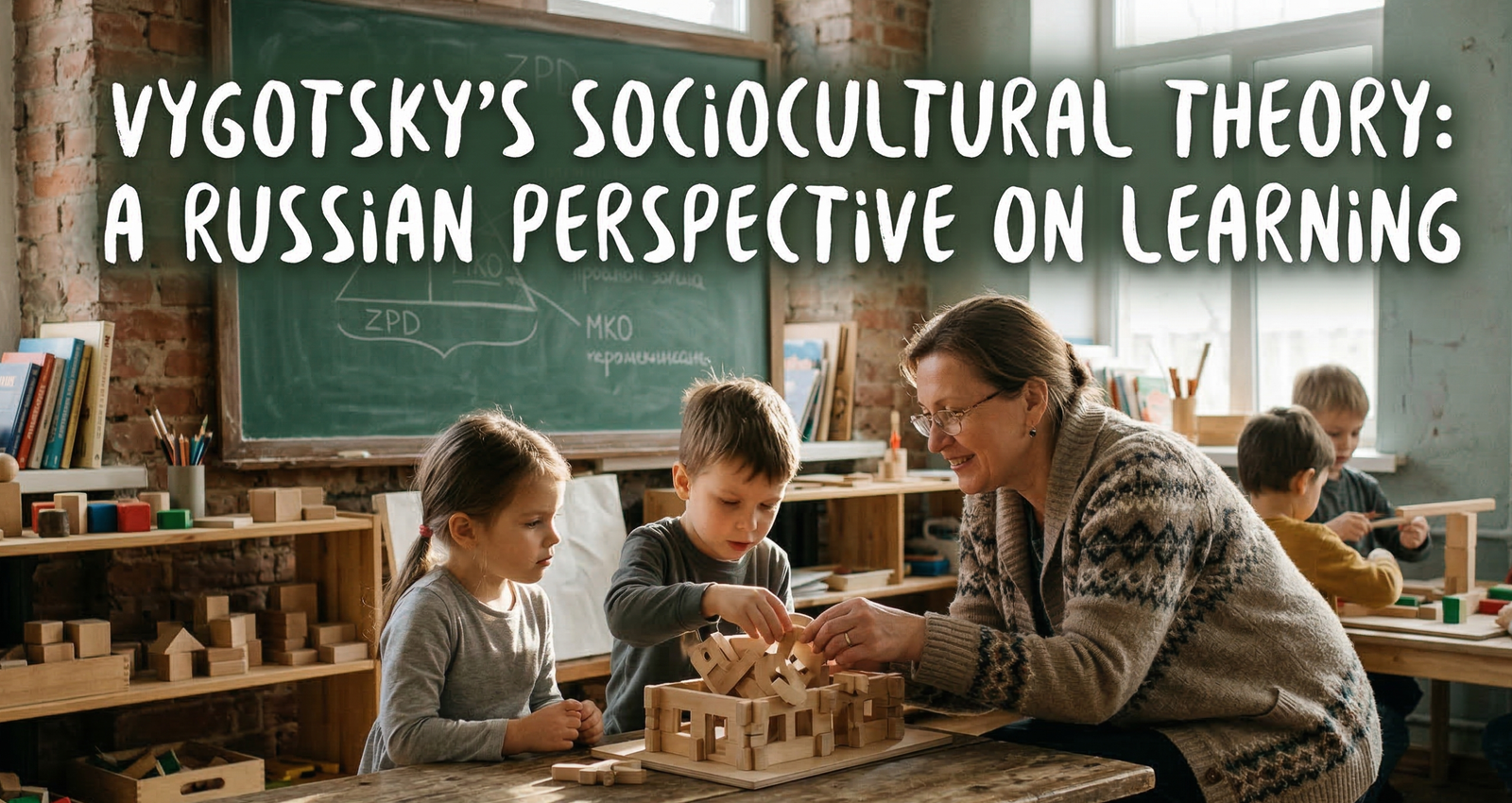

When examining how human beings acquire knowledge and develop cognitive abilities, few frameworks have been as influential as Lev Vygotsky’s Sociocultural Theory. Emerging from early 20th-century Russia, Vygotsky offered a groundbreaking perspective that challenged existing notions of child development. Unlike theorists who believed learning was an isolated, heavily internal process, Vygotsky argued that cognition is fundamentally social.
For students, educators, and psychologists, understanding Vygotsky’s work provides crucial insights into how culture, language, and social interactions shape the human mind.
Who Was Lev Vygotsky?
Lev Vygotsky (1896–1934) was a seminal Russian psychologist. Despite his premature death from tuberculosis at the age of 37, his extensive writings left an indelible mark on developmental psychology and education. His theories gained immense global traction in the late 20th century when his works were widely translated into English, presenting a compelling alternative to Jean Piaget’s stages of cognitive development.
The Core Premise: Social Interaction is Primary
At the heart of Vygotsky’s Sociocultural Theory is the assertion that social interaction plays a fundamental role in the development of cognition. Vygotsky believed that learning is not just assimilated into a child’s existing cognitive structures; rather, learning precedes and actually drives cognitive development.
He proposed that human development occurs on two distinct levels:
- Social level (Interpsychological): Learning first takes place between people through interactions.
- Individual level (Intrapsychological): Learning is then internalized by the individual.
This means that all higher cognitive functions—such as problem-solving, reasoning, and voluntary attention—originate as actual relationships between individuals.
Key Concepts of Vygotsky’s Theory
To fully grasp the Sociocultural Theory, one must understand its foundational concepts.
1. The More Knowledgeable Other (MKO)
The “More Knowledgeable Other” refers to anyone who has a better understanding or a higher ability level than the learner with respect to a particular task, concept, or process.
- Traditional MKOs: Teachers, parents, and older adults.
- Modern MKOs: Peers, younger individuals (who might be more tech-savvy, for instance), and even digital systems or AI tutors.
2. The Zone of Proximal Development (ZPD)
The Zone of Proximal Development is arguably Vygotsky’s most famous contribution to psychology. It represents the distance between what a learner can do independently and what they can achieve with guidance.
- Current Understanding: What the learner can do without any help.
- The ZPD: What the learner can do with the guidance of an MKO. This is where the most effective learning occurs.
- Out of Reach: What the learner cannot do, even with assistance.
By targeting the ZPD, educators can stretch a student’s cognitive abilities just enough to facilitate growth without causing frustration.
3. Scaffolding (A Vygotskian Extension)
While the term “scaffolding” was actually introduced by American psychologist Jerome Bruner, it is intrinsically linked to Vygotsky’s ZPD. Scaffolding is the temporary support provided by an MKO that enables the learner to achieve a goal or complete a task within their ZPD. As the learner’s competence increases, the MKO gradually removes the support, allowing the learner to perform the task independently.
4. The Role of Language
Vygotsky viewed language not just as a way to express thoughts, but as the very tool that shapes thought. He identified three stages of language development:
- Social Speech (External): Used primarily to communicate with others (starts around age 2).
- Private Speech: Directed to the self, serving an intellectual function. Children often talk out loud to themselves to guide their actions and solve problems (starts around age 3).
- Inner Speech: Private speech goes “underground,” transforming into silent inner thought, acting as a self-regulating mechanism (starts around age 7).
Vygotsky vs. Piaget: A Brief Comparison
To appreciate Vygotsky’s unique perspective, it helps to contrast it with Jean Piaget’s theory of cognitive development.
- Direction of Learning: Piaget argued that cognitive development must precede learning (a child must reach a certain stage to learn a concept). Vygotsky argued that social learning precedes cognitive development.
- Universality vs. Culture: Piaget proposed universal stages of development applicable to all children. Vygotsky emphasized that cognitive development varies across cultures, as it is shaped by culturally specific tools and interactions.
- Role of Peers vs. Adults: Piaget emphasized the importance of peer interaction in challenging a child’s thinking. Vygotsky placed stronger emphasis on the role of adults and MKOs in guiding learning.
Applications in Modern Education
Vygotsky’s Sociocultural Theory has profoundly shaped modern pedagogical practices.
- Collaborative Learning: Group work and peer tutoring capitalize on the concept of the MKO, allowing students to learn from one another.
- Dynamic Assessment: Rather than just testing what a student already knows (standardized testing), educators assess a student’s potential by seeing how much they can achieve with a little prompting, directly utilizing the ZPD.
- Instructional Scaffolding: Teachers break down complex tasks into manageable steps, providing templates, hints, or physical aids, and gradually withdrawing them.
Conclusion
Lev Vygotsky transformed developmental psychology by illustrating that we do not learn in a vacuum. His Sociocultural Theory highlights that human cognition is a deeply social and cultural phenomenon. By understanding the critical roles of social interaction, language, and the Zone of Proximal Development, educators and psychologists can foster environments where learners are supported to reach their full cognitive potential.