
The human nervous system is a marvel of biological engineering, and cranial nerves serve as the critical communication highways between the brain and the rest of the body. Among these, the glossopharyngeal nerve, known as Cranial Nerve IX (CN IX), plays a fascinating and multifaceted role.
From allowing us to savor the bitter taste of black coffee to facilitating the complex muscular coordination of swallowing, this nerve is deeply embedded in our daily human experience. Understanding the glossopharyngeal nerve is essential for grasping the intricate connections between neuroanatomy, physiological function, and even the psychological impacts of neurological disorders.
What is the Glossopharyngeal Nerve?
The glossopharyngeal nerve is the ninth of the twelve cranial nerves. Its name perfectly describes its primary areas of operation: glosso- refers to the tongue, and -pharyngeal refers to the pharynx (throat).
It is a mixed nerve, meaning it carries both sensory and motor fibers. In addition, it carries parasympathetic fibers that control glandular secretions. This tri-fold responsibility makes it vital for eating, speaking, and maintaining internal homeostasis.
Anatomy and Pathway of Cranial Nerve IX
To understand how the nerve functions, we must look at its pathway from the brain to its target organs.
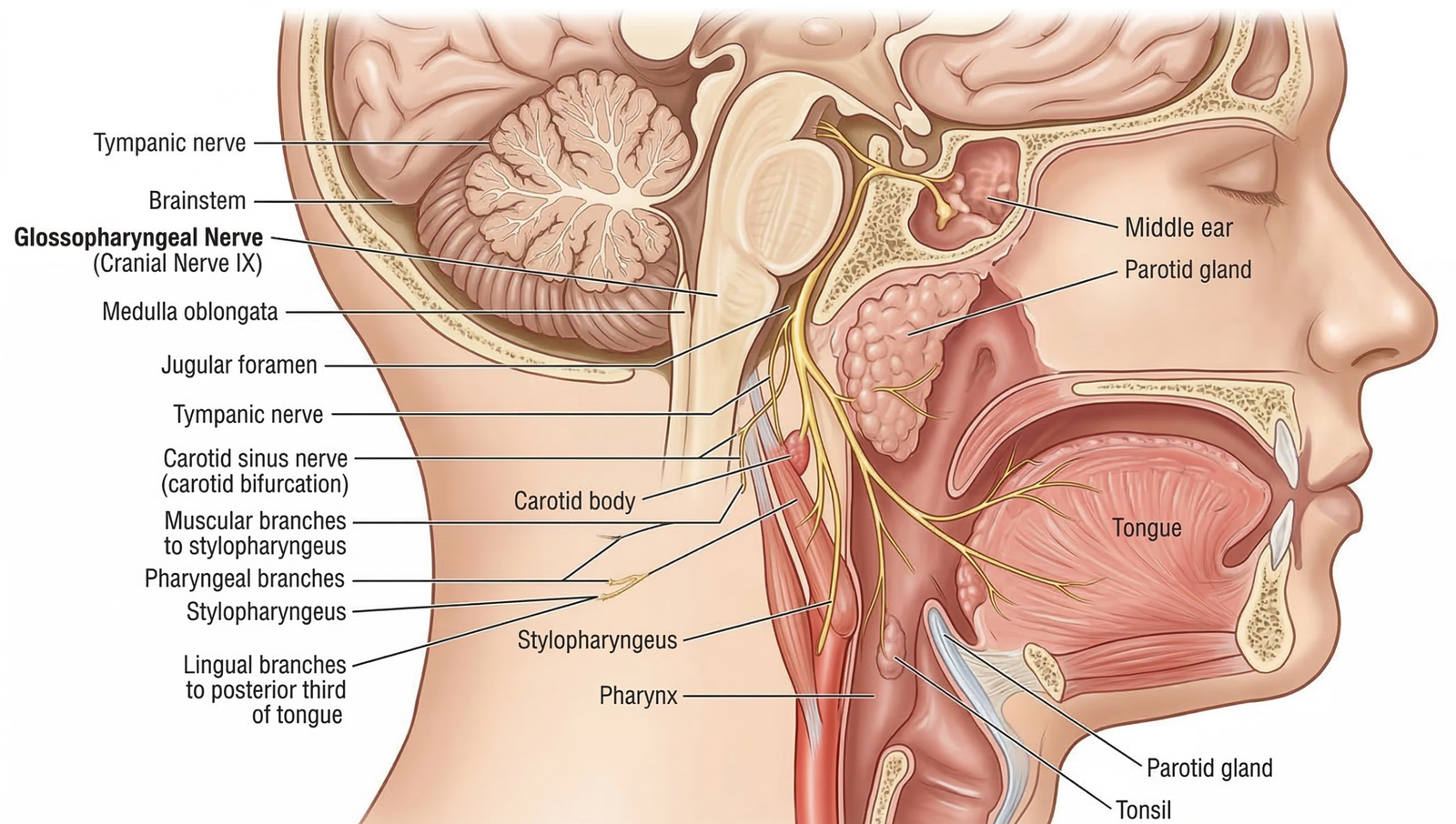
- Origin: The nerve originates in the brainstem, specifically emerging from the medulla oblongata.
- Exit: It exits the skull through an opening called the jugular foramen, traveling alongside the vagus nerve (CN X) and the accessory nerve (CN XI).
- Branching Out: As it descends into the neck, it branches out to innervate various structures in the mouth, throat, and neck.
Core Functions of the Glossopharyngeal Nerve
The duties of CN IX can be broken down into four distinct categories:
1. Special Sensory Function (Taste)
While the facial nerve (CN VII) handles taste for the front of the tongue, the glossopharyngeal nerve is responsible for the posterior one-third of the tongue. This region is particularly sensitive to bitter tastes, an evolutionary mechanism that historically helped humans detect and spit out potential toxins before swallowing.
2. General Sensory Function
CN IX provides general somatic sensation (touch, pain, and temperature) to several areas:
- The posterior one-third of the tongue.
- The tonsils and the pharynx.
- The middle ear and the Eustachian tube. This sensory input is what triggers the gag reflex when the back of the throat is stimulated.
3. Motor Function
The motor component of the glossopharyngeal nerve is highly specific. It innervates a single muscle: the stylopharyngeus. This muscle elevates the pharynx and larynx during speaking and swallowing, effectively clearing the pathway for food and preventing choking.
4. Autonomic (Parasympathetic) and Visceral Functions
- Salivation: It sends parasympathetic signals to the parotid gland (the largest salivary gland), stimulating the production of saliva to aid in digestion and lubrication.
- Blood Pressure Regulation: It receives vital sensory input from the carotid body (which monitors oxygen and carbon dioxide levels in the blood) and the carotid sinus (which monitors blood pressure). It relays this information back to the brain to help regulate cardiovascular function.
Clinical Significance and Disorders
When the glossopharyngeal nerve is damaged—whether by trauma, tumors, infections, or vascular compression—it can lead to significant functional and psychological distress.
Glossopharyngeal Neuralgia
This is a rare but severe condition characterized by intense, stabbing, or electric shock-like pain in the back of the throat, tongue, or ear. The pain is often triggered by simple actions like swallowing, chewing, coughing, or speaking.
The Psychological Impact: Because the triggers for this severe pain are essential daily activities (eating and communicating), glossopharyngeal neuralgia can severely impact a patient’s mental health. It frequently leads to severe anxiety around eating (phagophobia), resulting in weight loss, social isolation, and depressive symptoms. The anticipation of the pain can be just as debilitating as the pain itself.
Loss of the Gag Reflex and Dysphagia
Damage to CN IX can result in an absent gag reflex. While this might sound harmless, the gag reflex is a crucial protective mechanism against choking. Furthermore, weakness in the stylopharyngeus muscle leads to dysphagia (difficulty swallowing). Patients with dysphagia face a high risk of aspiration pneumonia (inhaling food or liquid into the lungs), which requires careful clinical management and speech-language therapy.
Summary
The glossopharyngeal nerve may not be the most famous cranial nerve, but its role is undeniable. By managing taste, regulating blood pressure, producing saliva, and ensuring we swallow safely, CN IX bridges the gap between our internal biological drives and our interaction with the outside world. For practitioners and students of neuroanatomy and biological psychology, respecting the complexity of the ninth cranial nerve is key to understanding the holistic nature of human health.