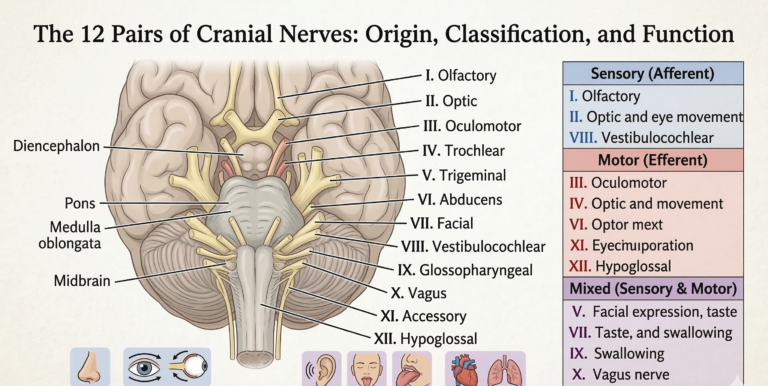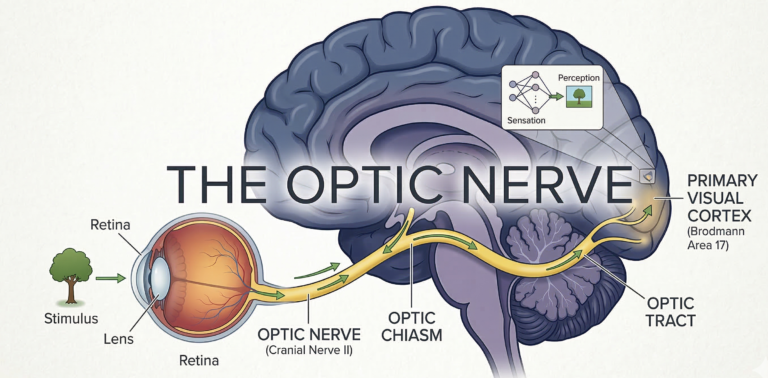

The human sensory experience is a fundamental component of psychology, shaping how we perceive, remember, and interact with the world around us. Among our cranial nerves, the olfactory nerve (Cranial Nerve I or CN I) holds a unique and powerful position. As the conduit for our sense of smell (olfaction), it is the only sensory system that bypasses the brain’s central relay station—the thalamus—and routes directly into the regions responsible for emotion and memory.
Understanding the olfactory nerve is essential not just for neurobiologists, but for psychologists, as it provides biological context for mood regulation, associative learning, and cognitive decline.
Anatomy and the Olfactory Pathway
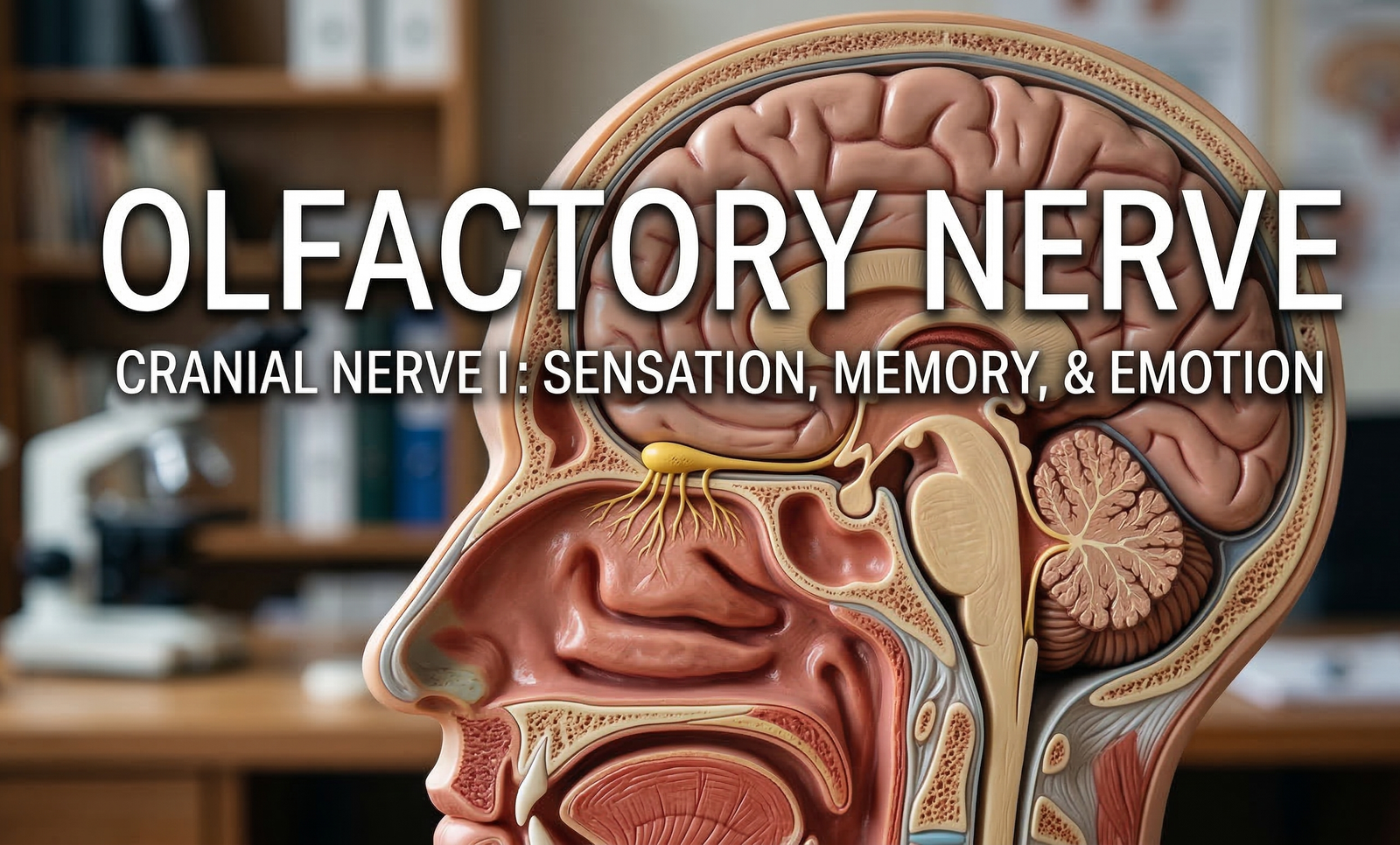
Unlike most other nerves, the olfactory nerve is not a single, thick trunk. Instead, it is a collection of delicate, sensory nerve fibers. It is the shortest cranial nerve and one of only two cranial nerves (along with the optic nerve) that emerge directly from the cerebrum rather than the brainstem.
The journey of a scent from the environment to the brain follows a specific biological pathway:
- Olfactory Epithelium: Scent molecules (odorants) enter the nasal cavity and bind to specialized receptor cells located in the olfactory epithelium, a patch of tissue high inside the nose.
- The Cribriform Plate: The unmyelinated axons of these receptor cells bundle together to form the true olfactory nerve. These fibers travel upward, passing through tiny holes in the cribriform plate of the ethmoid bone (part of the skull).
- The Olfactory Bulb: Once through the skull, the nerve fibers synapse (connect) with mitral cells in the olfactory bulb, which sits on the underside of the frontal lobe.
- The Olfactory Tract and Cortex: From the bulb, the signal travels down the olfactory tract directly into the primary olfactory cortex (including the piriform cortex and the amygdala) and secondary areas like the hippocampus and orbitofrontal cortex.
Key Psychological Note: Because the olfactory nerve routes directly into the limbic system (the amygdala and hippocampus) before reaching the thalamus or neocortex, olfactory processing is intrinsically linked to unconscious emotional processing and memory consolidation.
The Psychology of Smell: Emotion and Memory
For psychologists, the most fascinating aspect of the olfactory nerve is its direct line to the limbic system. This neuroanatomical shortcut explains several well-documented psychological phenomena.
The Proustian Phenomenon
Often referred to as involuntary autobiographical memory, the “Proustian phenomenon” describes how a specific odor can trigger a sudden, vivid, and highly emotional memory from the past. Because the olfactory bulb projects directly to the hippocampus (the brain’s memory center), smells become deeply encoded with the context and emotions of the moment they were first encountered.
Emotion and Mood Regulation
The amygdala, which processes emotion (particularly fear and pleasure), receives direct input from the olfactory tract. Consequently, certain scents can immediately alter mood, reduce anxiety, or trigger a trauma response (such as in PTSD) before the conscious brain has even identified what the smell is.
Flavor Perception and Behavior
While taste relies on the facial and glossopharyngeal nerves, the complex perception of flavor is largely dependent on the olfactory nerve (retronasal olfaction). Loss of this sensory input drastically alters eating behaviors, which can subsequently impact a patient’s psychological well-being and physical health.
Clinical Significance and Olfactory Disorders
Damage to the olfactory nerve can occur through traumatic brain injury (particularly shearing forces that tear the delicate fibers at the cribriform plate), upper respiratory infections, tumors, or neurodegenerative diseases.
Disruptions to this nerve manifest in several ways, deeply affecting a patient’s quality of life and mental health.
| Condition | Description | Psychological Impact |
| Anosmia | Complete loss of the sense of smell. | High correlation with depression, feelings of isolation, and loss of appetite. |
| Hyposmia | Diminished sense of smell. | Frustration, reduced enjoyment of daily activities, potential safety risks (inability to smell smoke or gas). |
| Parosmia | Distorted perception of normal odors (e.g., coffee smells like rotting garbage). | Severe dietary restrictions, anxiety, and social withdrawal. |
| Phantosmia | Olfactory hallucinations (smelling things that are not there). | Can be deeply distressing; often linked to trauma, seizures, or psychiatric conditions. |
Olfaction as a Biomarker for Cognitive Decline
In neuropsychology, the assessment of the olfactory nerve has become a critical diagnostic tool. A decline in olfactory function (idiopathic anosmia or hyposmia) is often one of the earliest prodromal symptoms of neurodegenerative disorders, predating memory loss or motor symptoms by several years in both Alzheimer’s disease and Parkinson’s disease.
How is the Olfactory Nerve Assessed?
In clinical and neuropsychological settings, testing the olfactory nerve is straightforward. Practitioners typically use standardized scratch-and-sniff tests, such as the University of Pennsylvania Smell Identification Test (UPSIT). Patients are asked to identify a series of common odors (like soap, coffee, or peppermint) with one nostril closed at a time.
Conclusion
The olfactory nerve is far more than a biological mechanism for detecting environmental chemicals. For the field of psychology, Cranial Nerve I is the physiological bridge between the external world and the internal landscape of human emotion and memory. Understanding its pathways, its disorders, and its psychological impacts allows for a more holistic approach to patient care, cognitive assessment, and the study of the human mind.