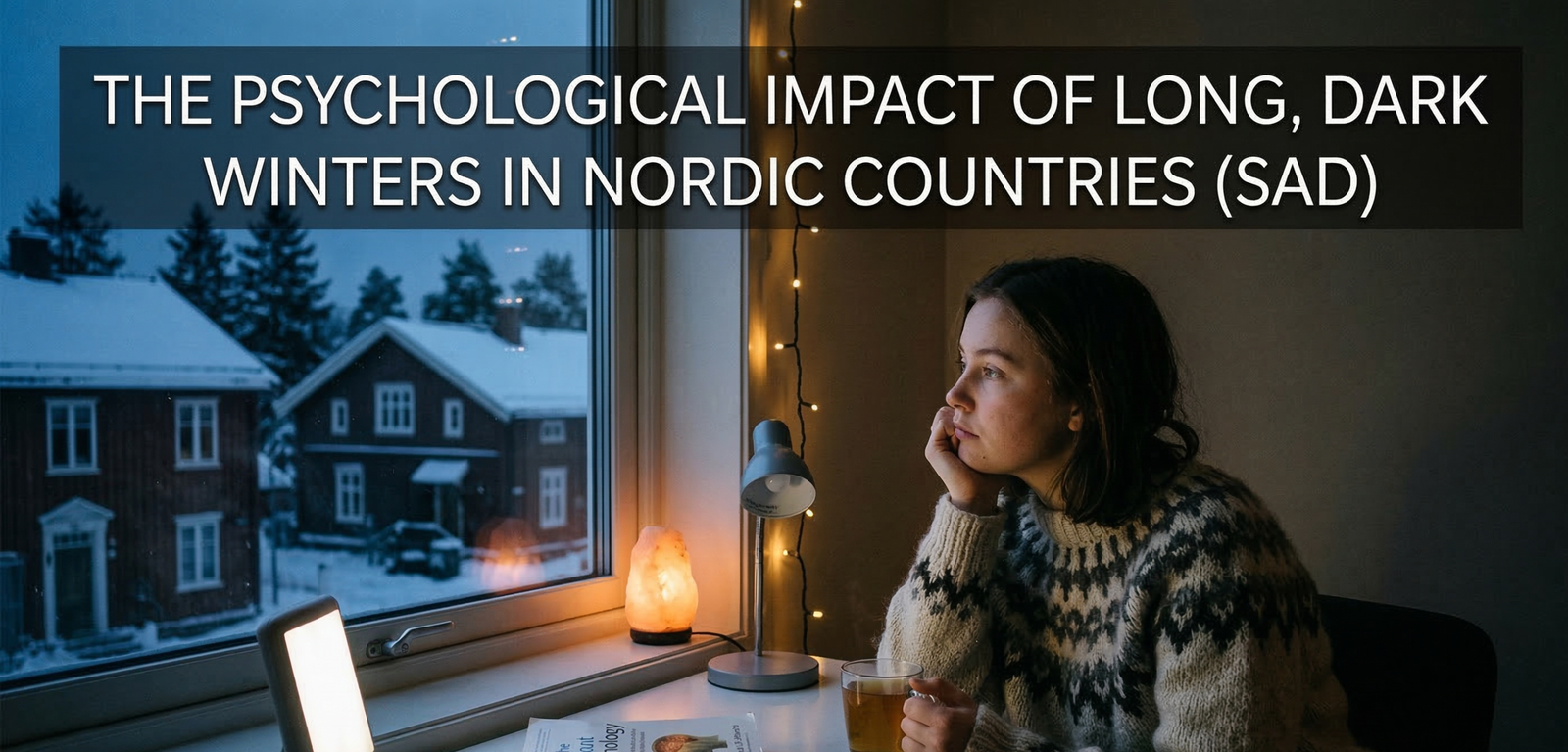

The Nordic region—encompassing countries like Norway, Sweden, Finland, Denmark, and Iceland—is renowned for its breathtaking landscapes and high standards of living. However, these geographical locations also come with a unique environmental challenge: extreme seasonal variations in daylight. When analyzing the phenomenon of Seasonal Affective Disorder Nordic countries face every year, we gain a fascinating insight into the psychological impact of the prolonged Polar Night, where the sun barely rises and casts the landscape in a twilight-like darkness.
While locals have adapted to these extremes over centuries, the dramatic reduction in sunlight takes an undeniable physiological and psychological toll. At the center of this seasonal shift is a condition known as Seasonal Affective Disorder (SAD).
Understanding Seasonal Affective Disorder Nordic Countries Experience
Seasonal Affective Disorder is a type of depression that is directly related to changes in seasons. In the Diagnostic and Statistical Manual of Mental Disorders (DSM-5), it is not listed as a separate disorder but rather as a “specifier” for Major Depressive Disorder or Bipolar Disorder—specifically, “with seasonal pattern.”
For most people dealing with Seasonal Affective Disorder Nordic countries and other high-latitude regions experience, symptoms start in the late fall and continue into the winter months, sapping energy and triggering depressive episodes.
The Science of Darkness: How Winter Impacts the Brain
To understand the psychological impact of these long winters, we have to look at how light interacts with human biology. The lack of sunlight disrupts several critical biological processes:
- Circadian Rhythm Disruption: Our internal biological clock relies on sunlight cues to regulate sleep-wake cycles. When sunlight is scarce, this internal clock can fall out of sync with the standard 24-hour day, leading to feelings of disorientation, fatigue, and lethargy.
- Melatonin Overproduction: Melatonin is the hormone responsible for regulating sleep. Darkness stimulates its production. During long, dark winters, the brain may produce excessive melatonin, leaving individuals feeling persistently groggy and sluggish during waking hours.
- Serotonin Depletion: Sunlight helps trigger the production of serotonin, a crucial neurotransmitter associated with mood elevation, focus, and calmness. Reduced sunlight can cause a drop in serotonin levels, which is a primary biological trigger for depression.
Recognizing the Symptoms of Winter SAD
The psychological and behavioral shifts associated with winter SAD go beyond the typical “winter blues.” They can significantly impair daily functioning. Common symptoms include:
- Hypersomnia: Oversleeping and struggling to wake up in the morning.
- Extreme Fatigue: A persistent lack of energy, making even small tasks feel physically taxing.
- Appetite Changes: Intense cravings for carbohydrates and comfort foods, often resulting in weight gain.
- Social Withdrawal: A strong desire to “hibernate,” leading to isolation from friends, family, and social activities.
- Cognitive Impairment: Difficulty concentrating, focusing, or processing information.
- Mood Changes: Persistent feelings of sadness, hopelessness, irritability, or anxiety.
The Nordic Paradox: Resilience and Cultural Coping
Interestingly, while one might expect the prevalence of Seasonal Affective Disorder Nordic countries record to be extraordinarily high due to the extreme darkness, research presents a “Nordic paradox.” Studies, particularly those observing populations in Northern Norway and Iceland, show that rates of winter depression are surprisingly lower than expected.
Psychologists attribute this resilience to a mix of genetic adaptation and powerful cultural coping mechanisms:
1. The Power of Mindset
Instead of dreading the darkness, there is a cultural acceptance and even appreciation of it. Psychology researchers have found that people in regions like Northern Norway possess a “positive wintertime mindset,” viewing the season as an opportunity for distinct outdoor activities rather than a limitation.
2. Cultural Concepts of Coziness
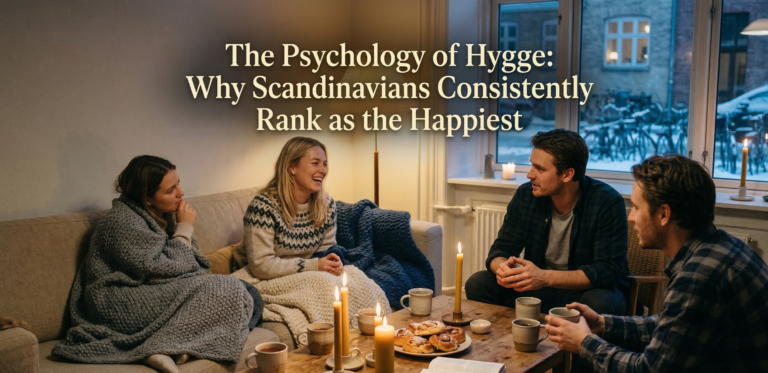
Nordic nations have embedded the concept of psychological comfort into their culture to combat the dark. Concepts like the Danish hygge, Norwegian koselig, and Swedish mysig emphasize creating warm, inviting indoor environments to actively combat the isolating effects of SAD.
3. Friluftsliv (Free Air Life)
Despite the cold and dark, the Nordic concept of friluftsliv encourages spending time outdoors regardless of the weather. Exposure to whatever natural light is available, combined with the mood-boosting effects of physical exercise, serves as a natural buffer against depressive symptoms.
Clinical Treatments for SAD
For individuals where a positive mindset and cultural practices are not enough to ward off winter depression, clinical psychology and medicine offer highly effective treatments:
- Light Therapy (Phototherapy): The first-line treatment for SAD involves sitting in front of a specialized light box (emitting at least 10,000 lux) each morning to simulate the missing sunlight.
- Cognitive Behavioral Therapy (CBT-SAD): A specific type of CBT adapted for SAD helps patients identify negative thought patterns related to the winter season and replaces them with positive behavioral activations.
- Medication: Selective Serotonin Reuptake Inhibitors (SSRIs) can be highly effective in regulating mood for those suffering from severe seasonal depression.
- Vitamin D Supplementation: Because the skin cannot synthesize Vitamin D from the sun during the Nordic winter, supplementation is widely recommended to support overall neurological and physical health.
Final Thoughts
The long, dark winters of the Nordic region present a fascinating psychological study. They highlight the profound ways in which our environment and biology interact to shape our mental health. Through a combination of cultural reframing, community support, and clinical interventions, the psychological impact of the darkness can be managed effectively.