
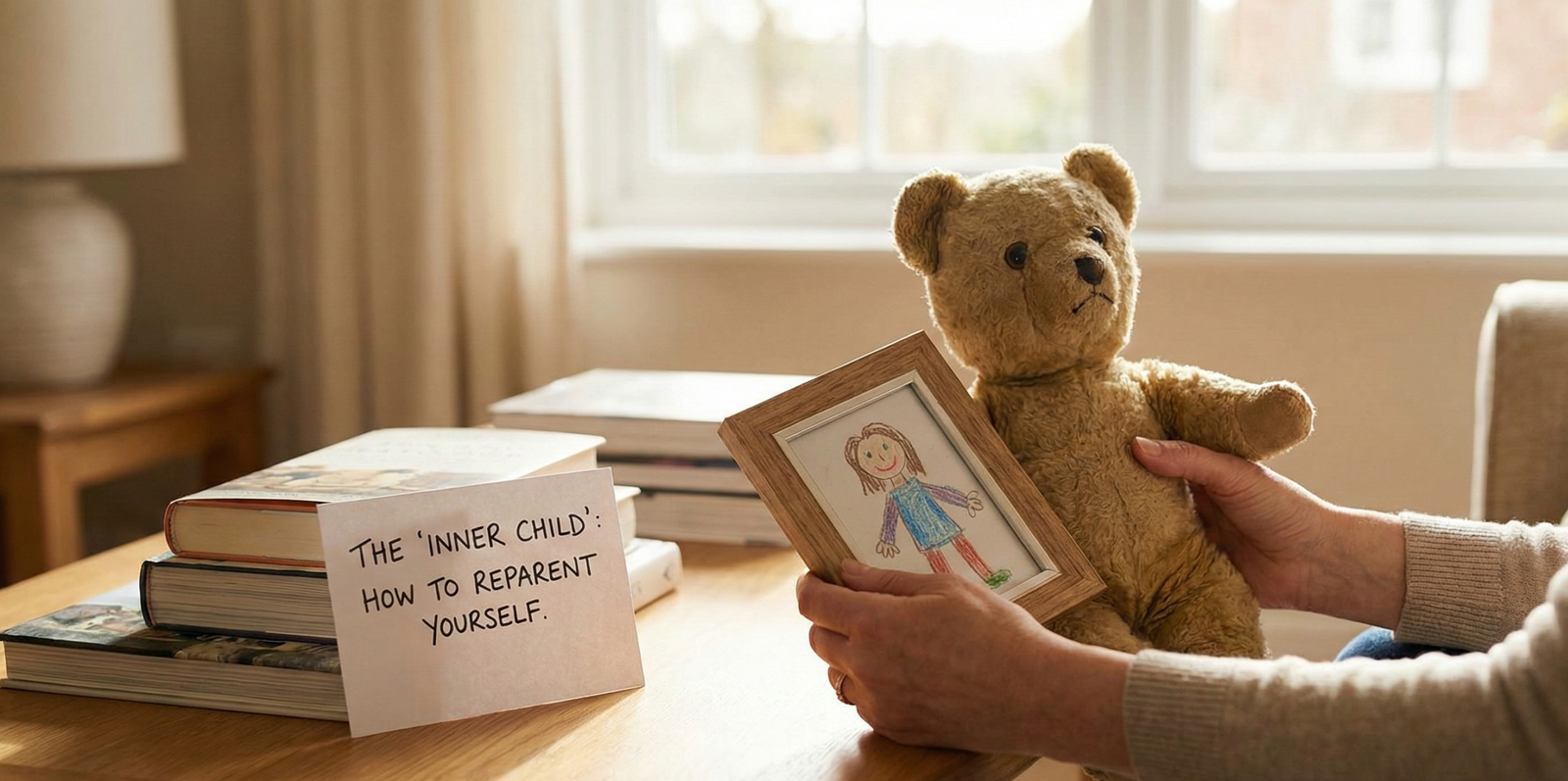
Have you ever found yourself reacting to a minor conflict with a burst of anger that felt disproportionate to the situation? Or perhaps you’ve felt a sudden, crushing sense of abandonment when a friend didn’t text back immediately? These intense emotional reactions often don’t come from our adult selves, but from a younger, more vulnerable part of our psyche: the Inner Child.
The concept of the Inner Child is not just a metaphor; it is a psychological reality that influences our behavior, relationships, and self-perception. Understanding this part of yourself and learning how to reparent yourself is one of the most transformative journeys you can undertake for your mental well-being.
What is the “Inner Child”?
The “Inner Child” is a term used in popular psychology and psychotherapy to denote a semi-independent subpersonality within the unconscious mind. It represents the sum of your childhood experiences, memories, and emotions.
- The Happy Child: This aspect holds your capacity for innocence, wonder, playfulness, creativity, and joy.
- The Wounded Child: This aspect carries the burdens of unresolved childhood trauma, unmet needs, suppressed emotions, and the pain of feeling unsafe or unloved.
When we talk about “healing the inner child,” we are addressing the Wounded Child—the part of you that may still be waiting for the validation, safety, and love you didn’t receive when you were young.
Why Do We Need Reparenting?
Reparenting is the act of giving yourself the emotional support, discipline, and care that you may have missed out on during childhood. Even in the most loving families, parents are imperfect humans who cannot meet every single emotional need of a child. In more difficult environments, where neglect or abuse occurred, the deficits are more profound.
If your emotional needs were ignored, dismissed, or punished, your inner child learned to suppress them to survive. As an adult, this manifests as:
- Difficulty regulating emotions (extreme outbursts or complete numbness).
- Fear of abandonment or rejection.
- Perfectionism and a harsh inner critic.
- People-pleasing behaviors and poor boundaries.
- Self-sabotage in relationships and career.
Reparenting bridges this gap. It allows you, the Wise Adult Self, to step in and become the caregiver your inner child needs now.
Signs Your Inner Child Needs Healing
How do you know if your inner child is calling out for help? Look for these signs in your daily life:
- Disproportionate Reactions: You get extremely upset over small things (e.g., spilling coffee ruins your whole day).
- Childish Behavior in Arguments: You resort to name-calling, silent treatment, or tantrums during conflicts.
- Chronic Insecurity: You constantly seek external validation to feel worthy.
- Rigidity: You struggle to “play” or relax, feeling that you must always be productive to be valuable.
- Avoidance: You numb your feelings with food, substances, or endless scrolling to avoid sitting with uncomfortable emotions.
Step-by-Step Guide: How to Reparent Yourself
Reparenting is a practice, not a one-time event. It involves building a relationship of trust between your adult self and your inner child. Here are the core pillars of this process.
1. Acknowledge and Validate
The first step is simply acknowledging that the inner child exists. Many of us ignore this part of ourselves because it holds pain.
- The Practice: When you feel a strong emotion, pause. Instead of pushing it away, say, “I see that you are hurting. It makes sense that you feel this way.” Validation is the antidote to the gaslighting or dismissal you may have experienced as a child.
2. Dialogue and Connection
You cannot heal a relationship without communication. You need to talk to your inner child.
- Journaling Technique: Write a letter to your younger self. Or, try a two-handed dialogue: use your dominant hand to write as your Adult Self, and your non-dominant hand to write as your Inner Child. The shakiness of the non-dominant hand often bypasses the logical brain and accesses deeper emotions.
- Visualization: Close your eyes and imagine your younger self standing in front of you. Ask them, “What do you need right now?” and listen for the answer.
3. Setting Healthy Boundaries (The Protective Parent)
Reparenting isn’t just about comforting; it’s also about protection. A good parent doesn’t let a child eat candy for dinner or play in traffic.
- Self-Discipline: Be the parent who ensures you get enough sleep, eat nutritious food, and manage your finances. This signals to your inner child, “I am taking care of us. We are safe.”
- External Boundaries: Learn to say “no” to people or situations that drain you. When you protect your energy, your inner child feels safe.
4. Play and Creativity
Healing isn’t all heavy work. Your inner child also holds your creativity and joy.
- Reclaim Play: Engage in activities you loved (or wanted to do) as a child. Finger painting, jumping in puddles, building LEGO sets, or watching cartoons. Do these things without any goal of “productivity.”
- Curiosity: Approach the world with wonder rather than judgment.
5. Dealing with the Inner Critic
Often, we internalize the critical voices of our past caregivers. This becomes a harsh inner critic that attacks us when we make mistakes.
- Correction: When you hear the inner critic say, “You’re so stupid,” intervene as the protective parent. Say, “That is not true. I made a mistake, and that is okay. I am still learning.”
A Practical Exercise: The “Time Travel” Check-In
Whenever you feel triggered (overwhelmed, angry, or scared), try this quick exercise:
- Identify the Age: Close your eyes. Ask yourself, “How old do I feel right now?” You might get a number, like 5 or 12.
- Locate the Feeling: Where is this emotion in your body? A tight chest? A knot in the stomach?
- Offer Comfort: Place your hand on that part of your body. Speak to that age. “I know you’re scared. I’m here now. I’m the adult, and I can handle this situation. You don’t have to fix it.”
Conclusion
Reparenting yourself is a courageous act of self-love. It is the process of breaking generational cycles of trauma and deciding that the buck stops with you. By listening to your inner child, validating their pain, and offering the safety they craved, you integrate your past into a healthier, more whole present.
Remember, the goal isn’t to silence the inner child, but to let them know they are no longer walking through the world alone. You are with them, and together, you are safe.