
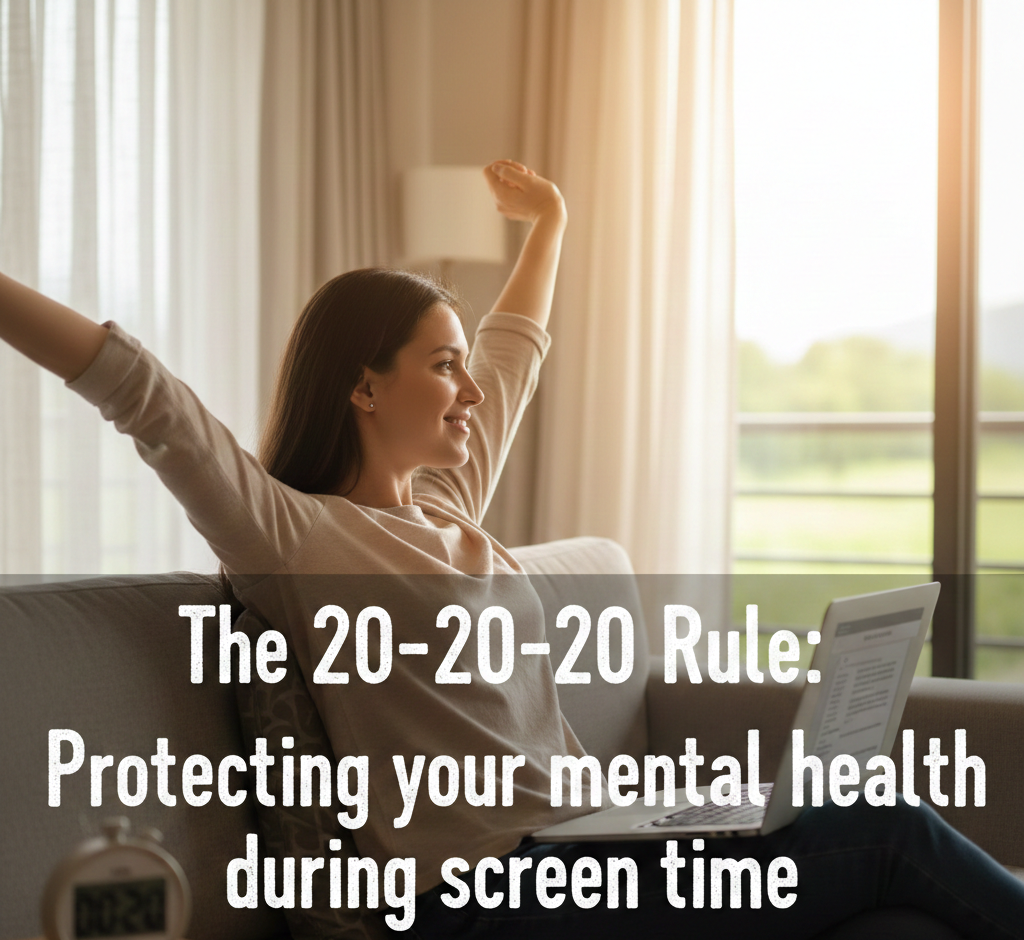
In the digital age, our lives are mediated by screens. From the moment we wake up to the moment we sleep, we are often locked in a visual embrace with smartphones, laptops, and tablets. While this connectivity drives productivity, it comes at a steep cost: Digital Eye Strain (DES) and, largely ignored but equally critical, Mental Fatigue.
At Formal Psychology, we believe that physical health and psychological well-being are deeply interconnected. One of the simplest, yet most effective cognitive behavioral tools you can implement today is the 20-20-20 Rule.
What is the 20-20-20 Rule?
The rule is a simple mnemonic designed to reduce eye strain and reset your focus. The premise is straightforward:
“Every 20 minutes, look at something 20 feet away for at least 20 seconds.”
Originally popularized by optometrists to combat Computer Vision Syndrome (CVS), this technique has profound implications for your neurological and psychological state. It acts as a “micro-break” for your brain, preventing the accumulation of stress that leads to burnout.
The Psychology of Screen Fatigue
Why do we feel drained after hours of scrolling or working? It isn’t just about tired eyes; it is about Cognitive Load.
1. The Vigilance Decrement
Psychological research shows that sustained attention on a single task drains cognitive resources. This is known as the “vigilance decrement.” When you stare at a screen for hours without a break, your brain’s ability to process information slows down, leading to frustration and increased error rates.
2. The Physical-Mental Feedback Loop
There is a direct link between physical discomfort and emotional regulation.
- Physical Symptom: Eye strain, dry eyes, and tension headaches.
- Psychological Response: Irritability, anxiety, and a reduced threshold for stress. By ignoring the physical signs of screen fatigue, you inadvertently trigger a stress response (cortisol spike) in the body, which mimics the feelings of anxiety.
How the 20-20-20 Rule Protects Mental Health
Implementing this rule does more than just relax your ciliary muscles; it provides a necessary cadence for your mind.
Breaks the Cycle of “Tunnel Vision”
Psychologically, “tunnel vision” is a state where our focus narrows, and we lose perspective. Taking 20 seconds to look into the distance engages your peripheral vision and spatial awareness. This physical widening of your view can subconsciously help broaden your mental perspective, reducing the feeling of being “trapped” in your work.
Resets the Amygdala
Constant focused attention is metabolically expensive for the brain. A 20-second break allows for a momentary reset of the default mode network (DMN)—the part of the brain associated with daydreaming and rest. This brief pause can lower the nervous system’s arousal, preventing the “fight or flight” feeling associated with high-pressure digital work.
Increases Mindfulness
Using the 20-20-20 rule requires intentionality. You must be mindful of the passage of time. This practice cultivates a habit of self-monitoring, where you become more attuned to your body’s signals of fatigue before they turn into exhaustion.
How to Implement the Rule Effectively
To make this a habit rather than a chore, integrate it into your workflow using behavioral psychology cues:
- Set an External Trigger: Our internal clocks are poor at judging 20-minute intervals. Use a timer, a smartwatch vibration, or a browser extension specifically designed for the 20-20-20 rule.
- Find Your “20 Feet”: You don’t need a tape measure. Simply look out a window, down a hallway, or at a tree across the street. The goal is to relax the focus so your eyes are not converging on a near object.
- The “Blink” Bonus: While looking away for 20 seconds, make a conscious effort to blink slowly. Screen usage reduces our blink rate by up to 66%, leading to dry eyes. Blinking signals safety and relaxation to the brain.
Beyond the Rule: Optimizing Your Digital Environment
While the 20-20-20 rule is a powerful frontline defense, consider these additional ergonomic and psychological adjustments:
- Adjust Screen Brightness: Ensure your screen matches the ambient lighting of the room. A screen that is too bright acts like a flashlight in your eyes; one that is too dim causes strain.
- Blue Light Management: Blue light suppresses melatonin and keeps the brain in a state of high alert. Use “Night Shift” modes or blue-light-blocking glasses to reduce physiological arousal in the evening.
- The “Formal” Detachment: Create a ritual for ending your screen time. When you are done for the day, physically close the laptop or put the phone in a drawer. This signals to your brain that the “work” mode is off.
Conclusion
The 20-20-20 Rule is not just an eye exercise; it is a boundary you set for your own well-being. In a world that demands constant attention, taking 20 seconds to look away is a radical act of self-care. It reminds us that while our work may be digital, our bodies and minds are very much analog—and they need rest to thrive.
Prioritize your vision and your peace of mind today. Look up, look away, and breathe.