
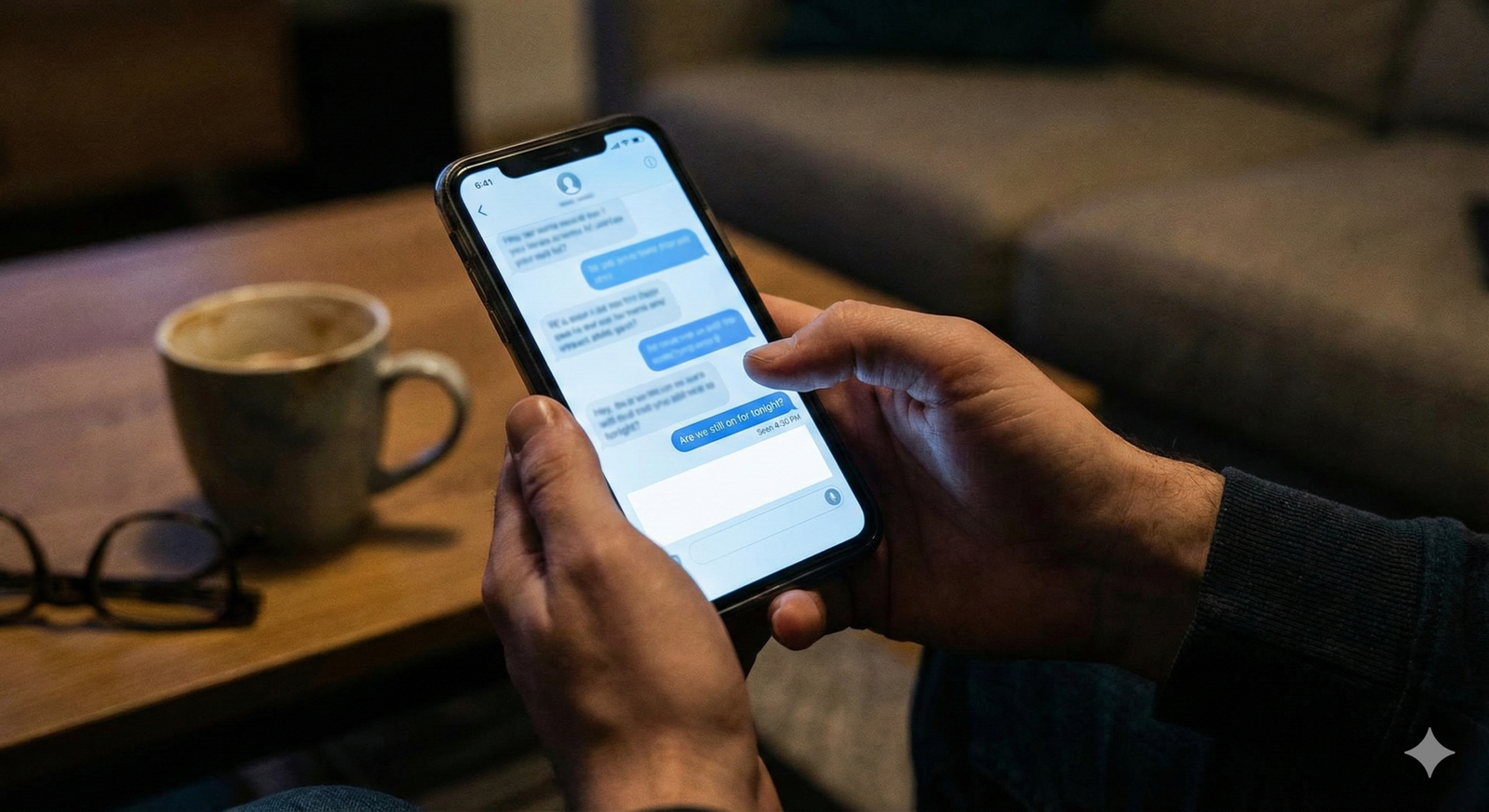

In the modern digital landscape, few things provoke as much immediate visceral discomfort as the “Seen” receipt. You send a text, you see the timestamp indicating it was read, and then… silence.
For someone with high social anxiety (or even the average smartphone user), that silence isn’t empty; it is loud. It screams rejection, indifference, or anger. But why does a lack of digital pixels trigger such a profound biological threat response?
At Formal Psychology, we look beyond the screen to understand the mechanism. Here is the comprehensive psychology behind why being “left on read” feels like a social crisis.
1. The Brain’s Hatred of Ambiguity (Uncertainty Reduction Theory)
The human brain is an uncertainty-reducing machine. Evolutionarily, knowing for sure that a predator is nearby is safer than not knowing if one is nearby. We crave closure.
When a text is delivered but not opened, we have an excuse: They haven’t seen it yet. But the “Seen” receipt strips away that buffer. Now, you know they know. The variable shifts from “availability” to “intent.”
- The Ambiguity Gap: The silence creates a vacuum of information.
- Catastrophizing: An anxious brain rushes to fill that vacuum with the worst-case scenario (e.g., “They are mad at me,” “I said something stupid,” “They don’t respect me”).
2. The Social Monitoring System
Psychologists often refer to the “sociometer theory,” which suggests our self-esteem functions as an internal gauge of our social acceptance.
In face-to-face interaction, we have thousands of micro-cues to interpret: tone of voice, facial expression, body posture. If someone pauses before answering in person, you can see if they are thinking or if they are angry.
Texting strips away 90% of these cues. The “Seen” icon is a raw data point without emotional context. Without the softening blow of a smile or a nod, the silence feels like a cold, blank stare.
3. Rejection Sensitivity Dysphoria (RSD)
For individuals prone to anxiety or those with ADHD, the “Seen” receipt can trigger Rejection Sensitivity Dysphoria.
This is an extreme emotional sensitivity to the perception of being rejected or criticized. The logic follows a painful path:
- Trigger: The text is read but not answered.
- Interpretation: This is a deliberate act of exclusion.
- Reaction: Intense shame, sadness, or defensive anger.
The read receipt transforms a casual delay into a “micro-rejection.”
4. The Dopamine Loop and Variable Reward
Texting is chemically addictive. Sending a message creates a “tension loop”—a state of anticipation. Receiving a reply releases dopamine, the brain’s pleasure and reward neurotransmitter.
When you are left on “Seen,” that loop remains open. The tension builds without the release. This is known as the Zeigarnik Effect—the psychological tendency to remember interrupted or incomplete tasks better than completed ones. Your brain literally cannot “put down” the conversation because it feels unfinished, keeping you in a state of high cognitive alert.
5. The Spotlight Effect
Anxiety often forces us into the center of our own universe—a phenomenon known as the Spotlight Effect.
We assume others are thinking about us as much as we are thinking about ourselves. If we are staring at the phone waiting for a reply, we assume the other person is staring at their phone deciding not to reply.
The Reality: They might be driving, cooking, working, or simply mentally exhausted. The “Seen” receipt often means “I acknowledge this, but I don’t have the mental bandwidth to reply right now.” It is rarely a commentary on your worth.
6. Breaking the Cycle: How to Cope
If you find your mood dictated by the “Seen” status, try these psychological re-framing techniques:
- Turn Off Read Receipts: If knowing they saw it hurts you, assume they knowing you saw it stresses them out too. opting out of the system entirely can lower the stakes.
- The “Rule of Fact”: Write down what you essentially know.
- Fact: They saw the message.
- Fact: They haven’t replied yet.
- Fiction: They hate me. (Separate the event from the story you tell yourself).
- Bridge the Gap: If the anxiety is overwhelming, send a “bridge” text after a reasonable time (e.g., “No rush on this, just wanted to share!”). This signals that you aren’t demanding immediate attention, which often relieves the pressure on both sides.
Conclusion
The “Seen” receipt is a technological feature that our biology hasn’t caught up to yet. It provides information without context, and for the anxious mind, that is a dangerous combination.
Understanding that this anxiety is a biological glitch—not a truth about your social standing—is the first step toward reclaiming your peace of mind.



Leave a Comment