
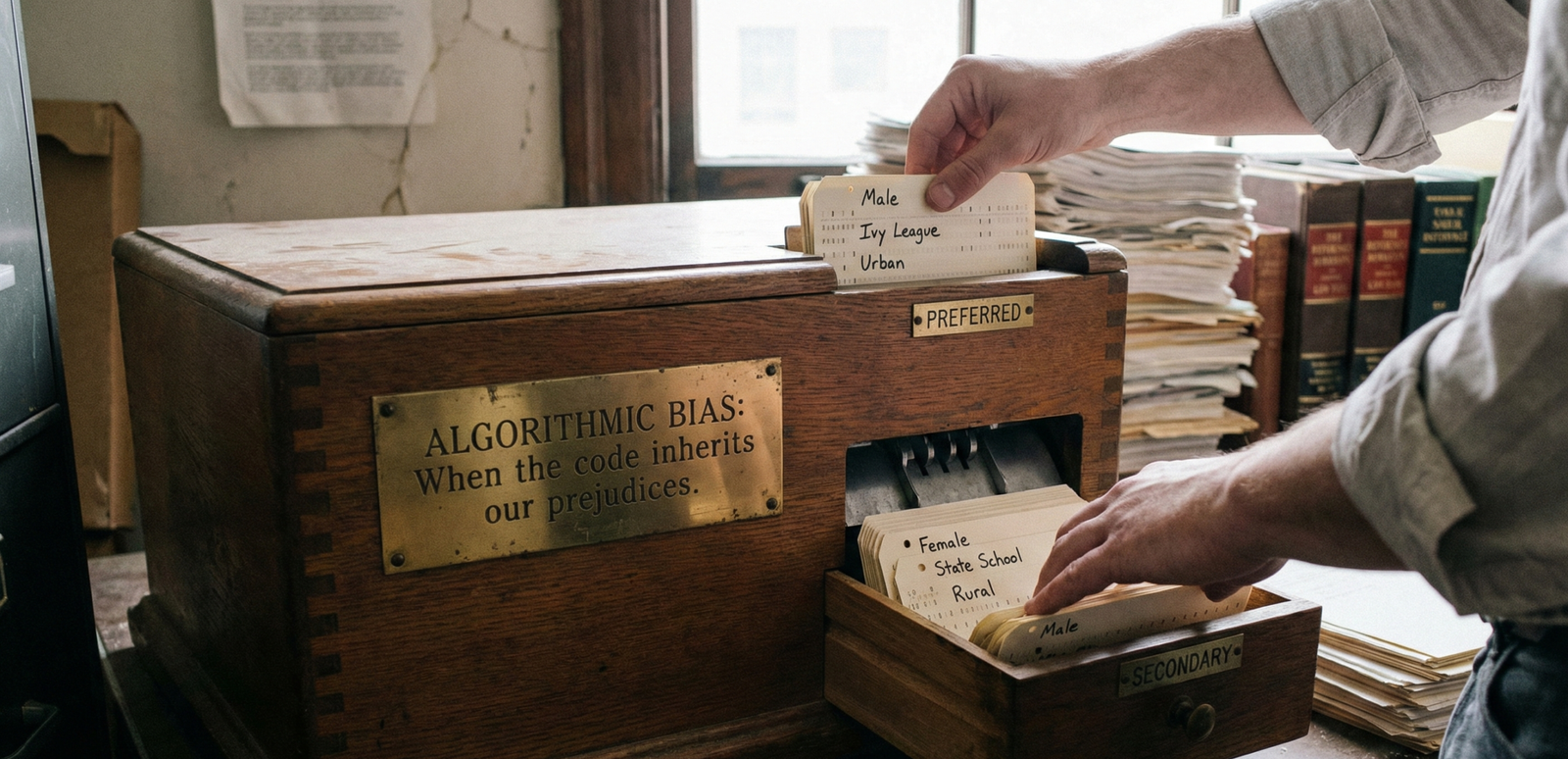

In the modern digital landscape, we often view computers as the ultimate objective arbiters. We assume that unlike humans—who are prone to fatigue, emotional swaying, and cognitive errors—machines operate on pure, neutral logic. However, from a psychological perspective, Artificial Intelligence (AI) and machine learning models are often simply “mirrors” reflecting the psyche of their creators.
Algorithmic bias occurs when computer systems reflect the implicit values, morals, and prejudices of the humans who design them or the historical data they are fed. For readers of Formal Psychology, understanding this requires looking not just at the code, but at the human cognition behind it.
Defining the Problem: What is Algorithmic Bias?
Algorithmic bias refers to systematic and repeatable errors in a computer system that create unfair outcomes, such as privileging one arbitrary group of users over others.
In psychology, we study heuristics—mental shortcuts that humans use to make decisions quickly. Algorithms function similarly; they identify patterns to predict outcomes. However, if the “textbook” (data) the algorithm studies is written with historical prejudice, the algorithm will learn to be prejudiced. It does not “decide” to be racist or sexist; it calculates that these traits correlate with specific outcomes based on flawed data.
The Psychology of Data: How Bias Enters the Machine
To understand how code becomes biased, we must look at the three psychological entry points of error:
1. Historical Bias (The Training Data)
Machine learning models are trained on vast datasets of past human behavior. If an AI is trained to identify “successful CEOs” using data from the last 50 years, it will notice that the vast majority were white men. The algorithm, lacking social context, infers that “being male” and “being white” are variables that predict success, rather than result from historical privilege.
- Psychological Parallel: This is similar to conditioning. If the input consistently pairs “Leadership” with “Male,” the association becomes solidified.
2. Representation Bias (The Sampling Error)
This occurs when the data used to train the algorithm does not accurately represent the population it serves. For example, facial recognition software has historically struggled to identify darker-skinned faces because the developers primarily used datasets dominated by lighter-skinned individuals.
- Psychological Parallel: This mirrors the Availability Heuristic, where we judge the world based only on the examples most immediately available to us.
3. The Creator’s Blind Spot (Implicit Bias)
Developers are humans with their own subconscious biases. A team of engineers from similar demographic backgrounds might fail to foresee how a feature could harm a marginalized group simply because it is outside their lived experience.
- Psychological Parallel: This is a classic example of In-Group Bias, where we design systems that work best for people who look and think like us.
Real-World Case Studies
The Amazon Recruitment Tool
In one of the most famous examples, Amazon scrapped an AI recruiting tool that showed bias against women. The system was trained on resumes submitted to the company over a 10-year period. Since the tech industry is male-dominated, the algorithm taught itself that words like “women’s chess club” or graduates from all-women’s colleges were negative indicators for hiring.
COMPAS and Criminal Justice
The COMPAS algorithm, used in US court systems to predict recidivism (the likelihood of a criminal re-offending), was found to falsely flag Black defendants as high-risk at nearly twice the rate of white defendants. The system had codified systemic racism into a “risk score,” giving judges a mathematically “valid” reason to impose harsher sentences.
The Psychological Impact on Society
When algorithms discriminate, the psychological toll on the affected individuals is profound.
- Minority Stress: Constant exposure to digital discrimination (e.g., search engines showing criminal mugshots for “Black teenagers” but stock photos for “White teenagers”) contributes to chronic stress and anxiety in marginalized groups.
- Gaslighting: Because algorithms are viewed as “math,” victims of algorithmic bias are often told their exclusion is “just what the data says.” This invalidates their experience of discrimination, a phenomenon known as technological gaslighting.
- Self-Fulfilling Prophecies: If an algorithm predicts a certain group is less credit-worthy, they are denied loans. Consequently, they cannot build credit, which “proves” the algorithm right. In psychology, this feedback loop reinforces negative stereotypes.
Debiasing the Machine (and the Human)
Addressing algorithmic bias is not just a coding challenge; it is a psychological and ethical one.
- Diverse Development Teams: Just as group therapy benefits from diverse perspectives, engineering teams need diversity to identify blind spots in logic and data collection.
- Algorithmic Audits: Companies must implement “psychological evaluations” for their code—regular audits to test for disparate impacts on different demographic groups.
- Explainable AI (XAI): We need to move away from “black box” models where we don’t know how a decision was made. If we cannot explain why an AI rejected a loan application, we cannot determine if the reason was valid or biased.
Conclusion
As we integrate AI deeper into psychology, healthcare, and daily life, we must remember that code is not a divine truth. It is a cultural artifact. It preserves the history—and the neuroses—of the society that created it.
For psychologists and developers alike, the goal is the same: to recognize our biases, bring them into conscious awareness, and correct them. We must ensure that our machines do not become high-speed engines for our oldest prejudices.