
In the last decade, Artificial Intelligence has moved from winning chess games to writing poetry, diagnosing diseases, and—perhaps most disarmingly—acting as a confidant. With the rise of Large Language Models (LLMs) and chatbots like ChatGPT, Replika, and Woebot, millions of users are finding themselves in surprisingly deep conversations with code.
But when an AI says, “I understand how painful that must be,” what is actually happening? Is this empathy, or merely a statistical prediction of what empathy sounds like?
For psychologists and tech enthusiasts alike, the intersection of AI and empathy represents one of the most profound frontiers in modern science. This article explores the mechanics of artificial emotion, the psychological divide between simulation and feeling, and the ethical implications of a world where machines can “care.”
The Science of “Artificial Empathy”
To understand if a machine can empathize, we must first understand how it processes human emotion. In the field of computer science, this is known as Affective Computing—the study and development of systems that can recognize, interpret, and simulate human affects.
Current AI models do not “feel” in the biological sense. Instead, they utilize two primary tools:
- Natural Language Processing (NLP): This allows the AI to parse the syntax and semantics of your speech.
- Sentiment Analysis: The AI assigns mathematical values to words and phrases to determine the emotional “temperature” of a statement (e.g., “I lost my job” flags as negative/distress).
When you tell an AI you are sad, it does not experience a drop in dopamine or a pang of heaviness in the chest. Instead, it accesses a vast dataset of human interactions, identifies that the appropriate social response to “sadness” is “comfort,” and generates text that statistically aligns with that goal.
The Psychological Divide: Cognitive vs. Emotional Empathy
Psychology generally categorizes empathy into two distinct types. This distinction is crucial when evaluating AI capabilities.
1. Cognitive Empathy (The “Head”)
This is the ability to intellectually understand someone else’s perspective. It involves recognizing emotions and predicting behavior.
- Can AI do this? Yes. AI is exceptionally good at cognitive empathy. It can analyze patterns in your text to deduce that you are angry, frustrated, or joking, often better than humans can.
2. Emotional (Affective) Empathy (The “Heart”)
This is the ability to physically share the feelings of another person. It is the visceral reaction you feel when you see someone cry—the “mirror neuron” response.
- Can AI do this? No. An AI has no body, no limbic system, and no subjective experience (qualia). It cannot “catch” your emotion.
Because AI lacks this biological hardware, what it produces is a simulation of empathy. It is a “psychopathic” empathy in the clinical sense—an intellectual understanding of emotion completely detached from the feeling of it.
The Philosophical Wall: The Chinese Room Argument
The question of whether a simulation can ever become “real” understanding was famously tackled by philosopher John Searle in his 1980 thought experiment, The Chinese Room.
Imagine a person who speaks only English locked in a room. They are given a book of rules (a program) that tells them how to manipulate Chinese characters. If someone outside slides a question in Chinese under the door, the person inside follows the rules to construct an answer in Chinese and slides it back out.
To the person outside, the room understands Chinese perfectly. But does the person inside understand Chinese? No. They are merely manipulating symbols according to a syntax they don’t comprehend.
The implication for AI:
- Syntax (The Rules): AI is a master of syntax. It knows where to place the word “sorry” in a sentence.
- Semantics (The Meaning): AI lacks semantics. It processes the symbol of “grief” without understanding the concept of grief.
The “Compassion Illusion” and the Uncanny Valley
Despite these limitations, humans are surprisingly eager to anthropomorphize AI. This phenomenon is known as the ELIZA effect, named after a 1960s chatbot that mimicked a psychotherapist. Users attributed deep human understanding to ELIZA, despite its simple code.
Today, this effect is stronger than ever. We are entering a psychological danger zone known as the “Compassion Illusion.”
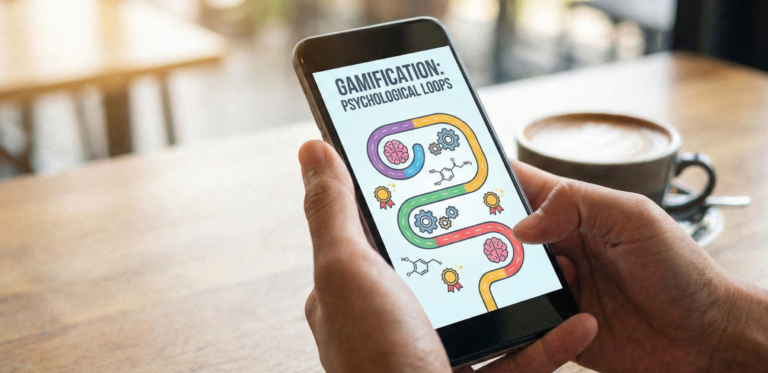
- Validation Loops: Unlike human friends, who might challenge us or get tired, AI companions offer unconditional, tireless validation. They are “safe” relationships that require no emotional labor from the user.
- The Uncanny Valley: As AI becomes more realistic, small glitches in its “empathy” can feel jarring. A bot that comforts you about a breakup but forgets your name in the next sentence creates a sense of dissonance—a reminder that you are confiding in a vacuum.
Clinical Perspectives: AI in Therapy
The field of psychology is currently debating the role of AI in mental health. Apps like Woebot and Wysa use CBT (Cognitive Behavioral Therapy) frameworks to help users manage anxiety.
The Pros:
- Accessibility: Available 24/7 for people who cannot afford or access traditional therapy.
- Stigma Reduction: Some patients feel safer confessing shameful secrets to a non-judgmental machine than to a human.
The Cons:
- Lack of Crisis Management: An AI cannot intervene if a user is in immediate danger of self-harm.
- Validation of Delusions: There have been cases where generative AI, trained to be “agreeable,” has validated a user’s delusions or negative self-talk rather than correcting them.
- Emotional Atrophy: There is a fear that relying on “perfect” AI listeners will make humans less capable of dealing with the messy, imperfect nature of human relationships.
Conclusion: The Future of Connection
Can a machine truly “understand” us? From a strict psychological and philosophical standpoint, the answer remains no. Understanding requires consciousness, and empathy requires shared vulnerability—qualities AI does not possess.
However, AI does not need to feel to be useful. A machine that simulates empathy effectively can still help us process our thoughts, practice social interactions, and feel less lonely in moments of isolation.
The challenge for the future is not making machines more human, but ensuring that we do not lose our humanity in the process. We must view AI as a tool for support, not a replacement for the chaotic, difficult, and deeply necessary connection between two living minds.